This Week in Conspiracy (20 Nov 2011)

November 22, 2011

It was a crazily jam-packed weekend for those of us at Skeptical Humanities, so this is a little late and a little short. On Saturday, Eve and I put on our thinking helmets (sometimes you just need the extra protection) and attended an event by paranormal enthusiasts. One of us will be writing about it soon, I’m sure. We were so tired at the end of the day, I think we missed our first skeptics in the pub event since…ever.

This morning, we were out again. I had been invited by the Alabama Freethought Association to talk about conspiracy theories. About 20 people showed up, and Lake Hypatia seems to be a sort of Mecca for southern atheists.

Speaking of Mecca, when we got there, an hour early (stupid time change), in one of the sitting areas on the lovely campus, we found a Koran under the bench. We pointed it out when our hosts arrived, and they brought it inside because someone might think that leaving it outside would be a desecration. That’s class, people. Learn from them.

Onto the week that was weak!

Conspiracy Theory of the Week:

That’s all for now, m’laddies. I’ve got lots more, but not a lot of time at the moment. So, keep your eyes open for more from this week in next week’s edition.

RJB


Today, South Dakota. Tomorrow….the WORLD!!!

November 15, 2011

I was recently interviewed on David Leonard’s Alive at Five radio show out of Yankton, SD. It’s a fun show that covers a  lot of topics that I find interesting. The interview was a hoot, and thanks to David for inviting me to talk about 9/11 Truthers.

RJB


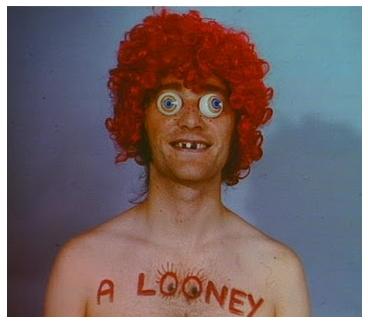
Spot the Looney: A lot of bad evidence=good evidence

November 10, 2011

I just got a new tablet computer. Yay! Of course, that means I’ve been downloading free books like a crazy woman. One of the first ones I downloaded was J. Thomas Looney‘s “Shakespeare” Identified in Edward De Vere the Seventeenth Earl of Oxford (1920). You can read it here, if you really want to. Looney was not the first to suggest that someone other than Shakespeare wrote Shakespeare. Far from it; indeed, he borrows heavily from the Baconians. His work, however, is  the basis for the claims that Oxford wrote Shakespeare. That’s right, without Looney, there would have been no Anonymous.

A word about the man’s name: it’s pronounced “loney” (rhymes with “pony”), so I won’t tolerate any childish “loony” jokes. Well, all right, but no more than a dozen or so.

I’ve only gotten through the first chapter, but the Introduction was extremely instructive. In it, I found this gem:

I do not maintain that any single objection, to what for convenience sake we must call the Stratfordian view, afforded by itself sufficient grounds for regarding it as untenable; for most of these objections have been stoutly combated severally, by men whose opinions are entitled to respect. It was rather the cumulative effect of the many objections which, it appeared to me, made it impossible to adhere with any confidence to the old view of things, and so gave to the whole situation an appearance of inexplicable mystery. (p. 3)

I reread that several times thinking, “he can’t really be saying what I think he’s saying. Surely not.” I even emailed Bob to ask “Is he saying what I think he’s saying?” Yes, that was the subject line. Eventually I came to the conclusion that he was indeed saying that no single objection to Shakespeare’s authorship has any real validity as they have all been “stoutly combated.” But put all these invalid objections together and–hey presto!–you’ve got yourself a reasonable argument. Wow. That’s almost exactly what critical thinking isn’t.

So, you may ask, what qualifications did Looney have in literary/historical investigation? Well, there’s this:

For several years in succession I had been called upon to go through repeated courses of reading one one particular play of Shakespeare’s, namely “The Merchant of Venice.” This long continued familiarity with the contents of one play induced a peculiar sense of intimacy with the mind and disposition of its author and his outlook upon life. (p. 2)

Ah. He read ONE play and felt he understood the author intimately. Makes perfect sense. More importantly, his lack of qualifications make him the right man for the job:

That one who is not a recognized authority or an expert in literature should attempt the solution of a problem which has so far baffled specialists must doubtless appear to many as a glaring act of overboldness; (p. 4)

I don’t know what “specialists” were baffled by the authorship question. I imagine if you asked the specialists of the day, “Who wrote Shakespeare?” They’d answer “Shakespeare.” If they looked baffled, it would probably be because they were puzzled that someone would ask such a silly question.

Looney continues,

…whilst to pretend to have actually solved this most momentous of literary puzzles will seem to some like sheer hallucination. A little reflection ought, however, to convince any one that the problem is not, at bottom, purely literary. That is to say, its solution does not depend wholly upon the extent of the investigator’s knowledge of literature nor upon the soundness of his literary judgment. (p. 4)

Well, I suppose that’s true. A person who is not trained in literary analysis and research could theoretically discover documentary evidence that proved that Oxford wrote Shakespeare, especially if that person was trained in historical research (which Looney was not). But Looney discovered no such evidence. All the documentary evidence (and there’s a lot of it) is on Shakespeare’s side.

This is probably why the problem has not been solved before now. It has been left mainly in the hands of literary men, whereas its solution required the application of methods of research which are not, strictly speaking, literary methods. (p. 4)

Suck it, experts! I’m not sure what Looney thinks “literary methods” are, but they do involve looking at historical context. He adds, “The imperfection of my own literary equipment…was therefore no reason why I should not attempt the task (p. 4).” It’s no reason why he shouldn’t make the attempt, but it may be a reason some of his conclusions are faulty: he looked at poems ascribed to Oxford and thought they fit Shakespeare. In fact, in many ways, the styles do not match at all. His opinion of actual experts is not high:

The common sense of the rank and file of Shakespeare students, when unhampered by past committals, leads irresistibly towards the rejection of the old idea of authorship: and only the doctors of the ancient literary cult hang in the rear. (p. 11)

Yay! I’ve always wanted to be in a cult. Wait, does this mean that if Stephen Greenblatt tells me to drink poison-laced Kool-Aid, I have to drink it? No, I’m a medievalist; I think I’m safe from Greenblatt’s evil cult-leader charisma.

But Looney’s comments on literary cults and literary men are typical, not just of Shakespeare-deniers, but also of conspiracy and fringe theorists the world over: you can’t trust experts; they are too invested in the “official story.” Either they are too stuffy and closed-minded to see the Truth, or they are actively suppressing it. Ancient alien proponents, 9/11 truthers, Holocaust deniers–they all sing the same tune.

A look at Looney’s biography may help explain why he needed to find a different author for the Shakespeare works. He grew up in an evangelical Methodist household, but he later became a leading light in the positivist Religion of Humanity. They placed great, almost worshipful, emphasis on Great Men (and women), even proposing to rename the months after important thinkers. From Looney’s point of view, Shakespeare-the-poet was a Great Man, but Shakespeare-the-man didn’t fit the bill, so he had to find someone else. Why he picked a murderous profligate, I don’t know. According to Looney’s Wikipedia page, his family claimed to be descended from the Earls of Derby, one of whom, William Stanley, the sixth Earl, is another candidate for the “real” author of Shakespeare’s work.

In assigning a “Great Man” to the Great Work, Looney thought he was performing another Great Work.

The transference of the honour of writing the immortal Shakespeare dramas from one man to another, if definitely effected, becomes not merely a national or contemporary event, but a world event of permanent importance, destined to leave a mark as enduring as human literature and the human race itself. (p. 1)

ES


This Week in Conspiracy (7 Nov 2011)

November 7, 2011

We survived CSICon, and the audience survived my epic spiel (which was never certain). I met some pretty fab folks and enjoyed myself mightily. Eve did too. But just because we played hooky for a few days doesn’t mean that I could help but see the crazy stuff that streamed in on my mail, twitter, and reader feeds.

Let get it on.

This Week in I Made More as a Graduate Student than Anonymous Has Pulled In

I’m pretty sure that Anonymous is losing money hand over fist in the American market. This is as it should be.

And the other crazy:

Twit of the week:

This came from the @poopy_poo, who is the soul of the age: “@davidicke I hope all your 13,000 followers will be attending wembley next year mr Icke, very excited to be coming :-)”

RJB


A Review of Anonymous, Commonly Attributed to John Orloff

November 7, 2011

As the closing credits rolled on Anonymous and Eve and I shouted our disapproval at the names that appeared on the screen (“Shame!” “Fail!” “Weak!”), a pair of old ladies in front of us started laughing.

“We were here for the 3:00 show,” one of them told us, “but the power went out. So they gave us free passes to see it again. I’m glad they did because I didn’t know what was going on the first time I saw it!”

And that’s the movie in a nutshell, a turd in a teapot, a tale told by an idiot, directed by a total spazz, and performed by a troupe of misguided failures.

The story was incoherent. Queen Elizabeth is a total ho, boinking everything that moves in her court. This includes her bastard son, the Earl of Oxford, Edward de Vere. Yuck and REALLY? (Several times in the movie, as Elizabeth was having a snit fit, Eve and I would turn to each other and say in our Queenie voice, “Who’s Queen?” Only really super cool people will laugh at that joke.)

The story was not told chronologically, which was a problem. It starts in the modern era, at a play or a lecture or something called “Anonymous.” It’s not clear. But what you do get, right out of the gate, is a completely useless series of questions by the character Underinformed Git (played by himself, Derek Jacobi), “Why aren’t books mentioned in Shakespeare’s will?” (What part of the “the whole damned estate” don’t you get, Rollo?) So, we were 2 minutes in, and I already wanted to kick a puppy.

Then we go almost to the end of the narrative proper, when Ben Jonson is getting done over good by the local constabulary for reasons that are not clear until the end. He’s hiding the plays written by de Vere-as-Shake-Speare. Jonson must be in on it because he is someone with credibility whose actual work (his elegy on Shakespeare faces the famous woodcut in the First Folio) totally f’in demolishes the Oxfordian fantasy before it got started. And then there is the little problem of the “Sweet Swan of Avon” elegy written, also by Jonson. Oh and the fact that Shakespeare was publishing long after de Vere was worm food. The solution? Make Jonson a conspirator and give him all of the plays to leak to Shakespeare slowly after de Vere’s death. Aaand your evidence for this is….apparently that you need it to be just so.

So, uh, then they are performing A Midsummer Night’s Dream, and everyone in court knows that it was written by a Bieber-aged de Vere…but then they all apparently forget that. My horse-drawn carriage has already thrown a wheel in that plot-hole.

Oxford is orphaned and raised by the Cecils who are advisors to the Queen. Turns out, go figure, that de Vere is smarter than all his tutors. The scene in which we are introduced to his Greek tutor, Latin tutor, cosmology tutor, etc. serves no functional purpose to the plot; it actually only underlines for Oxfordian cultists that de Vere had exactly the type of education they think that you need to write Shakespeare’s work. There were little nods to the in-group like that throughout the movie. For instance, you pan across Oxford’s office and see a falcon, you can almost hear Emmerich wondering out loud about how Shakespeare could know the vocabulary related to falconry if he was a bumpkin. And then you can almost hear a whoosh and a smack as I lose it.

OH! The movie is so insulting to the playwrights of the age. They were basically all hacks and they sat together in the peanut gallery. The treatment of Shakespeare was basically defamation. Shakespeare was slightly less fluent in English than Jesse Ventura, perpetually drunk, and usually whoring. They even suggested that Shakespeare killed Christopher Marlowe! Anything you can do to make him look bad, s’pose. At one point the playwrights are at their whore-and-ale house, the Randy Badger (or something), and Jonson throws down, daring Shakespeare to write his name. Lamest. Challenge. Ever.

Did I mention that it made no sense and that it left two old ladies very confused?

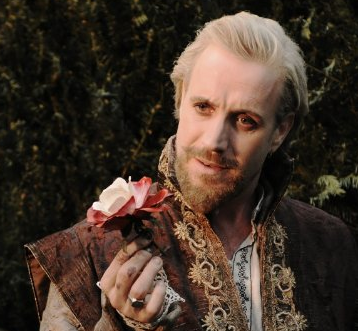
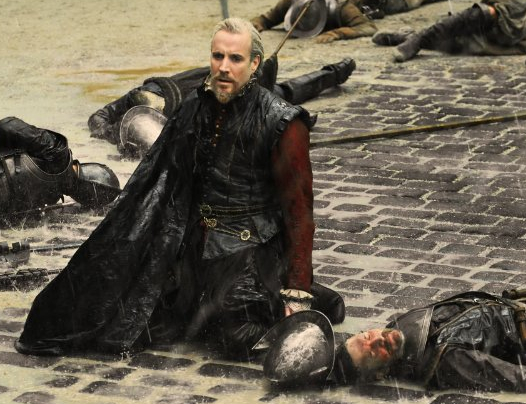
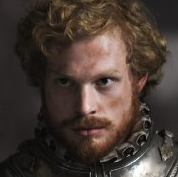
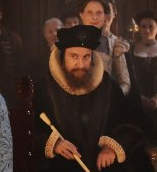
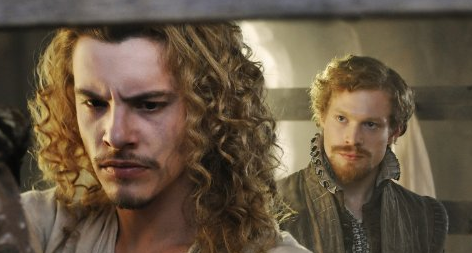
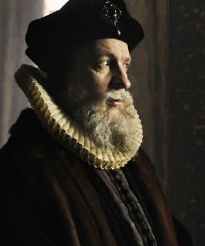
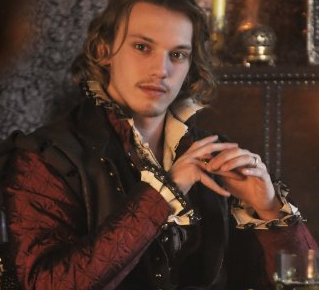
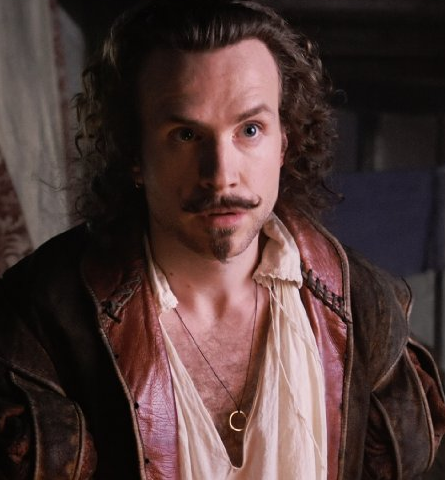
There was one really phenomenal aspect to the film, however, the mustaches. Whoever did the facial arrangements should get an Oscar(tm). If you could roll that clip I brought…..

“F’in roses how do they work?” –Wm. Shkspere

First the Queen dumps him and then there’s a rebellion. Ed’s having a crappy day.

It’s been only 3 days, and I forget who this is. Well acted, my friend. But look at that beard!

Bad guy who is not Shakespeare.

“Fauntleroy, why do you never return my text messages?”

Lord Melchett: “BAAAAAAAAAA!”

“What would you, the audience, do?”

Seriously, Shakespeare’s facial wig carries the performance.

If they had spent half as much time grooming the plot as they did these guys’ upper lips, the movie would have passed. But it was badly told to the point that only a true believer could possibly invest in it. The infuriating thing at the end, however, was not that it crapped on the Bard, who can take care of himself, but that the little old ladies in front of us wondered out loud if their understanding of history had always been that bad. “No,” I assured them. “Roland Emmerich is just a bad person.”

RJB


The Other 5 Reasons Roland Emmerich is an Idiot

October 24, 2011

Here beginneth Part the Second (see here for Part the First):

6. Not edumucated enough.

Considering the anti-intellectual slant of Shakespeare-deniers (expressed by a comment on this post from screenwriter John Orloff), this one is rich.  As Emmerich says, “no records prove that Shakespeare ever attended the Stratford Grammar School.” True, no records survive before the nineteenth century. “Yet the work of William Shakespeare the writer shows extensive knowledge of [a bunch of stuff] as well as aristocratic activities such as royal tennis and falconry. Call me a snob….” Yup, you’re a big snob…. “but even if he was a genius, he couldn’t have pulled that one off without leaving a trace of his learning.” I don’t get it. Aren’t all those examples Emmerich provided evidence of Shakespeare’s learning? Not just formal education, but a continuing interest in learning things and, you know, reading stuff? “William Shakespeare had the largest English vocabulary of any writer in history. Not quite grammar school level I would say.” Well, then, you would be wrong. Again. First of all, “education” in Shakespeare’s day meant classical education: Latin and Greek. They weren’t learning English composition, much less creative writing. Second, as Shakespeare scholars have pointed out repeatedly, Shakespeare’s education was perfectly sufficient. James Shapiro notes that a grammar school education “was roughly equivalent to a university degree today, with a better facility in Latin than that of a typical classics major” (Contested Will, p. 276).

And let us not forget the things Shakespeare got wrong. In The Winter’s Tale, Shakespeare provided Bohemia with a coastline and a desert that it doesn’t actually have. Ben Jonson considered such mistakes risible. If you click the link above, you can see how Oxfordians have danced around this issue, and, if you scroll down a bit, you can see the history of the word “dildos.” It has nothing to do with the authorship question, but it’s fun. Shakespeare also kindly bestowed a harbor on Padua in The Taming of the Shrew.

7.  “Here is a big one:” if Emmerich had been Shakespeare, he wouldn’t have retired so early.

So what? What does Emmerich’s interminable drive to make splashy, bad movies have to do with Shakespeare? Emmerich adds that, after Shakespeare retired to Stratford (which was not the tiny town Emmerich makes it out to be), he never wrote “a single poem, play or sonnet again.” Okay, first, sonnets are poems. Second, argument from ignorance. How do you know he didn’t write anything ever again? Just because they don’t survive doesn’t mean they never existed. Finally, Shakespeare’s last plays (all collaborations) were probably written after after Shakespeare had largely retired and been replaced as principle playwright by John Fletcher.

“I would never compare myself to Shakespeare.” Oh, good, then shut up. “But to me the idea of retiring from directing and moving back to my hometown and never to be associated with movies again is just completely unthinkable.” Do you have a wife and kids in your hometown? And as we’ve seen, Shakespeare did continue to be associated with the theater (see more here). So, no, the explanation is not that he ran out of “idears.”

8. There is no record of Shakespeare traveling abroad, but he mentions Italy and other foreign lands a lot in his plays.

Argument from ignorance: we have no records of Shakespeare traveling abroad; therefore he must never have traveled abroad. Actually, we just don’t know. Even if he never left England, there were ways of finding out stuff about other countries. In the Renaissance they had a primitive version of Google earth.  It was called a “map.” And while Shakespeare didn’t have access to Wikipedia, there were these things called “books.” Oh, and while he couldn’t watch the Travel Channel (Emmerich actually sarcastically suggests this) there were travelers that he could talk to. And let us not forget Bohemia’s coastline and desert and Padua’s harbor.

9. The Stratford monument may have been altered to show Shakespeare as a writer.

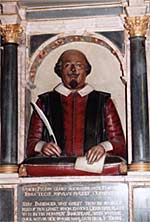
Shakespeare’s monument was erected sometime between his death in 1616 and the publication of the First Folio in 1623 (the Folio mentions the monument). It shows Shakespeare with his arms resting on a cushion and holding a quill in one hand and a piece of paper in the other.

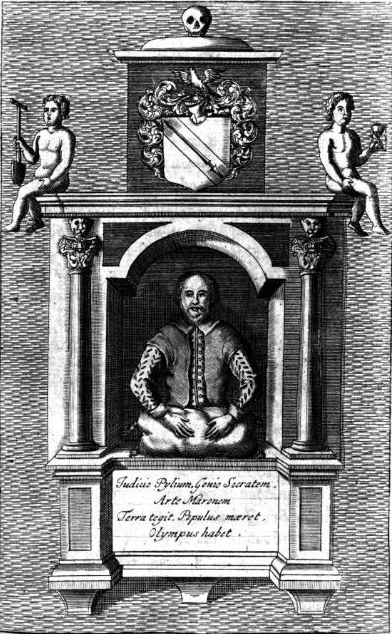
Emmerich points out that there were renovations to the monument. This is true. It was also repainted several times. He points out that in an early “engravement,” Shakespeare isn’t holding quill and paper; instead he is holding a “sack of grain.” The engraving appeared in William Dugdale’s Antiquities of Warwickshire published in 1656. Here it is:

First of all, while historians agree that the monument was renovated, I don’t think they believe it was renovated as early as 1656 (only a few decades after its erection). Secondly, the “sack of grain” is pretty clearly an awkward representation of the cushion, which is cut from the same hunk of stone as the bust (including the forearms and hands that rest on it). Why there is no quill and paper, I don’t know. Here is a discussion of the Dugdale engraving.

Also, you will notice that, even in the engraving, there is an inscription beneath the bust. This is what it says: “IVDICIO PYLIVM, GENIO SOCRATEM, ARTE MARONEM, TERRA TEGIT, POPVLVS MÆRET, OLYMPVS HABET.” Translation, “In judgment a Pylius [Nestor], in wit a Socrates, in art a Maro [Virgil]; the earth buries [him], the people mourn [him], Olympus possesses [him].” Not the inscription of a grain merchant. Although it is not visible in the engraving, there is also an English epithet (on the same slab as the Latin and so necessarily contemporary with it). It says (in modernized spelling): “Stay passenger, why goest thou by so fast? Read if thou canst, whom envious Death hath placed within this monument, Shakespeare, with whom quick nature died, whose name doth deck the tomb far more than cost, sith all that he hath writ leaves living art, but page, to serve his wit.” In other words, quill or no, the monument absolutely identifies Shakespeare as a writer, as is clear even in Dugdale’s rather bad drawing.

10. The bloody will.

“Can you believe that the last will of William Shakespeare of Stratford does not mention any books or manuscripts?” Why, yes, Roland: I can believe that, and if you can’t, your disbelief is merely an argument from incredulity. “Didn’t he care what would happen to his life’s work after his death?” Okay, I’m just going to copy and paste what I said about the will in my first post on this blog:

As for the will…well, Oxfordians get very excited about the will.  Shakespeare doesn’t mention his library, his books or his plays.  True, but he didn’t personally own the plays: they belonged to the acting company.  Those that were published became the property of the publisher.  He doesn’t mention books, but nor does he mention many specific items: the bulk of his estate was entailed.  Shapiro, citing  James Orchard Halliwell-Phillipps, notes that when Shakespeare’s son-in-law John Hall went to prove Shakespeare’s will, he apparently had with him “an inventory of the testator’s household effects” (qtd. in Shapiro, p. 50).  Shapiro continues:

Whatever valuable books, manuscripts, or letters Shakespeare owned and was bequeathing to his heirs would have been listed in this inventory rather than in the will itself (which explains, as Jonathan Bate has observed, why the surviving wills of such Elizabethan notables as the leading theologian Richard Hooker and the poet Samuel Daniel fail, like Shakespeare’s, to list any books at all).  (p. 50)

So, there you have it: arguments from ignorance, arguments from incredulity, arguments from snobbery and romanticism and arguments from what Roland Emmerich would have done if he’d been Shakespeare. And not a single iota of evidence to support the case for another author. [Emmerich mode] I chust don’t buy it [/Emmerich mode].

ES

RESOURCES:

The Norton Shakespeare.  Gen. ed. Stephen Greenblatt.  New York and London: Norton, 1997.  Texts based on the Oxford Edition, gen. eds. Stanley Wells and Gary Taylor.

The Riverside Shakespeare.  2nd ed.  Text. ed. G. Blakemore Evans.  Boston: Houghton, 1997.

Shakespeare: Life and Times. Palomar College. http://shakespeare.palomar.edu/life.htm.

Shapiro, James.  Contested Will: Who Wrote Shakespeare.  New York: Simon, 2010.

Shapiro, James. “Hollywood Dishonors the Bard.” New York Times 16 Oct. 2011

Wells, Stanley.  Shakespeare & Co.: Christopher Marlowe, Thomas Dekker, Ben Jonson, Thomas Middleton, John Fletcher, and the Other Players in His Story.  New York: Vintage, 2006.


Good news! Roland Emmerich’s stinker Anonymous release limited!

October 24, 2011

Heheh. I just saw news that the release of Anonymous has gone from 2000 theaters to 250. Eve and I would be happy to take credit for this if it weren’t for the fact that the whole world instantly realized that the entire premise was ridiculous. Also, I haven’t seen a positive review yet. Rollo is saying that it’s his idea. Go with that, kiddo. Embrace the fail.

So, what is to be made of this apparent straight-to-DVD upcoming box office failure? Other than “fun of”?

RJB


This Week in Conspiracy (23 Oct 2011)

October 23, 2011

I won’t have time to do everything that I need to in the few days that I have before CSICon. But I make a point of doing this, even if it hurts a little.

So, given the time crunch, I’m going to do as much as I can in an hour. GO!

  • In additional Shakespeare news, Forbes’s Alex Knapp wrote a piece, “Yes, Shakespeare Wrote Shakespeare” and got inundated with…enthusiastic correspondence. He contacted me and Eve about coming up with a reply to the specific claims of Shakespeare deniers, and we’re happy to help. Also, John Orloff, the screenwriter of Anonymous, left a smudge in the comments on my post about his indignation at the HuffPo.
  • Holy crap! I thought Ron Paul reminded me of someone! It’s Pat Buchanan!
  • Godlike Productions stepped in it this week when they tweeted:

They actually tweeted the word "Negro".

Conspiracy Theory of the Week:

You win! Please! Stop sending me this! Everyone I have ever met since I got out of short-pants has sent me this at least twice! Are you guys coordinating this??? Hey, I’m “just asking questions.”

Hey, not bad for an hour.

RJB


“Anonymous” Screenwriter John Orloff: Name Dropping and Wrong

October 18, 2011

John Orloff, who wrote the screenplay for the badly titled Anonymous (as Eve points out, it should be Pseudonymousout-stupided the Huffington Post on their own turf, which is no mean feat. He took issue with the phrase “urban legend.” I agree. They should have used the phrase, “unfettered clacking bollocks.” I intend to use his little screed in future classes to teach logical fallacies. His letter went as follows:

I’d like to think current and past US Supreme Court Justices don’t believe in Urban Legends. Namely, Justices Stevens, Blackmun, O’Connor and Scalia all think there is reason to doubt the validity of the actor William Shakespeare having written the plays history ascribes to him.

Wow. Not a Shakespearean scholar among them. Ok, you’re name dropping, but the sad fact is that just because you don’t like to think about it doesn’t mean it’s not true. This is the appeal to personal incredulity. “I can’t believe that these smart people would believe an urban legend, therefore, Shakespeare wasn’t Shakespeare.”

As does historian David McCullough. As do authors such as Mark Twain (whose last book, “Is Shakespeare Dead” is dedicated to the issue), Henry James (who said he was “haunted by the conviction that the divine William is the biggest and most successful fraud ever perpetrated on an unsuspecting Public”), and Walt Whitman (to name a few).

This is a classic appeal to false authority. You could fart sonnets like an angel and still not have a rollicking clue about the reams of scholarship backing the mainstream view.

As do Shakespearean actors Sir John Gielgud, Sir Derek Jacobi, and Orson Welles (who directed and starred in several Shakespeare plays).

Yawn. Appeal to false authority. Sorry.

And Mark Rylance, who is not only perhaps the greatest Shakespearean actor of his generation, but a man who was also the Artistic Director of the Globe Theater in London for ten years. Think about that last name; the man who ran the Globe theater for a decade doesn’t think Shakespeare wrote a single word.

Wow. I’m willing to bet if I look in my university databases I’ll find he never had to publish a goddamned thing under peer review:

  • Academic Search Complete ( 0 )
  • Research Library ( 0 )
  • Project Muse ( 0 )
  • MLA International Bibliography ( 1 )
  • Essay & General Literature Index ( 0 )
  • Arts & Humanities Citation Index ( 0 )
  • Humanities Int’l Index ( 0 )

That single entry is in a book about the resurrection of the Globe Theater, and it does not address authorship. And it’s not you like are citing an independent authority, since he’s in the freaking movie. “Well, my friends think so,” is as unconvincing as, “My mom says I’m smart.”

And we can add Sigmund Freud in there as well.

SO!?!

An Urban Myth is something proven to be false. I’m not sure we’re there on this particular issue.

Well, I disagree with your definition of urban myth, but the burden of proof is not on mainstream academia. We don’t default to the position that you know your head from your ham hocks.

And how do you know that someone wasn’t scared by Eddie Murphy in an elevator?

Either way, I am reminded of Winston Churchill’s statement on the subject when he was asked about the Authorship Issue. His response? He replied he wasn’t that interested in Oxford because, in his words: “I don’t like to have my myths tampered with”.

He meant the Shakespeare myth.

He meant, “Get stuffed, bozo. I’m not interested.” It doesn’t matter how many amateurs you say you surround yourself with, you’re still sitting on the short bus. (Yes, the actors and directors have a skill set that is completely unrelated to scholarship.)

Your software is broken, kiddo. Don’t try to contribute to the Great Discussion, because you’ll only embarrass yourself.

RJB