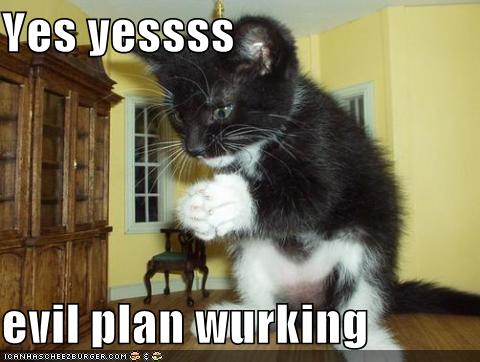
Dr. Taylor sends us the Shakespeare foul papers!

April 2, 2011

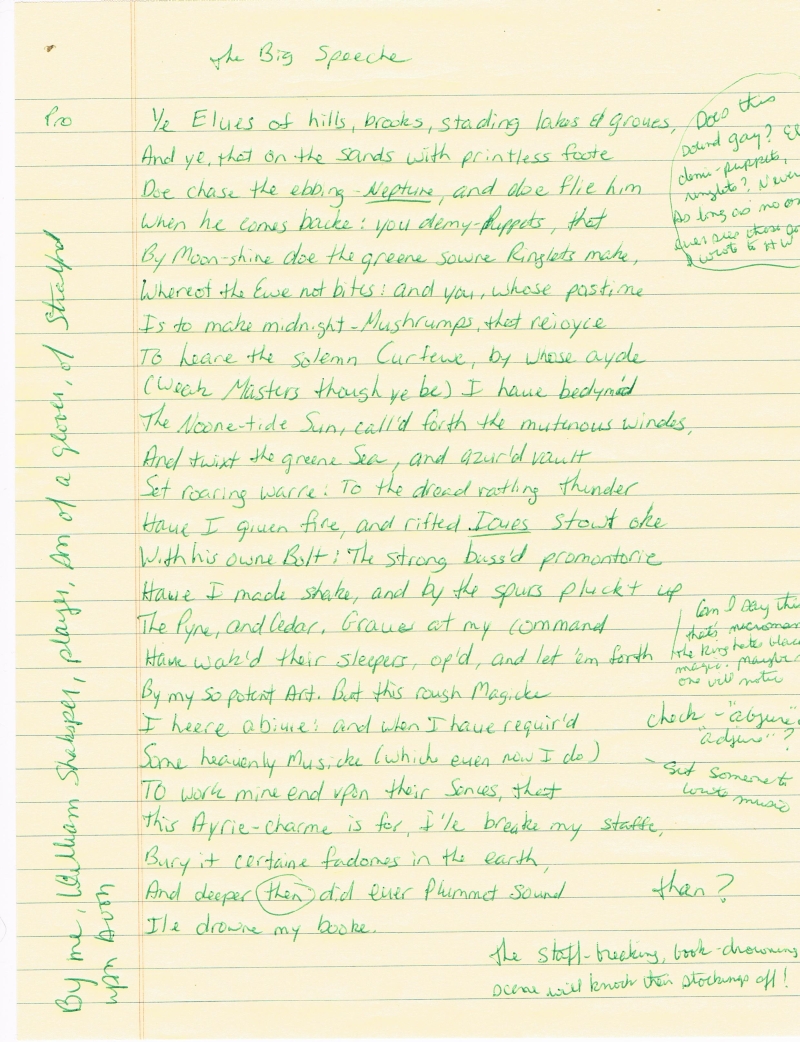
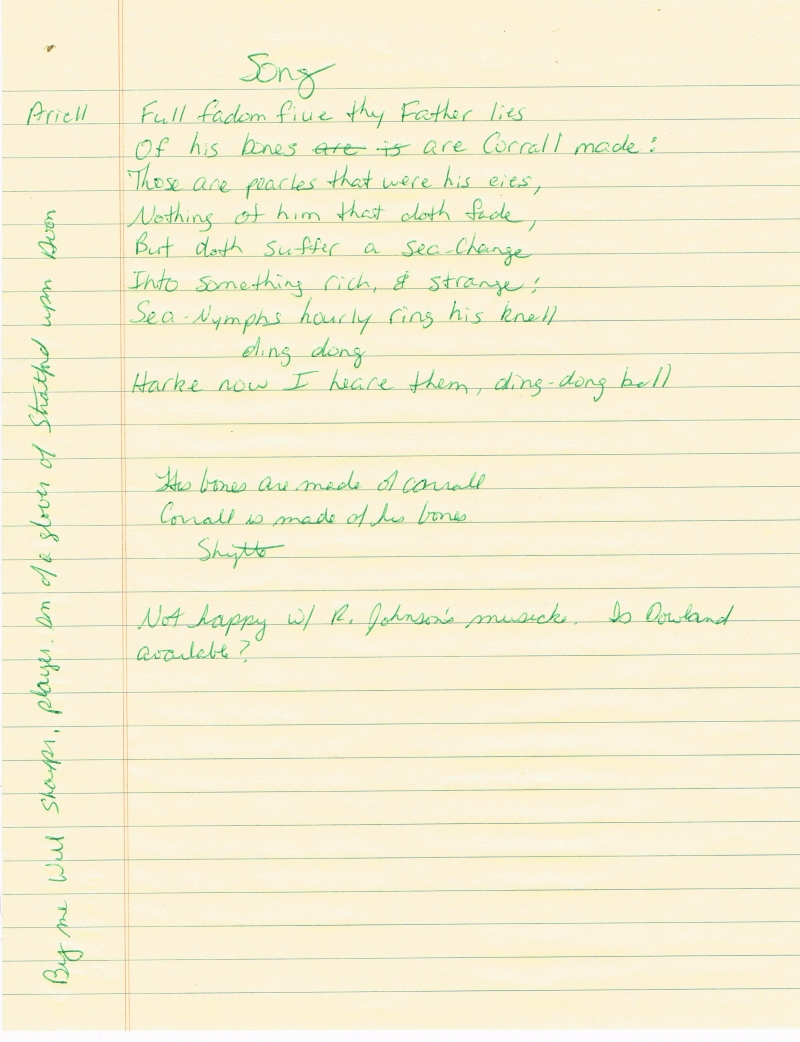
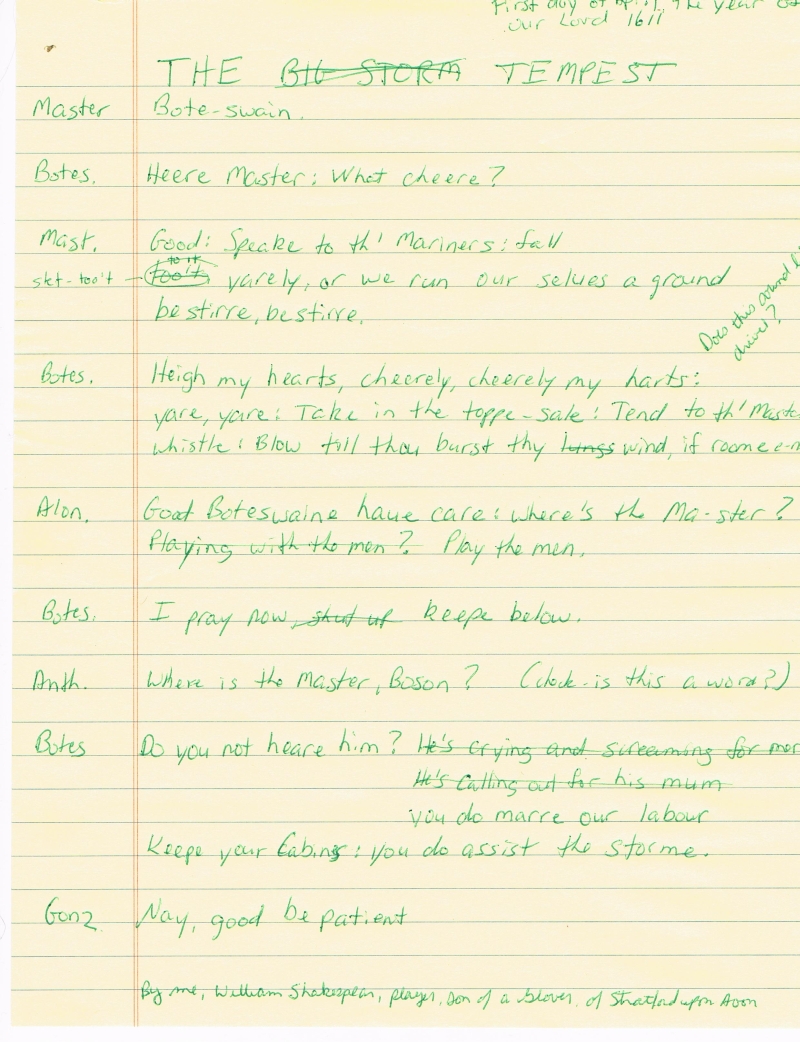
We wrote to Dr. Taylor about the discovery of the foul papers, and even though he is inundated with requests, he sent us scans from the Folger. We’ll let you decide if these are genuine. It is, after all, best left to the masses to decide for themselves than to have “experts” tell them what they should believe based on evidence:

Click to embiggen

Click to embiggen

Click to embiggen

RJB/ES


Shakespeare’s Foul Papers Found

April 1, 2011

The essence of responsible skepticism is to adjust one’s beliefs to accord with the evidence. Hand-in-hand with this principle is the guiding maxim that extraordinary claims require extraordinary evidence. With the Shakespeare authorship question, we have often said that for us (Eve and Bob) to credit anyone but Shakespeare of Stratford it would take something on the order of the “true” author of the works signing a letter or a manuscript explaining exactly why and how he (presumably) took the pseudonym. Even then, we’d have to cross-check and verify this new evidence with multiple lines of converging evidence.

Everyone knows that Shakespeare’s plays were performed at the Globe Theater, but his company also performed at a small indoor theater called the Blackfriars, built on the site of a Dominican friary. The Globe has been reconstructed as Shakespeare’s Globe, and from the beginning, there was always a plan to reconstruct the Blackfriars as well. Indeed, the shell of the Blackfriars was built before the Globe opened, and the Globe is now raising funds to complete its sister theater.

There were actually two theaters built on the site of the monastery. The first theater was built on the site of the former buttery and produced plays featuring boy actors. In the 1580s, Edward de Vere, the 17th Earl of Oxford, whom many believe wrote the plays attributed to Shakespeare, was involved with this theater. He may have been its patron, and he placed the running of the theater under the control of his secretary, playwright John Lyly, and William Hunnis. This theater was shut down by legal entanglements in 1585.

In 1596, James Burbage, impressario of Shakespeare’s company the Lord Chamberlain’s Men and father of the great tragic actor Richard Burbage, purchased the friary’s refectory and the rooms below it. Burbage had the space renovated into a theater; however, the residents of the area were unhappy, and even Lord Hunsdon, the patron of the Lord Chamberlain’s Men, signed a petition to prohibit the company from performing there. In 1600, Richard Burbage was able to lease the theater to Henry Evans, and the Children of the Chapel began performing there. Finally, in 1608, Burbage reclaimed the lease and his company, now called the King’s Men, took over the Blackfriars Playhouse. Shakespeare was one of the theater’s owners. The King’s Men performed seven months of the year at the Blackfriars and five months at the Globe. Although the Blackfriars was smaller, the company earned more revenue from it because they were able to charge a higher admission price. Many of Shakespeare’s late plays were written to be performed at the Blackfriars. In addition, Shakespeare owned a property in the Blackfriars area, which he left to his daughter Susanna in his will.

It is interesting that both Shakespeare and Oxford have an association with the old monastery and the surrounding area, since recent excavations have unearthed a treasure trove of manuscripts which some have identified as Shakespeare’s “foul papers,” the rough, handwritten copies of plays produced before a fair copy. The manuscripts, found in a trunk, are damaged and dirty, and it will take some time for scholars to assess what they have. Early indications, though, suggest that they are not a hoax or forgery. The paper, ink and handwriting seem to date from the late 16th century. According to Professor Stanley Jay Taylor of the Folger Shakespeare Library, if the manuscripts are genuine, they are authorial works: they are rough and show evidence of revision. It is not clear from the release how many or which plays have been found (Taylor only mentions two, Two Gentlemen of Verona and The Tempest), but the foul papers may cause us to rethink our view of the plays if the manuscripts represent a version substantially different from the texts we have. Furthermore, snippets from what seems to be an early draft of The Tempest has been carbon dated to 1599, within Oxford’s lifetime! (Give or take 3 years.) This is important because The Tempest is considered to be one of the author’s later plays. That–and the prospect of abandoned literary projects–boggles the mind!

The discovery of the foul papers could also settle once and for all the question of “Who wrote Shakespeare?” If the handwriting matches Shakespeare’s six signatures, then we will know that he was indeed the author. If not, or if there is any question, Oxfordians will finally have their day. Of course, it may not be as easy as that: it may be difficult to make a definitive assessment of the handwriting by comparing it to just six signatures. Luckily, we have numerous, mutually consistent examples of Oxford’s hand, so we will have a firm answer on that account likely very, very soon.

More to come!

ES/RJB


WordPress, you are a cruel bitch…

April 1, 2011

Click to embiggen.

RJB


Taking it to the radio…

March 30, 2011

I heard from some of you who were surprised to hear that I wasn’t to be heard on the radio this afternoon. Nobody was more surprised than me, and I was Mr. Peter G. Grumbletrousers all afternoon.

No, that’s not right. I was DOCTOR Peter G. Grumbletrousers. The radio interview, which was to be about the language of pseudoscience, did not happen for reasons that are not completely clear to me. It was email’s fault, though. You know, I’m pretty laid back, especially when I’m at work. But, man, it was a slap in the face to be completely forgotten about. Not cool.

I don’t want to complain, but you know by the preceding independent clause that I’m going to. I told my students about it, put aside other work to prepare, and canceled a class to be there. I have to cancel a class next week too because of a conference. It’s going to be hard to justify doing it again so close to the end of the semester.

Big disappointment.

But when life gives you a turd, make a turd pie! IIG-Atlanta will be officially constituted by the time I am rescheduled, and I’ll be able to announce the $50,000 challenge for evidence of the supernatural, paranormal or occult under properly controlled conditions. That’s a plus. Also, I will be back from NECSS, which I will be attending next week after my panel at NeMLA. (By a very great coincidence, I’m going to be talking at Rutgers the day before NECSS starts and will hop on the train to New York City.) I should be charged up and ready to go after that. And, I am going to ask that a couple of local paranormal celebs be present or invited to call in.

Strike me down, and I’ll become more powerful than you could possibly imagine.

RJB


The Week in Conspiracy (26 March 2011)

March 27, 2011

More news that validates everything regarding whatever position I advocated last week about who’s really in control. I mean, it’s staring you in the face, man! Or woman. Or reptillian-human uberlord.

JV — Did the AIDS crisis hinder or help the Homosexual Movement?

RE — In terms of finances, government-sponsored AIDS programs proved to be the goose that laid the golden egg, and millions of dollars of “health” funds has made their way into homosexual political/activist organizations. AIDS has the added “benefit” of helping to reduce the “surplus population,” in keeping with the New World Order’s relentless campaign against the proliferation of people. Unfortunately, the useful idiots that dominate the “gay” leadership have yet to figure that out, or if they have, they are silent so as not to loose their salaries, or possibly their lives.

Conspiracy Theory of the Week!

Almost forgot about this one! A group that seems to represent the (few probably delusional) family members of 9/11 victims (but sounds more like it is Architects and Engineers for 9/11 Truth) launched an ad campaign to raise an awareness of WTC 7. As badly as I feel for some of these people, I can’t help but remind you that your personal tragedy does not give you expertise any more than having expelled a child from her uterus makes Jenny McCarthy an infectious disease specialist.

That’s what I got for now, people. Keep the tin foil tightly wrapped!

RJB


Skeptics visit the Creation Museum

March 24, 2011

About a year ago, over Christmas break, Eve and I visited the Creation Museum in Kentucky. It was fun and everything, but not for the reasons the creators (with a lower-case “c”) intended.

This never happened.


Every so often, we may post audio of our public talks. Just be you warned. This is a young website, one sparking with shiny promise.

BobandEveSiTP

The Atlanta Skeptics in the Pub podcast, by the way, is produced by Mark Ditsler of Abrupt Media. He’s a multimedia whiz-bang and does a great job for the Altanta Skeptics. He’s also on the steering committee of the newly formed IIG-Atlanta. More on that project soon!

RJB


The Week in Conspiracy (3/20/11)

March 20, 2011

Well, hi there! I was almost right last week when I sounded the alarm about the apocalypse that was coming. I meant to say within two weeks of the 14th of either this month or next month. But it’s coming!

Anyway, this was another Japan-heavy week in the flip-out-o-sphere. Nukes and all that. The mainstream media, I will note, did not help and should be ashamed. Regardless, there is a new war on, Libya, and a whole new suite of fears to exploit. Let’s have at it!


Conspiracy Theories of the Week:

AND

RJB


The Week in Conspiracy (13 March 2011)

March 14, 2011

Fwaaaaaaaaaa! I can’t believe I thought last week was going to be the culmination of immense, secret machinations. This week it will be different. This week it will happen.

Yeah, as I’m sure you are aware, the wackosphere is going potty over the earthquake in Japan. No disaster is too horrific for them to not fap furiously over.

It’s been quiet here recently, and I appologize. I have, in fact, been busy this week doing conspiracy related things. On Saturday, I went to a 9/11 Truther event in Atlanta and did some interviews. I offered my audio to a locally produced podcast that you may have heard of, so we’ll see what happens there.

Before launching into this week’s theme, Japan, I wanted to mention a little tweet from a big twit, in which a 9/11 Truther encourages Charlie Sheen to get back to his crazy roots. Personally, I think that Charlie Sheen is disinfo. Think about it, people.

At any rate, I have been doing things and you can’t prove that I haven’t so there.

Let’s turn this into something a little more productive this week. Please visit the Red Cross and donate to their Japan relief efforts.

RJB

UPDATE:

A couple more conspiracies are trickling in. There is no shortage of goofy Japan-related woo:

Conspiracy numerologist. (This is tongue in cheek.)

Courtesy of Nate, from the Atlanta Skeptics, <panic>Nibiru caused the earthquake</panic>:


Things that Went Bump in the Middle Ages (Part 1)

March 14, 2011

A few years ago, I used to frequent the Ghost Hunters discussion forum on Syfy.com. Many of the regular members were highly skeptical of TAPS and extremely good at analyzing questionable evidence from the program. As one might expect, however, most of the members believed in ghosts or at least believed that it was plausible that ghosts could exist. One of the reasons given for this belief was the ubiquity of ghost stories. Even noted skeptic Alison Smith at one time thought the commonness of ghost stories was the most compelling evidence for ghosts:

To me, the best evidence for the existence of ghosts was the way they permeated every culture. They crept across the globe. If they didn’t exist, then why would so many vastly different cultures believe in them?

Or, as a believer puts it (warning: website is very colorful):

Ghost stories, whether modern or of old, all seem to tell similar stories about ghosts’ tragedies, unfinished business, unrest, visitations, and hopeless roamings among the living.  Ghost stories also sometimes share common ghostly messages of warning to aid those still alive, or tell of spirits with ill intentions, seeking revenge from those who wronged them in life.  Some ghost stories truly enlighten, while other ghost stories paint a picture of hell to frighten!

I understand this point of view to an extent, but I have always found that the history of ghost stories argues against the reality of ghosts because the ghosts tend to fit the culture from which they come. Ghosts and ghost stories change radically over time and from culture to culture.

To begin with, what is a ghost? If you ask the guys from Ghost Hunters, Ghost Adventures, Ghost Lab, Ghost Wranglers, Ghost Snatchers, World’s Deadliest Ghost Catches, Martha Stewart’s UnLiving, etc., they would probably say something vague about “energy.” This isn’t entirely surprising, since the culture modern ghost stories come from combines New Age and schmience, which vaguely resembles science, but not that much. Wikipedia offers a more traditional definition: “the soul or spirit of a deceased person or animal that can appear, in visible form or other manifestation, to the living.” Probably most people would agree that ghosts are insubstantial.

Now, there are already problems with this description. Often ghosts are visible, sometimes as shadows and sometimes as “full-body apparitions.” Sometimes they appear solid; sometimes they are transparent. Ghosts can often be heard speaking, whispering, laughing or breathing with non-existent vocal cords and lungs, although some of them only make themselves heard by imprinting their disembodied voices on recorders. Sometimes ghosts can interact with physical objects: they touch/brush against/push/attack people; they make knocking sounds; they throw things; they play with equipment. They can disappear and walk through walls, but they don’t generally sink through floors or the ground (unless they do so dramatically at a place of burial, for instance). Do they have mass or not? Are they bound by gravity or not? As far as I can tell, ghosts are bound by the laws of physics, sort of, except when they aren’t.

And that’s modern ghosts. What are we to make of medieval ghosts such as this one?

[In Berwick-upon-Tweed] a certain wealthy man who…had been given over to sinful behaviour, died  and was buried. However, with Satan’s help he kept emerging at night from his tomb and wandering here and there to the sound of loudly barking dogs. Every night he was the cause of great terror to townspeople before his return at daybreak to the tomb…. The simpler folk of the town feared that they might accidentally run into the lifeless creature and be physically attacked; the more thoughtful were afraid that, unless something were done quickly, the air circulating around the town would become infected by the corpse and so lead to general sickness and death in the town. It was apparent to all that something had to be done, and so they brought together ten sturdy young men who dug up the offending corpse, dismembered it and burnt the pieces in a fire. Once this had been done, the nightly perturbations ceased… (William of Newburgh, Historia Rerum Anglicarum, Joynes 98-99).

William tells several similar tales. One dead man “entered the bedchamber of his sleeping wife…[and] attempted to lie upon her in the marital bed” (Joynes 97). After his wife employed watchmen, he attempted to attack his brothers and “took to prancing among the animals in the byre” (Joynes 97).  In another case, “the doors of every house were bolted, and nobody dared go out to attend to any business from sunset to sunrise for fear of being attacked by the wandering monster. But even such a precaution…was useless, since, by the circulation of air poisoned and infected by the corpse, the neighbourhood became filled with the sick and the dying who had inhaled the pestilence” (Joynes 101). In three of the four cases, the haunting stops when the body is dismembered/beheaded and/or burned. In the fourth case, such treatment is suggested, but Bishop Hugh of Lincoln instead has a letter of absolution placed on the corpse’s chest.

Now you may be thinking, “That isn’t a ghost–that’s a vampire or something.” But how do we decide on the taxonomy of the undead? How do we decide who’s a ghost, who’s a vampire, who’s a zombie, who’s a revenant? Most of our ideas about these classifications are fairly modern and to some extent derived from literature and film. In earlier time periods, it’s more difficult to say who’s what among the undead. William of Malmesbury and Walter Map also mention walking corpses, and Old Norse sagas are full of them. Though in Norse there are several words for such creatures, the words are generally translated as “ghost.” These “ghosts” spread illness, but they also attack and kill animals and humans directly. Somewhat oddly, on the blurb on the back cover of Denton Fox and Hermann Pálsson’s  translation of Grettir’s Saga, the undead fought by the hero are called “wraiths,” which is an almost perfectly inaccurate description.

A writer known as the “Monk of Byland” lived in the same area as William of Newburgh around 200 years later. He tells a number of tales that resemble William’s. One concerns

James Tankerlay, the one-time Rector of Kereby….His spirit began to wander at night as far as Kereby, and one evening he gouged out the eye of his concubine who still lived there. It is said that the abbot and chapter had his body in its coffin dug out of the grave and that they ordered Roger Wayneman to convey it to Gormyre. When he was about to throw the coffin into the water, the oxen drawing his wagon panicked and were almost drowned with fear (Joynes 123).

Some of the “spirits” shape-shift into animal form, but it is clear that they are corporeal. While they sometimes jump on a living person, they are generally less dangerous than William’s ghosts. Most want to right a wrong and/or to receive absolution. By the time the Monk of Byland was active (end of the fourteenth century), the doctrine of Purgatory was widely known and accepted, and this helps to explain the differences between his tales and those of William, who was writing when the doctrine was still developing.

Indeed, Purgatory was a great boon for the medieval ghost story. According to Jean-Claude Schmitt,

[the Church’s influence] enabled an inculcation of the faithful with a religious morality centered on the notions of sin, penance, and salvation, culminating at the end of the twelfth century in the “birth of Purgatory.”  Henceforth all Christians could hope to be saved, but only under the condition that after death, they would undergo salutary punishments–the duration and the intensity of which depended…[in part] on the suffrages (masses, prayers, and almsgiving) undertaken by relatives and friends….Otherwise the dead person might appear to a relative or close friend to demand the suffrages needed…. Eager to support and organize the unity of the living and the dead, the church gladly repeated tales of ghosts (4).

Jaques Le Goff points out that

Purgatory would become the prison in which ghosts were normally incarcerated, though they might be allowed to escape now and then to briefly haunt those of the living whose zeal in their behalf was insufficient (82).

He further notes that Purgatory was popularized in part by ghost stories (177). The ghosts might warn loved ones to mend their ways or announce an imminent death. They might want their heirs to return stolen property. Increasingly, though, they asked/demanded that relatives pay for masses or prayers to be said for their souls. Coincidentally, many of these ghost stories came out of monasteries that had become, since the introduction of Purgatory, factories that manufactured masses and prayers for the dead. While these ghosts were generally a bit tamer than those described by William and the Byland monk, they sometimes still appeared corporeal, and sometimes they retained pagan aspects, as when they appeared in a Wild Hunt (Schmitt 115).

While modern ghosts may warn loved ones or attempt to right wrongs, they rarely ask for suffrages anymore. Another thing that sets medieval ghosts apart from modern ones is their lack of ambiguity. Whether they were corporeal or incorporeal, whether they wanted to beg forgiveness or kill loved ones, they didn’t seem to have difficulty making themselves known. They were visible; usually they were able to communicate clearly. People saw them, heard them and sometimes felt them. The reporters hardly ever say, “What was that? Did you hear that?” When the only way to record ghostly phenomena was with quill, ink and parchment, the ghosts were bold and clear. Now that plumbers are armed with a dazzling variety of video and audio recorders, as well as other magical ghost hunting devices, the ghosts have gotten much more shy.  Odd that.

ES

References:

Le Goff, Jaques. The Birth of Purgatory. Trans. Arthur Goldhammer. Univ. of Chicago Press, 1984.

Joynes, Andrew, comp. and ed. Medieval Ghost Stories: An Anthology of Miracles, Marvels and Prodigies. Woodbridge, Suffolk: Boydell, 2001.

Schmitt, Jean-Claude. Ghosts in the Middle Ages: The Living and the Dead in Medieval Society. Trans. Teresa Lavender Fagan. Univ. of Chicago Press, 1998.

Simpson, Jacqueline. “Repentant Soul or Walking Corpse? Debatable Apparitions in Medieval England.” Folklore 114 (2003): 389-402.
Do you like despairing? Sure! We all do!

March 8, 2011

Then read the YouTube comments about the newly released police 9/11 video. Very disheartening. It’s a swarm of fail.

Now, if you will excuse me, I’m going to do…anything else but look at those comments.

When I feel like crap, I look at movies of puppies:


RJB