Is the Voynich Manuscript the Product of an Alien Intelligence?

February 19, 2011

Of course the hell not, but by sticking to the evidence, I find myself regrettably unable to run out into the quad and shout: “IT’S A COOKBOOK! THE VOYNICH MANUSCRIPT IS A COOKBOOK!” Sticking to evidence, however, has never been the strength of the writers at Above Top Secret, which delivered a rather soggy excuse for a story entitled: “Voynich Manuscript–Diary of an Alien or a Mad Man? 100 Years Older than First Thought.”

Already wrong, but I’ll get there.

The Voynich Manuscript is a genuine mystery. Currently housed in Yale’s Beineke Library, the Voynich MS totally skipped my mind when I went up there to do research for my dissertation. Nonetheless, it is there, which has until recently been just about the only thing we’ve known for sure about it.

According to Curt A. Zimansky, writing in Philological Quarterly (before it went all corporate–haha), says that the manuscript was originally found in the library of Rudolph II and that it was in the possession of Father Athanasius Kircher in 1666. It then dropped out of sight for centuries, until it was acquired by a Polish bookseller named Voynich in 1912 during one of his book buying tours of Europe. The provenance of the manuscript is only certain, as far as I can tell, once it is in Voynich’s hands. He found it in a trunk at Villa Mondragone, in Frascatti. Upon Voynich’s death, it passed into the hands of Hans Kraus and eventually ended up at Yale.

It’s a beautiful book–nearly 250 vellum pages–an example of fine craftsmanship, beautiful and elegant and nobody has the faintest idea what the crap it says. You see, it is written in an unknown script in a language that does not seem to exist outside of the manuscript. Based on the illustrations that accompany the text, scholars have divided up the book into parts, including the herbal section, astrological section,  biological section, cosmological section, pharmaceutical section, and “recipes,” but really, we have no idea how closely the text corresponds to the images. But even with the, say, “herbal” sections, the plants that appear are unknown. As Voynich is reported to have asked, “WTF?”

A lot of people have stepped forward to offer their interpretations of the MS. The first person to attempt to answer the question was an otherwise reputable scholar at Penn by the name of Newbold.

In April 1921, Newbold announced that he had deciphered the Voynich MS. Hurrah! He said that it was a monograph written in a secret hand by Roger Bacon. Bacon was a 13th-century English monk and one of the first Europeans to embrace empiricism and experiment; and such he is considered a founding father of modern science. Hurrah!

Among the fantastic revelations that Newbold, uh, revealed, was that the manuscript was written in two codes. The first was a surface code, a Latin-text cipher. This cipher was so rife with arbitrary rules of substitution and anagrams that it could yield basically anything. The second cipher was a more subtle, much more interesting cipher, the shorthand cipher. The premise of this cipher was that tiny, literally microscopic strokes appeared on each character, and that a complete reading of this second, more secret text depended on deciphering these marks.

He revealed that the Voynich MS revealed the invention of the telescope in the 13th century! Doctor mirabilis!

As evidence of this exceptional assertion, Newbold produced the Latin text which  he said was associated with a peculiar image in the manuscript:
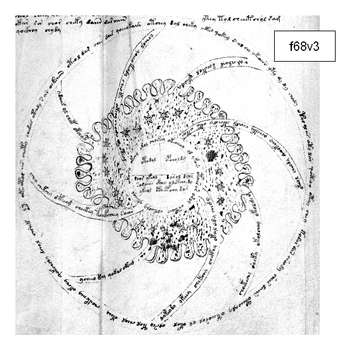
The Latin decipherment Newbold associates with this diagram partially reads:

Vidi stellas in speculo concavo, in cochleae forma agglomeratas…

If my eyeballing of this snippet is correct, it reads: “In a concave mirror, I saw stars formed into the shape of a snail.” (That is, a spiral.) The rest of the passage makes this clear he is talking the Andromeda Galaxy:
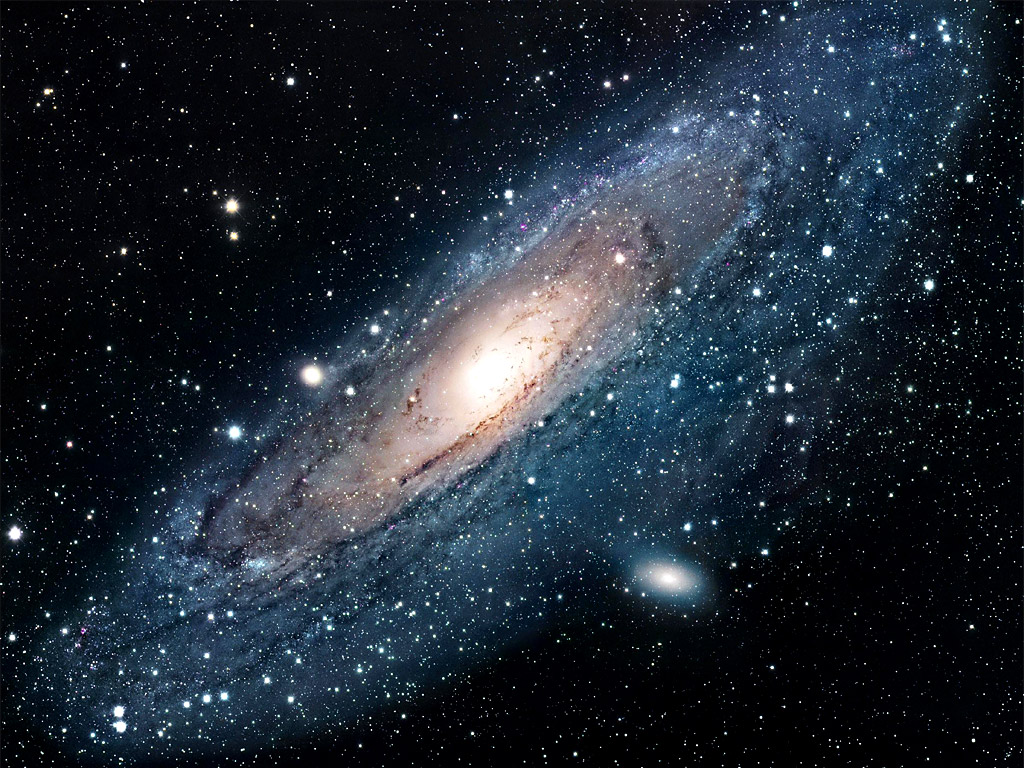
Well, Holy Haleakala, Batman! Newbold pushed the history of the telescope back hundreds of years.

But, wait, there’s more! Bacon also invented the compound microscope, as evidenced by the images of what Newbold interpreted as ova and spermatozoa. (Not to mention the shorthand cipher itself, which could only be seen through a microscope.) The Voynich MS was the most important discovery in the history of science, and scholars generally accepted Newbold’s interpretation. Probably because nobody could understand his process of deciphering the manuscript.

In 1931, following Newbold’s death, John Matthews Manly wrote what should stand as one of the most thorough debunkings in the history of debunking, a spectacular and thorough treatment of Newbold’s assertions. He showed that the encryption that Newbold could not reliably generate text for the recipient. He illustrated that the cipher could achieve and had achieved “results” when applied to texts known not to be written by Bacon, to texts written long before the Voynich MS, and to mistranscriptions of the Voynich manuscript that Newbold used. In Newbold’s decipherments, sometimes the same passage revealed different messages. Manly demolished the content of the messages that Newbold had found to show that they could not square with what was known with the period. Newbold’s assertion defied even the laws of physics. Newbold apparently had simply shrugged off the objection that the Andromeda galaxy could not possibly have changed so radically in the time between the manuscript’s production and the 20th century. Also, he seemed not to worry that the spirals could not be seen by the naked eye even in a modern telescope–our images come from long exposures. It was in every way a thorough and complete trashing of the Newbold interpretation, and it left Newbold’s legacy in tatters. One may consider it a professional courtesy that Manly waited until Newbold had died before publishing his rebuttal.

It also meant that we had not progressed a single jot toward understanding what the heck this manuscript was.

As far as I can tell, the most interesting fabrication of Newbold’s mind was the secondary shorthand cipher. The little tails and swoops and signs that Newbold had found under a microscope were either clearly examples of ink bleeding into the cracks on the surface of the vellum and therefore meaningless, or they disappeared entirely when others looked at them. This strikes me as a close corollary to Lowell’s “discovery” of canals on Mars a few decades earlier, when the astronomer declared that he could see artificial channels on the surface of the Red Planet and spun a rather fanciful story to explain them. Turns out they weren’t there at all, but were artifacts of Lowell’s imagination.

By the way, I strongly recommend the conclusion of the Manly article as perhaps the epitome of the “don’t be a dick” school of skeptical criticism.

In the intervening years, a number of hypotheses have been floated about the content and meaning of the manuscript.In 1943, a bloke named O’Neill announced that he had deciphered the manuscript. In 1944, a botanist, James Feeley, have claimed that New World pepper plants and sunflowers appeared in the manuscript, which would place the manuscript after 1492. But even these botanical identifications are dubious, especially in the light of the vellum’s carbon-dating.

Without a doubt, my favorite “translation” appeared in Science in 1945, and it underlines why specialists in the humanities should be given their due respect. It came from Leonell C. Strong, who said that he had finally, really, actually cracked the code, but because of the current state of war, thought it was an inopportune time to reveal how he had uncovered its cryptological secrets (ahem, yeah). Voynich, Strong claimed, was written by 16th-century astrologer Anthony Askham. Most of the manuscript, he reported, discussed “the effects of plants on physiological processes in health and disease, especially, the diseases of women, and a conception of pre-Harveian generation and parturition” (608).

The cipher translated into something called “Medieval English,” which reads like: “When skuge uf tun’c-bag rip, seo oogon kum sli of se mosure-issue ped-stans sku-bent, stokked kimbo-elbow crawknot.” This passage, he says, is about the birth of a baby: “when the contents of the womb rip, the child comes slyly from the mother-issuing with the leg stance scewed and bent, while the arms, are knotted (above the head) like the legs of a crawfish.” I can’t imagine that anyone with a postgraduate degree in English at the time (Old English and history of English were still generally required graduate courses) did not howl with laughter when they read the “Medieval English.” It looks like it wants to be “Old English”: for instance, the “seo” is a feminine form for “that” and there are some…compound-y words. Unfortunately, it has the letter “k,” not found in Old English (you’d see it Old Norse), and words like “issue” that seem to be from a romance language. And it’s nothing like Middle English either. And what the hell’s up with that apostrophe? Strong further claimed that Ascham knew about antibiotics!

A group of cryptographers waiting to be released from the military after the Second World War spent their free time trying to decipher the sucker. I even found a reference to a report produced by the NSA on the shelves at Emory, but when I went to pull it, the report had mysteriously disappeared. Others have seen it, however, and report that the NSA was unable to crack the cipher. Take that, NSA! (Please don’t hurt me.)

A 2007 analysis of the characters by theoretical physicist Andreas Schinner suggests that the manuscript has been “generated by a stochastic (random) process rather than by encoding of encryption of language.” Damn it.

Nonetheless, crafty science types at the University of Arizona have at least pinned down the age of the vellum (which is slightly different from pinning down the age of the manuscript). The critters that died to make the MS snuffed it in the early 15th century. In the release at physorg.com, the author says that the writing doesn’t “resemble anything written–or read–by human beings.” This statement seems to have lead the imaginative author at ATS to a new hypothesis–aliens wrote it!

On vellum.

In the 15th century.

The poor guy writes, referring to the “galaxy” image above: “I will start with the picture that shocked me the most. To me, this is on par with the Sumerians knowing things they should not have been able to.”

Sigh. Me too, my friend. Me too.

RJB

References:

Kennedy, Gerry and Rob Churchill. The Voynich Manuscript: The Unsolved Riddle of an Extraordinary Book Which Has Defied Interpretation for Centuries. London: Orion, 2005.

Manly, John Matthews. “Roger Bacon and the Voynich MS.” Speculum 6.3 (1931): 345-391.

Schinner, Andreas. “The Voynich Manuscript: Evidence of the Hoax Hypothesis.” Cryptologia 31 (2007): 95-107.

Strong, Leonell C. “Anthony Askham, the Author of the Voynich Manuscript.” Science 101.2633 (15 June 1945): 608-609.

Zimansky, Curt A. “William F. Friedman and the Voynich Manuscript.” Philological Quarterly 49.4 (Oct 1970): 433-443.


National Commission on the Humanities Formed

February 18, 2011

The humanities have a hard time getting respect, if by respect you mean funding. Sure, we’re (often) the ones teaching the basic research, thinking and documentation skills that underpin the rest of a valuable education…blah blah whine. I often think that popular apathy toward the humanities, especially literature and cultural criticism, stems from the topics to which we choose to apply those important, cross-disciplinary skills. That is to say, that students often resent, say, that we are looking at the business culture of the Renaissance or the works of Theodore Dreiser or 17th-century Norwegian mysticism or whatever. Yes, these are the topics that float the boat of the instructor, who has devoted his or her life to the study of these topics. I know that I picked my areas of study, war and literature and extraordinary claims because I’m fascinated about them, but I certainly do not expect my students to love those topics with the myopic, passionate intensity that I devote to them. At the same time, however, I expect them to recognize that the research practices, habits of thought and underlying curiosity I bring to the study of, say, conspiracy theory, has value in all areas of education.

The incessant beating that the humanities seem to get as university budgets shrink fundamentally undermine the mission of the university. We’re not trying to crank out people as effete, feckless and dull as we are. We’re trying to arm our students with the ability to become self-directed, fulfilled, lifelong learners, as well as college students worth bragging about.

A number of muckety-mucks from Research-1 institutions are pooling their brainpower to give the humanities a boost, according to the Chronicle. This is swell and all, but I agree with the first comment that other types of schools need to be represented. I have a feeling that the smart students are the ones who are going to be taking their core courses, including the core humanities courses, at less expensive institutions of higher ed before moving on to the R1s. Their instructors will be a part of the field and should be included.

Thus ends my mid-afternoon proclamation. Perhaps I will see folks tonight at Virtual Drinking Skeptically? http://virtualds.org/ I think Eve will be participating as well.

RJB


Excellent Tribute to an Awesome Soldier

February 17, 2011

In the spirit of my current class, Writing about World War II, I thought I would pass along the following announcement. Early this year, Maj. Dick Winters of the 101st AB died at age 92, I think he was. His story and that of Easy Company was depicted in the Spielberg/Hanks/Ambrose collaboration Band of Brothers. We’ll be watching parts of the series later in the semester.

Well, the cast of Band of Brothers is coming together again to raise money for a monument to Winters in Normandy. They are going to jump out of planes, and donations go toward sponsoring parachutes. If you don’t donate, I presume the cast of Band of Brothers splatters.

http://jumpingforheroes.blogspot.com/

I great, creative, and appropriate fundraiser, I thought. Will they remember to yell, “Curahee!” I wonder?

RJB


The Great Gatsby for NES

February 17, 2011

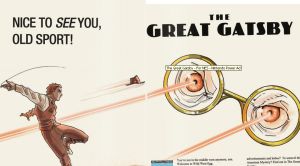
It is, in a word, awesome. You’re Nick and you are looking for Gatsby. The only thing between you and your objective is an army of waiters and flappers. Luckily, you have booze on your side!

http://greatgatsbygame.com/

Love it.

RJB


The Week in Conspiracy: 14 Feb 2011

February 14, 2011

Forget what I said last week. That’s just peanuts compared to how important this week was in the unfolding of global events that will lead to our inevitable doom! Shall we?

  • You can almost hear Philip Jones resisting the urge to type this entire story in capital letters and centered in the middle of his page. Luckily, reason won out: “Google: Zionist Engine of Mind and Genetic Control.”
  • In a sinister turn of events, Long Island Sky Watch, your source for news about the chemtrail menace, has discovered…schmutz in snow! DUM DUM DUMMMMM!
  • From WorldNetDaily comes the warning that Islamists are invading CPAC! Yes, it is the silliest thing ever written, folks.
  • Alex Jones: “Texas hippies: ‘Give us uranium'”:

See?

Conspiracy Theory of the Week:

This week it’s not a conspiracy that caught my fancy so much as a parody of Glenn Beck’s conspiracies. Behold the Glenn Beck Conspiracy Theory Generator!

Also, I would like to thank Glenn Beck for going a conspiracy theory too far with his socialist caliphate conspiracy this week! That cracked me up!

RJB


The books on my nightstand…

February 14, 2011

I like books. Love the things. Have stacks of them. My shelves are lined 2 or 3 rows deep, and they sag under the weight of all the damned books. As you might expect, I often read more than one book at a time. Right now is an especially bad time, as I am working on…I think a half-dozen.

I am currently reading three books about the so-called “science wars,” that is, (certain) postmodernists’ almost New Agey assault on science. This is in preparation for a panel about science and literature I am sitting on in New Jersey this April. I’m excited about this conference because, hey, science and literature! I’ll be talking about the responsibilities, as I see them, of scholars in the humanities when discussing science. That conference will end with a trip to NECSS for me. Yay!

Eve and I have been talking about doing a series of posts on The Da Vinci Code, and so I’ve been reading for that. We decided that in order to write about it, we should each have read the novel as well as Holy Blood, Holy Grail (the alternate history the novel is heavily based on) and a book about topics covered in the novel, which I happened across in a used bookstore a few weeks ago. Before I go to sleep, I’ve been reading encyclopedia entry length essays about various topics in classical, medieval, and Renaissance history that Dan Brown failed to understand. Last night, I was reading about the Merovingians. I was happy to see a Merovingian named Sigebert, because I suspect that his name is etymologically the same as Eve’s last name, Siebert (victory bright). It’s the little things, really, that keep me going.

On top of that, I have started on a Voynich Manuscript kick that I can’t seem to, uh, kick. Gotta scratch that itch. I had not posted to Skeptical Humanities for a few days, and I was looking for something quick and easy to do, and, damn it, I came across someone writing total bollocks about the Voynich Manuscript. I will, of course, have to write about it at some length now, because it is such an interesting, inscrutable object and so easy to completely misunderstand. Georgia Tech, my current academic mothership, does not have an extensive humanities collection, so I was off at Emory’s library this morning, where the boughs sag low under the weight of humanities databases. I gathered a couple of articles for review, including some seminal ones from the 1930s. In the stacks, I found a copy of the original academic “translation,” and were it not for a nagging sense of reality I would have brought it home with me to read. (I already have one book about the manuscript here. And, yes, I am reading that one too.) Emory’s catalog claimed to have a copy of a report by NSA cryptographers about the manuscript, but when I went to the government documents section, there was nothing remotely similar to it to be found on the shelves.

It’s probably just as well, what with the two book projects I picked up.

The first will be a chapter-length contribution to a undergraduate-level collection of criticism about technology in literature. That’s due at the end of the semester. The second is more closely related to the stuff I am doing here. I’m not going to announce it here because it is only just past the “good idea” phase (I’ve only had one meeting about it). The other writing project is the article about TruthCon, which I have been working on tonight.

Tomorrow morning, I take my classes to the University Archives. In the evening, at 5:00, I’ll be screening episodes of The Pacific. Hopefully, I’ll be able to get a little work done in the 5 hours between the end of class and the beginning of the movie. (I think I have committee meetings, however….Dang.)

I love my job. It’s a great gig. I just have almost no time! Hopefully tomorrow night I’ll have a new week in conspiracy up for you. There were some real humdingers this week!

RJB


The Green Knight Code

February 10, 2011

Well, I finished re-reading The Da Vinci Code. Then I drank some beer in an attempt to kill the brain cells where awareness of it is stored, but that failed. Then I read a well-written mystery novel and had a nap, and now I feel a little better.

From the moment of its publication, people have been writing refutations of the “facts” presented in the book, so, at least for the moment, I will confine my comments to the general category of “random stuff that irritated me.” Today’s topic is Sir Gawain and the Green Knight (SGGK), an Arthurian romance from the fourteenth century and one of the glories of the so-called Alliterative Revival (I say “so-called” because it was really more of a survival than a revival). Brown mentions SGGK twice. Both mentions are brief, but annoying.

I’ll deal with the second reference first. In the exciting and suspenseful database-search scene (chapter 95), a computer, having been fed the search terms “knight,” “London,” “Pope” and “tomb” within a 100-word proximity of the terms “grail,” “rose,” “sangreal” or “chalice” (p. 381), spits out the title, “Grail Allegory in Medieval Literature: A Treatise on Sir Gawain and the Green Knight.” As far as the plot is concerned, this result is irrelevant–“Not many mythological green giants buried in London,” as the librarian says (389)–so one has to assume it’s an attempt by the author to tie SGGK to the grail/bloodline of Jesus/sacred feminine fantasy he’s been weaving.

There’s something a bit odd about the title though. Certainly, the poem can be read as an allegory (of the Christian variety),and like many medieval grail stories, it is a quest romance. But it is not a grail romance. There’s no grail: the word isn’t even mentioned. Granted, it is one of the premises of The Da Vinci Code that references to Mary Magdalene and her descendants had to be hidden in allegory (or “symbology”), but it must be hidden very well indeed in SGGK. Not only is there no mention of Mary Magdalene or her bloodline, there is no reference to the grail which symbolizes the bloodline. If the grail exists in the poem at all, it is through allegory. So something (I have no idea what) represents the grail allegorically, and the grail allegorically represents Mary’s womb. The Gawain-poet was one sneaky, clever dude.

In the first reference to SGGK, Brown makes the connection between the poem and Mary Magdalene even more explicit.  Langdon tells Sophie,

“The Grail story is everywhere, but it is hidden. When the Church outlawed speaking of the shunned Mary Magdalene, her story and importance had to be passed on through more discreet channels…channels that supported metaphor and symbolism.” [ellipsis in original]

“Of course. The arts.”

“….Some of today’s most enduring art, literature, and music secretly tell the history of Mary Magdalene and Jesus.”

Langdon quickly told her about works by Da Vinci, Botticelli, Poussin, Bernini, Mozart, and Victor Hugo that all whispered of the quest to restore the banished sacred feminine. Enduring legends like Sir Gawain and the Green Knight, King Arthur, and Sleeping Beauty were Grail allegories….(p. 281)

So SGGK definitely has something to do with the grail, Mary and Jesus and the sacred feminine. It’s hard to see what, though. Let’s take a look at the sacred feminine’s representatives in the poem. There’s Morgan le Fay. In some modern Arthurian tales, such as Marion Zimmer Bradley’s The Mists of Avalon, Morgan is presented in a favorable light. SGGK, however, is not a modern tale. When she first appears, she is described as old and unattractive: her eyes are bleary, her skin wrinkled, her chin black, her body short and thick and her buttocks swollen and broad (ll. 947-969). When her identity is revealed, she is called a “goddess,” (l. 2452), but she seems more like a typical sorceress. She has transformed an ordinary knight into the Green Knight and sent him to Arthur’s court in order to frighten Guinevere, hopefully to death.

The other prominent woman in the poem is the wife of the Green Knight (or Sir Bertilak as he’s known when not enchanted). On her husband’s orders (and according to Morgan’s plans, presumably) she visits Gawain in his room on three successive mornings and attempts to seduce him. When the seduction fails, she tempts him to accept a green girdle which will supposedly protect him from harm. Gawain and Bertilak have agreed to exchange whatever they acquire during Gawain’s stay (Bertilak spends each day out hunting a different animal). Gawain fails to give the girdle to Bertilak. As a punishment for this minor failing, the Green Knight gives Gawain a slight nick with his axe (rather than beheading him or seriously injuring him as he would have done if Gawain had succumbed to the seduction).

It’s not really looking very good for the sacred feminine–one hag and one seductress. Gawain’s speech in which he gives examples of men who have been brought to sorrow through the wiles of women doesn’t help the case much either (he mentions Adam, Solomon, Samson and David). He concludes that men would be better off if they could love women well, but not believe them (ll. 2407-2428).

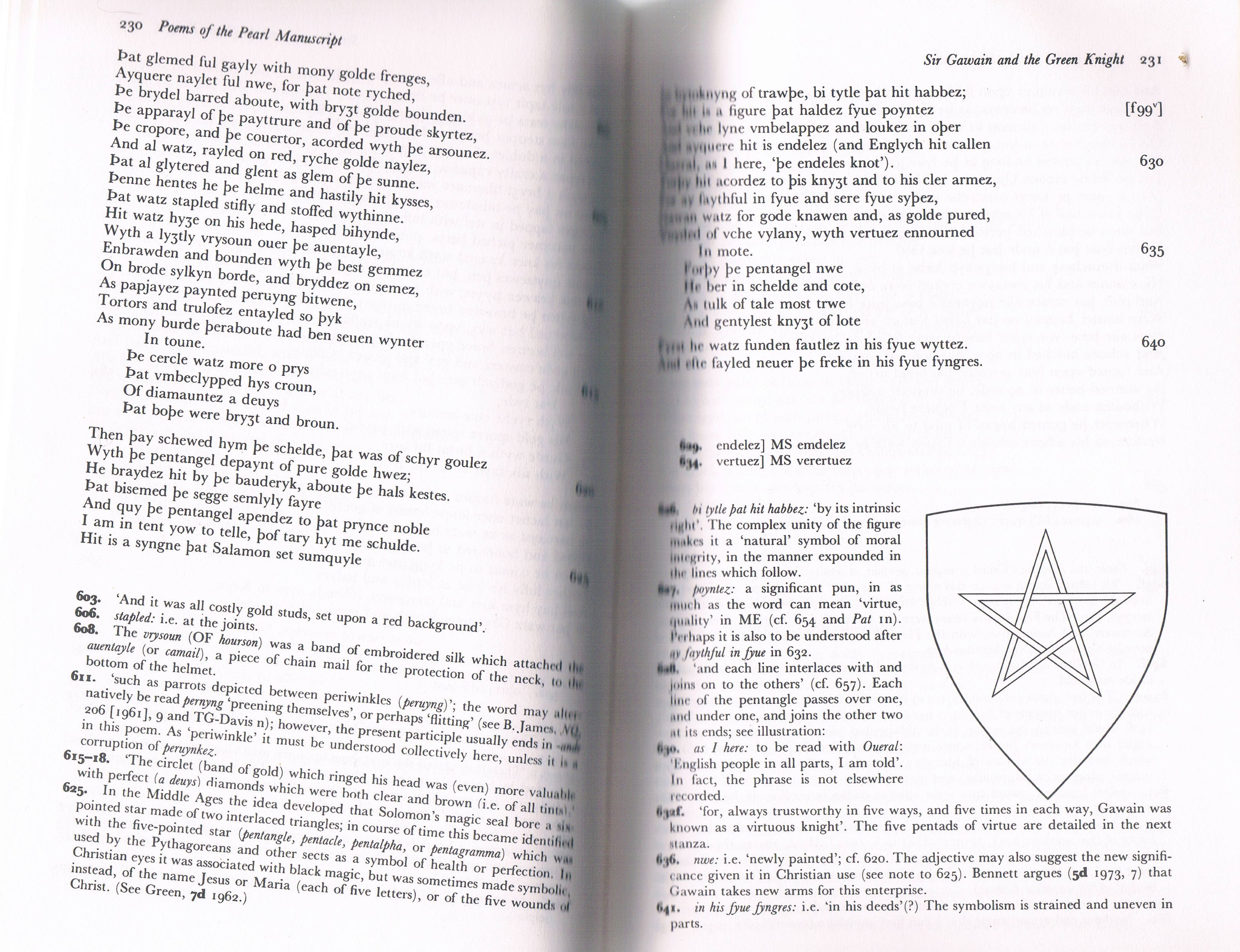
To be fair though, there is one unambiguously positive female in SGGK. And her name is Mary. And she is associated with the pentagram, which, as all readers of The Da Vinci Code know, represents Venus and the sacred feminine. Gawain bears a pentangle on his shield. He wears the pentangle because, as an endless knot, it represents the perfection he aspires to as a knight. The five points also have symbolic significance. Gawain is said to be faultless in his five senses; he never fails with his five fingers; he puts his trust in the five wounds of Christ; in battle, he receives strength from contemplating the five joys that the Virgin Mary had in her son; he has five virtues (generosity, fellowship, purity, courtesy and pity). He is so devoted to the Virgin Mary that he has her picture painted on the inside of his shield (ll. 619-670).

So, there you go: SGGK does encourage devotion to Mary. Wait, that’s the wrong Mary, isn’t it? As with his references to the Holy Grail and the bloodline of Jesus, the Gawain-poet kept his theological unorthodoxy very well hidden indeed.

ES

References:

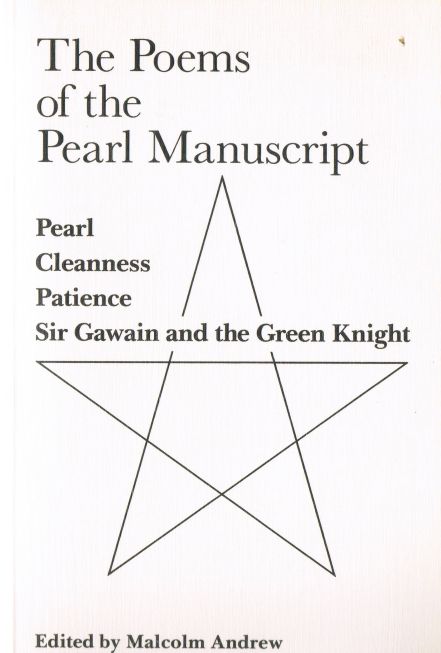
Andrew, Malcom and Ronald Waldron, eds. The Poems of the Pearl Manuscript. Rev. ed. Exeter Medieval English Texts and Studies. Exeter: U of Exeter Press, 1987. My apologies to Ronald Waldron, whose name got cut off the scan above.

Brown, Dan. The Da Vinci Code. New York: Anchor-Random, 2003.


Shakespeare and Skeptoid

February 8, 2011

In a recent episode of Skeptoid, Brian Dunning answered questions from students around the world. One student, Stephen from California, asked Dunning’s opinion about the Shakespeare authorship question. Briefly, Dunning concludes that “all available evidence supports Shakespeare as a real living author, and the only support for the opposing viewpoint is supposition.” He also notes that the authorship question “may be worthy of its own complete Skeptoid episode.”

I agree with Dunning’s conclusions, and think Shakespeare does warrant an episode to himself. If Dunning does choose to devote an episode to the authorship question, however, I hope he does better research and uses better sources than he did in this episode. The two sources he cites in this episode are from those two great literary heavyweights, Scientific American and physorg.com*. Why must skeptics appeal to science even when discussing the humanities? The Scientific American article was written by Michael Shermer, who has a Bachelor’s degree in Psychology/Biology, a Master’s in Experimental Psychology and a Ph.D. in the History of Science. He also seems to want to make history into a science: “But reasonable doubt should not cost an author his claim, at least not if we treat history as a science instead of as a legal debate.” He was responding to former Supreme Court Justice John Paul Stevens’ use of legalese in making his argument for the Earl of Oxford. But history is neither of these: it is its own field with its own methods and standards for scholarship. It may be messier than science and more open to interpretation, but that is largely unavoidable. It can’t be fixed by trying to make it into a science.

In introducing the physorg.com article, Dunning says:

Perhaps the most compelling reason to accept Shakespeare as the real author is his unique and recognizable writing style, which does not match that of the authors to which his works have been attributed by doubters. And this is not merely an unreliable, subjective opinion: It’s backed by hard science.

Again there is a suggestion that the humanities are only trustworthy when science is involved. Of course science can be a useful tool in literary studies. In this case, literary scholars used computational stylistics to detect Shakespeare’s hand in various works. That is to say, they used a computer program to compare Shakespeare’s diction, syntax, etc. to other writers from the period. For instance, a scholar would look at a work whose authorship is disputed and use the computer program to compare it to works by many different authors. The frequency with which certain typical features of a certain author appear in the disputed work suggests a likely attribution.

Obviously, a computer can sift through a huge amount of data at great speed. Still, it builds on work done for years by literary scholars who have painstakingly studied the language and usage of Shakespeare and his contemporaries. In addition, it is wildly optimistic to assume that such computer analyses will actually settle many questions. Someone else is bound to say, “Oh yeah, well my computer program said Shakespeare wrote this unattributed play.” Indeed, some of the conclusions drawn by the group headed by Arthur F. Kinney, director of the Massachusetts Center for Renaissance Studies at UMass Amherst, have already been questioned.  Kinney, for example, claims in the article cited by Dunning: “I have now proven that Shakespeare is part-author of Arden of Faversham. They guessed that in the 19th century but no one would believe it in the 20th century. Now we know.” He makes this argument at greater length in Shakespeare, Computers and the Mystery of Authorship. Sir Brian Vickers, however, has argued, based on his own computer analysis of the play, that Thomas Kyd is the sole author.**

Based on the thumbnail descriptions of studies in the physorg.com article, some of the conclusions just seem…odd. For instance, in regard to the play Sir Thomas More, we learn that

Timothy Watt at last proved that Hand D in the manuscript of a play called The Book of Sir Thomas More is Shakespeare’s own handwriting and so extends examples of his writing past the seven signatures which alone have been attributed to him.

In the first place, there are only six signatures that are more or less universally regarded as genuinely Shakespearean (I assume the seventh refers to a copy of William Lambarde’s Archaionomia. If that signature were considered genuine, it would prove that Shakespeare did indeed own at least one book. Although a number of eminent scholars have accepted the signature as likely genuine, the attribution is still in question). Moreover, how could a computer program that evaluates authors’ styles conclude that the passage was in Shakespeare’s handwriting? It seems, based on the article in Computers, Shakespeare and the Mystery of Authorship, that Watt concluded that Shakespeare was the author of the Hand D passage. At the end of the article, Watt argues that “[s]ince the nature of the manuscript indicates an author at work–correcting and amending along the way–rather than a scribe making a fair copy,” if Shakespeare is the author of the passage, it logically must be in his hand. In other words, the handwriting isn’t being used as evidence of Shakespeare’s authorship; Shakespeare’s authorship is used as evidence of his handwriting. At any rate, the study has not quelled questions about Sir Thomas More.

Another assertion in the physorg.com article concerns one of Shakespeare’s putative sources:

Kevin Petersen noted that although people think Shakespeare was influenced by Montaigne’s skepticism in his work from Richard II through Hamlet to The Tempest, and was the source of his skepticism in parts of many of his plays, in fact there is no indication of any Montaigne – in French or in the popular English translation.

This article did not make it into the book, so it is hard to judge. It is possible that the brief description misrepresents the argument, but, as stated, it just doesn’t make sense. In the first place, while many of Montaigne’s essays have been suggested as sources for Shakespeare, very few of them are widely accepted. Many of the most compelling arguments for Montaigne’s influence on Shakespeare concern The Tempest. In 1781, Edward Cappel suggested that Gonzalo’s “commonwealth” speech in Act 2, scene 1 of The Tempest very closely resembles a passage in John Florio’s 1603 translation of Montaigne’s “Of the Cannibals:”

I’ th’ commonwealth I would, by contraries,
Execute all things, for no kind of traffic
Would I admit; no name of magistrate;
Letters should not be known; riches, poverty,
And use of service, none; contract, succession,
Bourn, bound of land, tilth, vineyard, none;
No use of metal, corn or wine, or oil;
No occupation, all men idle, all;
And women too, but innocent and pure;
No sovereignty–
Seb.                                       Yet he would be king on’t.
Ant.  The latter end of his commonwealth forgets the beginning.
Gon.  All things in common nature should produce
Without sweat or endeavour. Treason, felony,
Sword, pike, knife, gun, or need of any engine
Would I not have; but nature should bring forth
Of it own kind all foison, all abundance,
To feed my innocent people.
Seb.  No marrying ‘mong his subjects?
Ant.  None, man, all idle–whores and knaves.
Gon.  I would with such perfection govern, sir,
T’ excel the golden age.  (2.1.145-66)

Here is Montaigne’s description of life among the Brazilian cannibals:

It is a nation…that hath no kind of traffic, no knowledge of letters, no intelligence of numbers, no name of magistrate nor of politic superiority, no use of service, of riches or of poverty, no contracts, no successions, no dividences, no occupation but idle, no respect of kindred but common, no apparel but natural, no manuring of lands, no use of wine, corn or metal. The very words that import lying, falsehood, treason, dissimulation, covetousness, envy, detraction, and pardon were never heard of amongst them. (“Of the Cannibals,” Bk 1, ch. 30 of The Essays by Michel de Montaigne, tr. by John Florio. Included in Orgel’s ed. of The Tempest, pp. 230-31)

No one claims that Shakespeare got his ideas for Gonzalo’s commonwealth from Montaigne–they were not original to Montaigne. It is the way those ideas are expressed: primarily in negatives. Neither Montaigne nor Shakespeare describes his Utopia in terms of what it is or what it has, but rather of what it is not and what it doesn’t have. In addition, many of the details are the same. And you do not need a computer program to point out the verbal parallels. Indeed, if a computer were to tell me that the verbal parallels did not exist, I’m afraid I would have to disbelieve it.

Computational stylistics is a useful tool, but it is naive to think that science can definitively answer questions that literary studies have failed to answer.  It can lend credence to arguments that Shakespeare had a hand in a particular work (or that a collaborator had a hand in a work generally attributed to Shakespeare alone), and it can question other attributions. It is less useful in the argument that Shakespeare wrote the works attributed to him. A particular disputed work, such as Arden of Faversham or Sir Thomas More, can be compared to Shakespeare’s acknowledged works, but when the entire corpus is disputed, to what can we compare it? One of the anti-Shakespeareans’ main arguments is that we have no works that can be definitively attributed to Shakespeare (this is not true, of course, but that’s the argument). Admittedly, we can compare “Shakespeare’s” works to those by Oxford, Bacon and Marlowe, but, with the exception of Marlowe, none of the main candidates wrote in the genres for which Shakespeare is known, which makes comparison more difficult. Not impossible, of course. Many idiosyncrasies are likely to be the same, regardless if the poet is writing drama or lyric poetry, but it’s certainly not going to be good enough to satisfy Oxfordians (not that anything is).

ES

*This article is taken word for word from a press release from the University of Massachusetts at Amherst.

**I have not yet read this article (I have ordered it from Inter-Library Loan), so I am basing my interpretation of it on second-hand accounts.

Further Reading:

Craig, Hugh and Arthur F. Kinney, eds. Shakespeare, Computers and the Mystery of Authorship. Cambridge UP, 2009.

Hodgen, Margaret. “Montaigne and Shakespeare Again,” Huntington Library Quarterly 16 (1952-53): 23-42.

Montaigne, Michel de. “Of the Cannibals.” The Essays. Tr. John Florio. 1603. Included in Orgel’s ed. of The Tempest, pp. 227-238).

Paster, Gail Kern. “Montaigne, Dido, and The Tempest: ‘How Came that Widow in?’” Shakespeare Quarterly 35 (1984): 91-94.

Prosser, Elaine. “Shakespeare, Montaigne, and the Rarer Action,” Shakespeare Studies 1 (1965): 261-64.

Shakespeare, William. The Tempest. Ed. Stephen Orgel. Oxford World’s Classics. Oxford UP, 1987.

Vickers, Brian. “Thomas Kyd, Secret Sharer.” Times Literary Supplement 18 Apr. 2008: 13-15.


10:23 campaign appears on NPR

February 8, 2011

Glad to see it! Sorry I missed it. But this weekend I came across something that is not even homeopathy. You’ll hear about it.  Teehee.

RJB


Favorite souvenir from the TruthCon

February 6, 2011

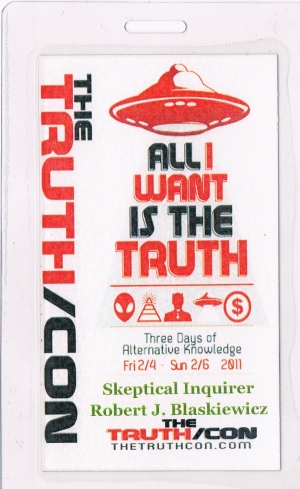
I can almost guarantee you that none of the other conferences I’ll attend this year will have as nifty a badge!

RJB