Virtual Skeptics, Episode 31 (20 March 2013)

March 22, 2013

This week on the Virtual Skeptics

  • Bob sacrifices Tim to the Illuminati for the success of the show;
  • Eve asks, “Got penis?”;
  • Sharon is mad Bob took her story so she is going to go watch television;
  • and Tim wants to see your papers – including your cash.

This Week’s Panel

  • Bob Blaskiewicz – CSI’s Conspiracy Guy web columnist, blogger for Skeptical Humanities and Swift Blog contributor
  • Eve Siebert – Editor and blogger at Skeptical Humanities and contributor to Skepticality
  • Sharon Hill – Editor of Doubtful News and author of the CSI’s Sounds Sciencey web column
  • Tim Farley – JREF fellow and creator of What’s the Harm.net and the Skeptical Software Tools blog and also contributor to Skepticality.

Bob’s links:

Eve’s links:

Other sources:

  • Ivan Crozier, “Making Up Koro: Multiplicity, Psychiatry, Culture, and Penis-Shrinking Anxieties,” Journal of the History of Medicine and Allied Sciences 67.1 (2012): 36-70.
  • Johan J. Mattelaer and Wolfgang Jilek, “Koro: The Psychological Disappearance of the Penis,” Journal of Sexual Medicine 4 (2007): 1509-1515.
  • Moira Smith. “The Flying Phallus and the Laughing Inquisitor: Penis Theft in Malleus Maleficarum,” Journal of Folklore Research 39.1 (2002): 85-117.

Sharon’s links:

Tim’s links:

Brian’s Robot links:

Announcements:

The Virtual Skeptics is an independent production of Doubtful News, WhatsTheHarm.net, Skeptical Humanities, and Brian Gregory. Our logo was designed by Sara Mayhew at SaraMayhew.com. Our theme music is by Tremor and is used with permission.


A moment for me…

March 22, 2013

I used to blog at another site under a pen name. It was a great way to keep a daily tally of my exploits, and if I did not get around to my nightly post, I would feel guilty.

Not so much these days.

I only sort of miss the frantic bursts of commentary that I used to produce. The best thing about becoming a blogger was how it helped me snap a longstanding bout of writers block so that I could finish my Ph.D. Establishing a routine was essential to that. Now that I work primarily on themed projects, doing similar things here and on Skepticality, the Burzynski stuff, and at CSI on conspiracy theory (new article on Jesuits coming soon!), education stuff at the JREF Swift blog, well, the Virtual Skeptics is the one place where I get to do a little bit of everything, a new short little essay every week about whatever catches my fancy. But I don’t get to go off on my Wagnerian rants like I used to. It’s probably for the best.

But I’m tired. At this point, I essentially have two full time jobs, and only one pays. The thought of turning away from either of them hasn’t occurred to me.

So, what’s next? Well, I have NECSS coming up in a few weeks. That’s going to be a great long weekend. I went to the conference two years ago, and had a great time. This time around, I’m going to be participating in a workshop about the joys of multidisciplinary skepticism.  The cool thing about speaking is casually bumping into your heroes in the green room. I am looking forward to seeing a couple of British skeptics who will be speaking who I have never met or seen. I have so many books to get signed.

After that, well, the next big thing that I’ll be doing is TAM. This year, I’m involved in two events, a workshop and a thingy on the main stage. That’s very, very exciting, of course. There was a point way back in the day when I sort of had TAM in my mind as a long-term career goal. This is my second one, so I’m pleased as punch.

Ah, well. It’s late. 2:00 AM. Lots to do tomorrow too.

RJB


Response to the release of Burzynski 2, Havanna Nights

March 14, 2013

On this week’s episode of the Virtual Skeptics, I replied to what was learned at the premiere of the new Burzynski movie. The text of my segment follows the episode.

This week, the new Burzynski movie premiered in San Luis Obispo, California. We largely knew what was going to be in the movie since a couple of trailers had been released, the patients who appeared had talked about the filming, and there was a sort of credulous review had appeared a few days ahead of time and I believe the director may have mentioned it on a PBS fundraising specual a few days earlier. So we had a pretty good idea of what our proxies should be looking for. We really wanted to see if certain people who had been filmed, like Amelia Saunders or Hannah Bradley appeared and especially what was said about them. We wanted lists of people who appeared, to see if we might be able to put together who said what. Most of these people’s stories are well known, and we doubted there would be anything new. Also our people took down key quotes that struck them as important, like “skeptics are hiding behind their BS free speech.”

This is my takeaway, after talking to the people who I know were there. We are wiggly little scumbags who are hateful and slimy. We ridicule the desperate and dying. Some of us are paid by big pharma. Others are deluded and think that we are doing good but are being misled. But make no mistake–and this was hammered home to me by everyone I talked to–we are to them pure evil.

One of my big concerns going into the movie was how I was going to be portrayed and whether or not I was going to receive death threats. That my family was going to receive death threats or that I was going to be harassed at work. I feared this because of a letter that, as you know, was sent to my employer promising that I would be featuring prominently in the Burzynski movie. Nobody asked me for my opinion or to give a statement or to respond or clarify; they went straight to my boss. Fine. I’ve had wacky people contact my employers in the past. I fully expect it to happen in the future. Clips of this show, episode 13, were included in the movie. This is the episode that was quoted in the letter on my university chancellor.

As it turned out, our faces were blurred, our names obscured, and our voices were altered. No real identifying information. Which, you know, I’m OK with. However, there are some problems here. 1) What was served by contacting my employer other than to scare me? How dare the filmmakers say that we’re terrorizing people when they are doing just that. 2) Someone asked me about a quote, “we’re coming for you, you little polish sausage you.” The thing is, the quote is patently absurd if my name is shown, something that everyone here jumped on, like I hoped you would during the original episode. That joking was not conveyed to the skeptics in the theater audience. This might be due to the fact that not only were we given scary voices but also that apparently every time we appeared scary music played in the background.

It’s clear that the reason I’m in the movie in the capacity I am, as chief bad guy, is because I’m on video talking about the Burzynski Clinic. And this leads me to another thing that Brian mentioned. That when we kind of appeared on the screen, they put up a title card type thing that said, “skeptical teleconference” or something like that, and that a woman at the end of the show, wanted to know, “How did you get this footage of these scheming skeptics?” Um….we publicize our show constantly? If you can’t have real clandestine drama, you might as well make it up. My favorite bit was a tweet that I got around this time where a new account who followed like 10 people I do said, “It’s really interesting when you talk about Burzynski on the show. Could you do that more?” Really, Eric? Do you think I’m two years old?

I am interested in ultimately seeing it. I’m asking that the producer send a review copy to the James Randi Educational Foundation so a proper review can be done.

Or you could screen it in Minneapolis. Next week works for me, Eric, if you’re free.

Another thing. News broke on the 7th of January in skeptical circles that the FDA was conducting an audit of the clinic. A patient in the movie apparently said that she had been receiving a brain scan when she heard that the Clinic was being investigated again. This means that material was added to the movie after the 7th of January. The Burzynski Birthday Fundraiser was announced by PZ Myers on the 6th. So there was more than enough time for the filmmaker to clarify exactly what was meant in that episode when I said that there was going to be a little present on his birthday. Skeptics evilly, and with malice aforethought, raised $14.5K dollars for St. Jude’s. We then challenged the Clinic to match us, and it didn’t. That the director did not mention this fact seems to me inexcusable, making us look like we are big meanos who hate babies and morality. This demonization is unfair and at the expense of the truth–if you ever read theotherburzynskipatientgroup blog you know whose side I’m on. If he used the video clip of us that he cited in his letter to my employer, about us bringing a “present” to Burzynski and knowing what it actually was without clarifying it, well, that just speaks to his regard for completeness and accuracy. No messiah should need such fudging. It suggests to me that he’s forcing evidence into a pre-existing narrative of persecution.

References:

PZ Myer’s announcement of the Houston Cancer Quack
http://scienceblogs.com/pharyngula/2013/01/06/lets-make-houston-cancer-quack-burzynski-pay/

The Virtual Skeptics episode that appears in the movie:
http://www.youtube.com/watch?v=IK-yF8w6nLo

RJB


Virtual Skeptics (Show 29, 6 March 2012)

March 6, 2013

RJB


Burzynski Movie to Air on Public Television? Get a physician on during pledge breaks!

March 3, 2013

On March 7th, PBS station CBT12 in Colorado is going to air the hagiographic Burzynski: Cancer is Big Business. CBT12 is notorious for using conspiracy theories to raise money at pledge time. It’s a cheap tactic. Last year, they aired the AE911 Truth movie during pledge week. It’s lucrative. Most conspiracy theorists, while they openly distrust mainstream media outlets, seem to yearn for the respectability that comes from being broadcast on them. And when their stories appear on CPT12, and I say this because the station continues to push this garbage, it seems that the conspiracy theorists reward the station.

I have come to expect the exploitation of ignorance on the part of CPT12. When it’s a truther movie, well, it makes PBS look bad, but that’s about it. But this movie has led so many people into Burzynski’s clutches, gotten so many patients entangled in his unpublishable trials and quack “gene therapy”, that I can say with a high degree of confidence that CPT12 is BANKING ON ITS VIEWERS’ LIVES.

Worse, at the breaks in the film, Eric Merola, the guy who contacted my employer in December, will be appearing alongside a spokesperson for the clinic to talk to the station’s fundraising director. This is unacceptable. Nonetheless, CPT12 has taken down misleading alt med propaganda before, so it is worth taking a strong stand and lobbying that they follow precedent and take this down.

Most importantly, one should contact Colorado state legislators who are also cancer survivors and alert them to this upcoming travesty, including state senator and esophageal cancer survivor Rollie Heath (rollie.heath.senate@state.co.us(303) 866-4872, fax: (303) 866-4543) and state representative and breast cancer survivor Dianne Primavera (dianne.primavera.house@state.co.us(303)-866-4667).

You might also contact the station, and demand that they either change their schedule or have an independent physician appear with Burzynski’s toadies. You know, because it’s a medical issue and a movie director and PR guy can’t add anything meaningful to the discussion.

Shari Bernson (she’s the host between breaks)
Director of Development
sbernson@cpt12.org

Willard “Wick” D. Rowland, Jr
President & CEO
wrowland@cpt12.org

Station:  (303) 296-1212
Toll-Free:  1-800-727-8812
Fax:  (303) 296-6650

Also, please register a complaint with the PBS ombudsman about the movie being aired at all and this weird little station’s repeated tarnishing of the name of public broadcasting:

http://www.pbs.org/ombudsman/feedback.html

We are making only reasonable, responsible requests. PLEASE follow through and contact the station and the PBS ombudsman.


Robert Steven Thomas’s Intelligent Intervention

February 26, 2013

Here is a transcript of my segment on this week’s Skepticality:

A (Sort of) Review of Intelligent Intervention by Robert Steven Thomas

Several months ago, at the Paradigm Symposium, a conference in Minneapolis devoted to the ancient alien hypothesis, during a question and answer session following an especially credulous presentation about Velikovski, I identified myself in front of the crowd as a skeptic with a capital S. After the session, a gentleman came up to me and seemed very interested in talking. His name was Robert Steven Thomas, and he the author of the book Intelligent Intervention: The Missing Link in the History of Human Evolution. After a cordial conversation, he got up to leave. We shook hands and he left the conference hall. A few minutes later, one of conference organizers who had issued me a press pass, came over and handed me a copy of Robert’s book. On the inside cover, it read:

“To Bob. A pleasure to have met you. Please read and the “have at it”! I’d be honored to hear your response. Warm regards, RS Thomas.”

I appreciate the gesture though, to be honest, I’ve been very busy in the last few months, so it has taken me a while to get around to looking through the book. And even then, you know, I’ve done most of my public work examining conspiracy theories. An ancient alien book is a little outside of the scope of my expertise, though I do find the idea of ancient aliens fascinating, if vanishingly improbable.

The book is written around the premise that the mainstream and academic understanding of human history is hopelessly flawed. What Thomas calls the “history establishment” is governed by dogmatism, he argues, and that it “monitors and controls what is commonly taught as history” (15). He uses this, I believe, as an explanation of why one does not see the ancient alien hypothesis in reputable journals, as he launches into a condemnation of the peer-review process. He describes peer-review as a subjective process, based on cronyism, run by people with a vested interest in maintaining the status quo. “As a result,” he says:

there have been valuable discoveries made in the last half-century that profoundly change history which, regrettably, have not gotten the proper attention and focus they deserve or seen publication in scientific journals because of the inequities in the peer review process. In the majority cases, the personal interest and ambitions of a few select individuals stand in the way of the open scientific discourse and dialog with which they have been called upon to champion and foster. (16-17)

He holds out Heinrich Schliemann, who, the story goes, used a copy of Homer’s Iliad as a guide to find the location of Priam’s Troy in 1870, as an example of an outsider defying the establishment and making great finds on his own. But he seems unaware that there are some real problems with Schliemann’s account of the discovery of Troy. Not the least being that the site he eventually dug at was originally identified as a possible candidate for the location of Troy in 1822—nearly 50 years before Schliemann’s find, that an amateur dig specifically looking for evidence of Troy had been ongoing at the site for seven years by the time Schliemann arrived, that the amateur archaeologist leading those exploratory digs, Frank Calvert, suggested to Schliemann that he poke around in the Mound of Haslarik, that of the several layers of debris found at the site Schliemann misidentified the one that is now thought to be Agamemnon or Priam’s Troy, that in his enthusiasm, Schliemann destroyed much of Priam’s Troy, that the hoard of so-called “Priam’s Gold” that was uncovered did not date from the Early Bronze Age, or that Schliemann privately absconded with the gold artifacts that he found there. Even if Schliemann’s account of the discovery were true, that merely interpreting the Iliad literally led him to the site of Troy, it does not follow that anything else that happens in the Iliad literally happened. Heck, even if he read the Iliad like a treasure map and found Troy, it doesn’t even mean that the Iliad is a good treasure map. Schliemann may have simply gotten incredibly lucky.

Personally, I feel for alternative knowledge scholars, and I suspect that it is immensely frustrating to find their work unrecognized. So, in the spirit of reciprocity for Thomas’s thoughtful gift, I feel I should offer back some advice, three points, about how to adapt alternative messages and methods so that they are more likely to receive a hearing and consideration from academics.

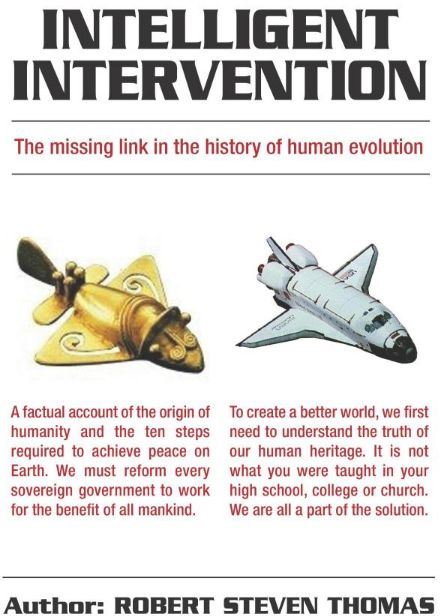
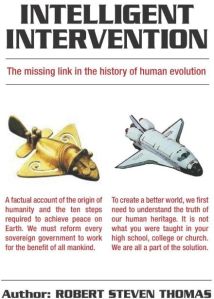
1) First and above all, specialize. A characteristic of ancient alien theorizing is to draw on a vast numbers of disparate and far-flung cultures, finding a few apparent similarities, and positing a common context for those similarities. But in creating a new context for archeological and historical finds, their analyses often fail to benefit from the explanatory power of the immediate context of historical finds. For instance, take the image on Thomas’s cover, a space shuttle juxtaposed with a gold bit of jewelry from the Museo de Oro in Bogota:
Thomas

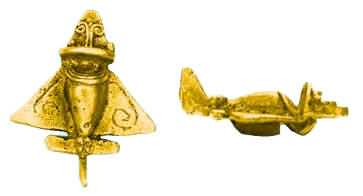
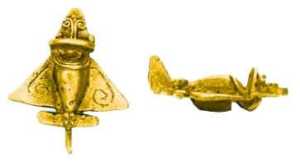
This juxtaposition suggests that objects with vastly different contexts share some sort of function. In fact, even the similarities are a matter of perspective. As you can see below, a profile shot of the jewelry shows that it is decidedly un-shuttle-like.
sar_7gl2

But when you understand that this bit of jewelry was found among a collection of stylized bugs, lizards and birds, none of which is out of keeping for jewelry of the time, suddenly the ancient alien explanation vanishes. It’s not actually an anomaly. A specialized understanding of local context of historical finds is crucial to generating credible hypothesis. As it stands, alternative scholars know a little bit about a lot, but not much about anything in particular.

2) Cite your sources in the text. When I teach research and writing classes, I describe footnotes and bibliographies as, in part, a courtesy to the interested reader. If someone, say a peer-reviewer, is genuinely interested in following up on a point that you have made, we need to know exactly where that came from, and it is your job as an author to at all points to show us all of your work. Depending on how you do it, it may be clunky and distracting, and god knows that it’s a huge pain in the neck to create a good bibliography or index if your research method does not anticipate it, but it is worth it to the reader.  When reading Intelligent Intervention, for instance, when Thomas says that an alternative understanding of history is “well-established” I want to know WHO SAID THAT so I can follow up on it. The bib at the back of each chapter is just not specific enough to be useful. When you say that the Indian Vedas say something about a spaceship, I want to know which line in which translation you are using, and I want to know now. Without citation, everything becomes as unhelpful as a bare assertion. Reverse engineering an author’s research is not a reader’s job.

3) Maintain civility. This should go without saying, but I’ve seen so many alternative knowledge authors display such vitriolic contempt for mainstream scholarship that perhaps it is no wonder that they have so little understanding of what it actually says and how they derived their conclusions. Scholarship is not a series of ex cathedra pronouncements about truth, which are, ironically, exactly what unsourced research is. Take, for instance, the opening of the fourth chapter of Intelligent Intervention, “Collective Memories,” which describes as “categorically incompetent” the dismissal of the Great Deluge when “almost every one of the world’s cultures, though scattered around the globe and separated by millennia and vast oceans, all share stories of these same ancient recollections.” Recollections of floods are to be expected all over the world because people all over the world need access to fresh water, which means rivers, which means floods, which means flood stories. An understanding about how orally transmitted stories tend to amplify memorable aspects of their stories at the expense of unremarkable content, easily explains how flood stories of global deluges are so common—the story itself is more memorable. But dismissing the vast amount of research about this process, indeed failing to display any awareness of this literature—is often why such assertions are dismissed. It’s not from ignorance, as alternative theorists suggest, it’s out of genuine expertise. Don’t ever suspect that the other side will ever take you seriously if you start out with “they are incompetent.” You might try, “I think that they are wrong,” then show you understand their argument, and then point out the flaws.

Like I said, I appreciated Thomas’s gift, and it’s an interesting look into alternative knowledge culture. But no matter how good their work is, alternative scholars will remain isolated from mainstream consideration if they don’t address these oversights.

RJB


Bob and Eve appearing at TAM 2013

February 19, 2013

Yesterday, the James Randi Educational Foundation released the lineup for this year’s The Amaz!ng Meeting (theme: “Fighting the Fakers”) and Eve and I were honored to be announced as presenters. The speakers are truly spectacular, and I keep going back to remind myself how totally awesome it’s going to be. The keynote speaker will be Susan Jacoby, an excellent choice. It will be hosted again this year by George Hrab.

The current lineup includes:

  • Dan Ariely
  • Susan Blackmore
  • Russell Blackford
  • Elisabeth Cornwell
  • Jerry Coyne
  • Barbara Drescher
  • Reginald Finley
  • David Gorski
  • D. J. Grothe
  • Susan Haack
  • Harriet Hall
  • Sharon Hill
  • Marty Klein
  • Max Maven
  • Sara E. Mayhew
  • Steve Novella
  • Edwina Rogers
  • Massimo Pigliucci
  • Massimo Polidoro
  • Cara Santa Maria
  • Joe Schwarcz
  • Michael Shermer
  • Karen Stollznow
  • Jamy Ian Swiss
  • Banachek
  • Joshie Berger
  • Evan Bernstein
  • Bob Blaskiewicz
  • Bryan & Baxter
  • Chip Denman
  • Tim Farley
  • Shane Greenup
  • Miranda Celeste Hale
  • Kyle Hill
  • Daniel Loxton
  • Maria Myrback
  • Bob Novella
  • Jay Novella
  • Penn & Teller
  • Don Prothero
  • Stuart J. Robbins
  • Paul Provenza
  • Todd Robbins
  • Richard Saunders
  • Eve Siebert
  • Nakul Shenoy
  • Brian Thompson
  • Brent Weedman

The sheer number of books I’ll need to bring to get signed will take up most of my luggage space. And I’m FINALLY going to get to meet Daniel Loxton, fer crying out loud.

You will notice a number of the Virtual Skeptics on the program, because we are pretty much a year-round self-contained TAM party. As far as my contribution to the program, as I understand it, I will be participating in two events. The first will be a workshop for educators called “Skepticism Across the Curriculum” on Thursday morning (with Eve). The second will likely be a main stage event (possibly with David Gorski et al.) about fighting quacks, which is in keeping with the theme of the convention.

A lot of new faces and a lot of familiar ones. If you are attending, or just really wanting to experience it vicariously, get the Lanyard app, an excellent crowd sourced all-purpose multimedia virtual convention program.

I guess I should also mention that I will also be appearing at NECSS in just under two months. A lot of my superheroes are presenting there too. (How does this keep happening to me?) I’ll be doing an education workshop there with Marc David Barnhill. It promises to be an excellent weekend.

RJB


Something is going down at the Burzynski Clinic

February 7, 2013

Non-humanities post here.

One of my vast network of informants has fed me the following CaringBridge update from a Burzynski patient that she is monitoring:

The Burzynski Clinic is going through some issues right now. They are in the process of getting audited for the past month by the FDA. The FDA has also gotten approved to continue their audit for another month. I believe it was August, the FDA stopped new pediatric patients because a child had went into a tumor related coma and did not get enough water during treatment, thus spiking the sodium level to a fatal level. Now, in January, for reasons unknown to me, the FDA has suspended new adult patients from the ANP as well. I do not know when the new patients will be allowed again or if any restrictions on current patients will also follow. Friday, the Burzynski Clinic shipped us 3 months of ANP, where they normally only ship 2 weeks. They are being proactive and making sure we have the meds she needs just in case any medicine production is stopped. Apparently, a person who monitors the medicine production had a serious medical emergency. This, along with the FDA auditing has us a little on edge waiting to see how it all plays out. Even though this is bad news for the clinic, there is silver lining because when this is finished, the clinic should be moving into Phase 3 of the clinical trail and hospitals and doctors should be able to start prescribing the ANP and doing clinical trials of their own. To my knowledge, Dr. Burzynski has the only medicine not sponsored or picked up by a pharma company. I think that’s why things don’t work like they do for normal drug approval.

In the last month, the clinic removed all mention of ANP from their website, and we did not know why. This might explain it. I am nauseated at the thought that their drug out-and-out killed a patient.

Also, it sure looks like they are shipping ANP across state lines, doesn’t it? Looks like the FDA had a birthday present for ol’ Stan too.

RJB


Burzynski Filmmaker Contacts My EMPLOYER?!?!

January 7, 2013

You might remember last year how people who thought they were acting in the interests of the Burzynski Clinic issued quasi-legal threats to bloggers who took issue with his unproven “antineoplaston” treatments. I am specifically thinking of Marc Stephens, who contacted Andy Lewis, Peter Bowditch, and Rhys Morgan. As I understand it, Burzynski had hired Stephens to do web-optimization work, cleaning up B’s reputation (no small feat considering who was signing the checks!). Stephens apparently interpreted this as a green light to send a high school student a picture of his house, the unmistakable threat: “We know where you live.” This was when I first wrote about Burzynski, I believe.

Another Burzynski supporter (one at the same IP address as the Burzynski Patient Group) put up a website–albeit very briefly–which painted prominent skeptics…and somehow me… as pedophiles. (That’s my name in between those of two of my heroes, Simon Singh and Stephen Fry! Squee! Best. Defamation. Ever.) When it was discovered, the site was instantly taken down, but The 21st Floor has the goods.

Well, people who seem to somehow think that they represent Burzynski are at it again; this time it is his propagandist Eric Merola (@BurzynskiMovie), the guy behind the straight-to-Internet stinker Burzynski. He is currently putting together a sequel (working title: Burzynski II: This Time It’s Peer-Reviewed).

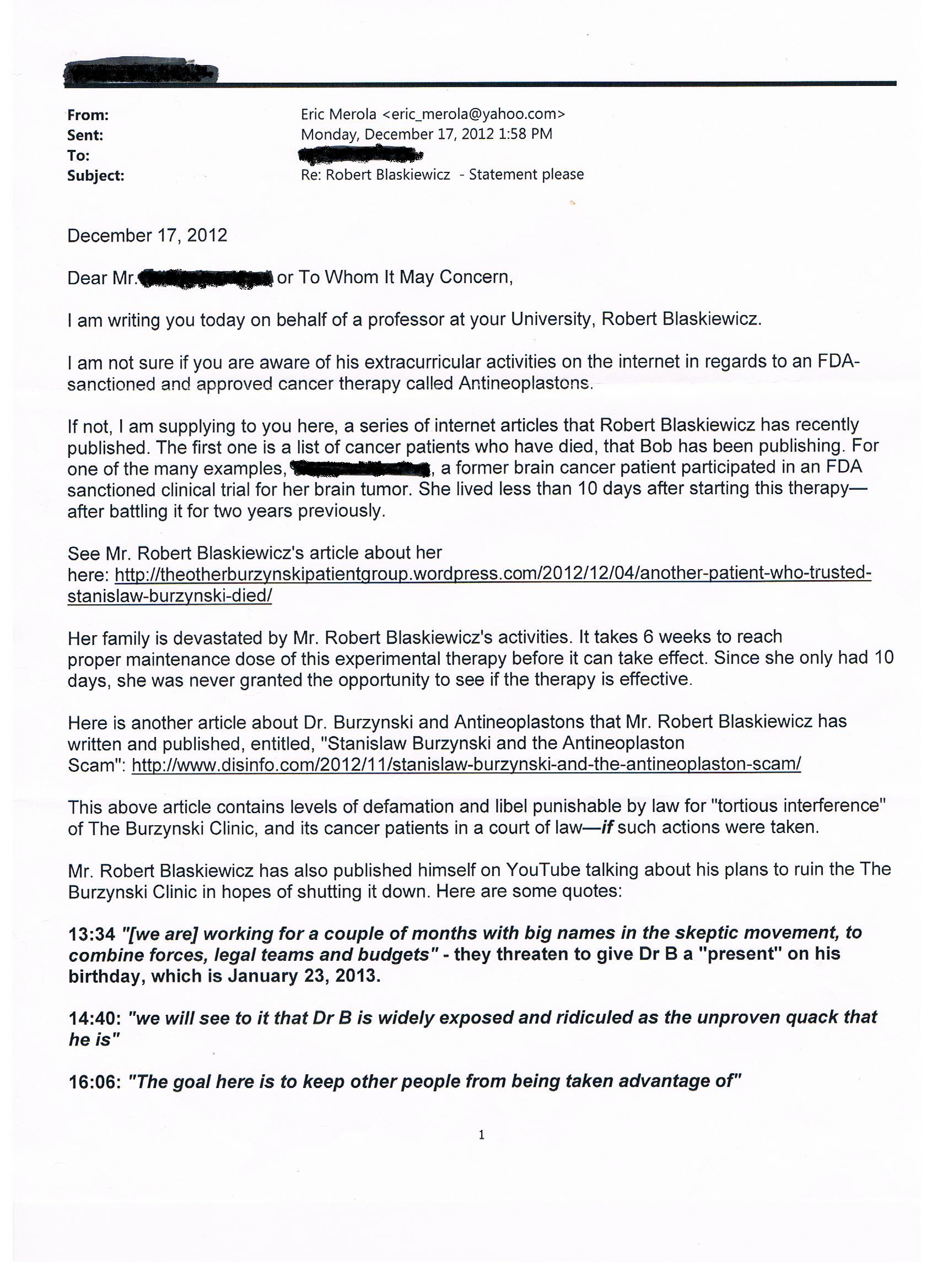
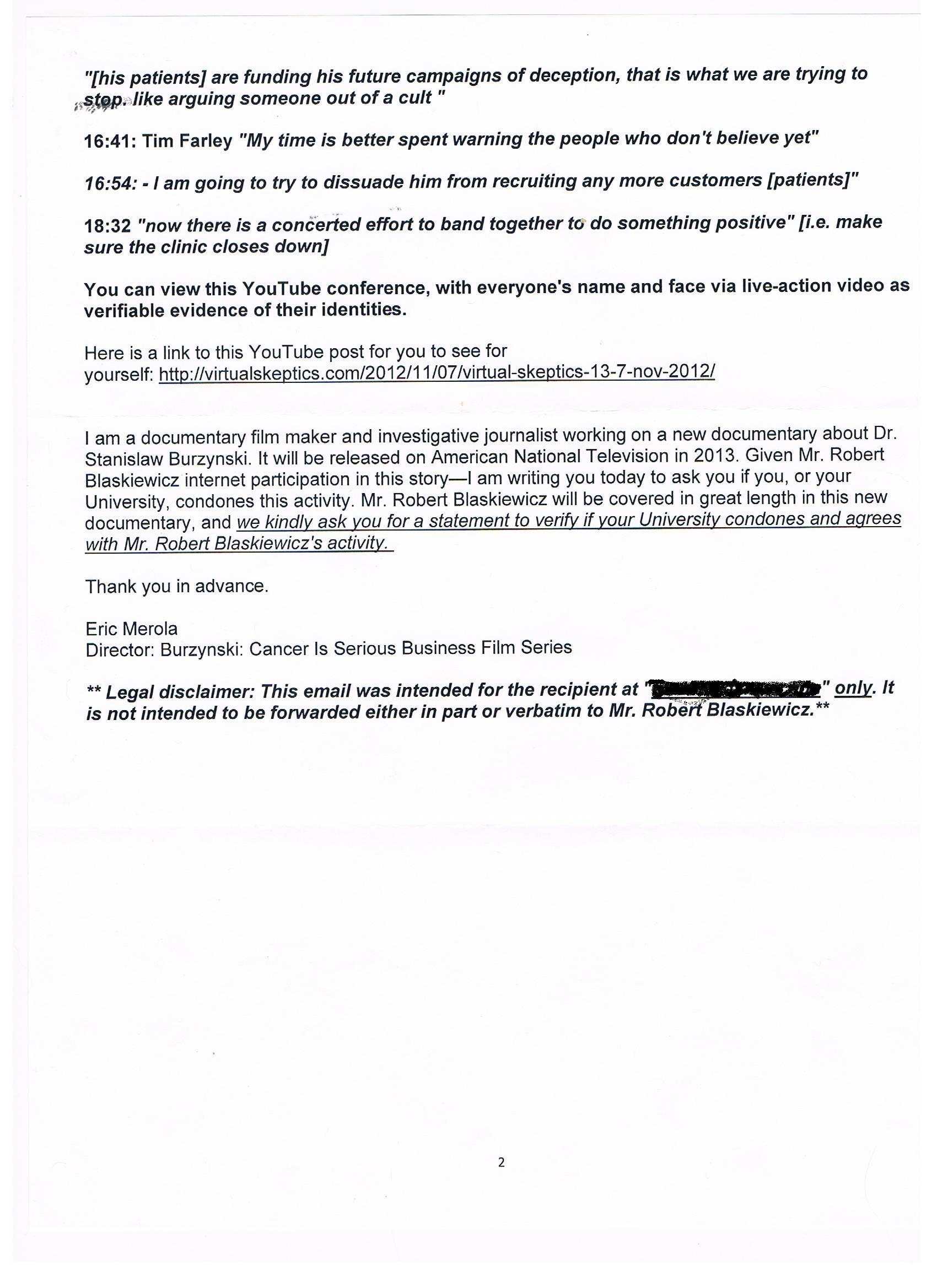
Not long ago, I received a call from one of the lawyers at my university. When I went over to see her, she handed me a letter that had been sent to the office of my university’s Chancellor. Honestly, from her description on the phone of how strange it was, I thought it was going to be something from Mabus, who had contacted my coworkers in the past. I was surprised to read that it was from the guy making the Burzynski movies. And now I share it with you:

Page1

Page2

How about that?

Let’s clarify a few things here, Eric. My “extracurricular” interest in Burzynski has nothing to do with my research and everything to do with my interest in science. My letters, articles, and blog posts that discuss Burzynski do not appear on my CV. The things I do in my spare time are no business of my employer and they respect that.

Your legal disclaimer is a joke; you are as competent a lawyer as you are a filmmaker.

The “present” we are going to give Burzynski on his birthday is a challenge to the Clinic to match the funds raised by skeptics for St. Jude Children’s Research Hospital. The “something positive” you fear is what I have publicly called “Operation Cuddly Puppy,” a campaign designed to put reliable information about clinical trials and cancer treatments into the hands of cancer patients. I can see why a Burzynski supporter would be afraid of that.

Regarding theOTHERburzynskipatientgroup.wordpress.com, I will be delighted for you to discuss my (and others’) work there in your movie. What we offer there is an honest look at the patients who have not made it, patients whose stories are just as important as the ones you believe Burzynski gave a happy ending. I’m not prying either; the patients and their families have already shared this information with the world. Also, it has about 30 total views (well, until today!). What you seem to be opposed to is open inquiry into what goes on at the clinic.

I’ve yet to hear from the family of the patient you singled out in your email. I would, of course, give them my standard answer for patients of Burzynski: “I’m very, very sorry for your loss, and I don’t take down content. Your stories are too important.” All of which is true. In about a month, three of us working in our spare time have been able to accumulate as many (more, actually) examples of failed treatment as there are “successes” at the Burzynski Patient Group site, which actually opens up patient records to promote Burzynski. (Though I don’t hear you howling about the ethics of that!)

In a way, I guess I’m not surprised that you went to my employer. I have gotten threats from other wackdoodles before who were going to “expose me to my employer.” This is more of the same.

Eric, the interpretation of my actions that you put forward in your laughable letter are so far from the mark that I should warn you against replicating them in your movie–and now  you have been notified of that. Furthermore, should you make any attempt to link my family or my employer to my online science advocacy, I will not hesitate to hire an actual lawyer and pursue you until you cry. The fact that you actively tried to hide it from me, to spread half-truths about me to my employer behind my back, is stunning evidence of your malicious motives. It’s like the type of thing trial lawyers dream of.

If you are appalled by this behavior, I encourage skeptics to contribute to the St. Jude fundraiser. We will be donating everything raised to the hospital in Burzynski’s name and then challenge the Clinic to match those funds. If he doesn’t participate, we will still be able to say it’s probably the best thing ever done for cancer research in his name!

birthday-quack

RJB


Happy Birthday, Dr. Burzynski!

January 4, 2013

Happy Birthday, Dr. Burzynski!.

Skeptics for the Protection of Cancer Patients are kicking off a project to celebrate the life’s work of Stanislaw Burzynski by giving immense amounts of money to…anyone else. Well, not just anyone, but St. Jude Children’s Hospital. Follow the link and find out how you can help get money and GOOD INFORMATION into the hands of potential Burzynski patients.

RJB