Review of “Anonymous:” The Essex Rebellion Was an Inside Job

November 7, 2011

So, we finally saw Anonymous. To begin with, the traffic sucked, the popcorn was disappointing and the soda machines refused to give me an adequate diet Coke (machine 1 was a mix of diet Coke and some red Hi-C-like substance; machine 2 mostly just gave me carbonated water). I suppose I can’t blame Roland Emmerich and John Orloff for these problems, but I’m not feeling generous.

One of the previews was for “William Shakespeare’s Coriolanus,” directed by and starring Ralph Fiennes. Shakespeare is listed as a writer on the IMDB page. Edward de Vere, seventeenth earl of Oxford, is not.

Anonymous begins with Shakespeare-denier Sir Derek Jacobi entering a modern-day theater (that sports “Anonymous” on its sign) and beginning to recite one of Ben Jonson’s poems in praise of Shakespeare in big-time over-the-top fashion. Then he stops and questions Shakespeare’s identity. He first lists the works attributed to Shakespeare, including “thirty-seven plays.” Almost all scholars now count thirty-eight plays. Why no love for Two Noble Kinsmen? Perhaps because it was written long after Oxford’s death?

All these plays, sonnets and miscellaneous poems and “not a single manuscript in Shakespeare’s hand.” Except–quite possibly–Hand D of Sir Thomas More, of course (which, naturally, Sir Derek doesn’t mention). All we have, says Sir Derek, are six barely legible signatures, each one spelled differently. We’ve been over this one repeatedly. See the fourth reason that Roland Emmerich is an idiot.

Shakespeare was the son of a glove-maker and had a grammar school education. Sir Derek doesn’t draw any conclusions from this, but the snobby implication is that it is unlikely that such a person could write the works attributed to Shakespeare.

Shakespeare’s daughters were “irrefutably illiterate.” Emmerich mentions this in his ten reasons Shakespeare is a fraud. I had a niggling suspicion about this, but since Susanna and Judith’s literacy has nothing to do with the authorship of their father’s works, I lazily ignored it. In the comments, Fretful Porpentine pointed out Emmerich’s error. Here is the signature of Susanna Hall (née Shakespeare). So, Sir Derek was irrefutably spouting a lie. Oh, but little facts don’t stop Shakespeare deniers. Apparently her signature is “painfully formed,” and she uses three different versions of the letter “a.” Thus she, like her sister, was functionally illiterate. Now since, as Fretful Porpentine notes and even Anonymous admits, reading and writing were two separate skills in Tudor England, this is highly dubious. If Susanna could write her name, she could read. One website contrasts the handwriting of Susanna and her father with that of her husband, John Hall: “His signature is what one would expect from a man who wrote in a clear Italian hand. Would that his father-in-law’s signatures had had such clarity and consistency.” John Hall wrote in an italic hand. Clearly, he was highly literate. Susanna and Shakespeare wrote in Secretary Hand. Clearly, they were functionally illiterate boobs.

Finally, Sir Derek brings up the will, which doesn’t mention Shakespeare’s plays or books. See reason 10 here. So, Sir Derek proposes to offer us a different story. At this point the film moves into the past. I should point out that I took copious notes, but even at the best of times, my handwriting is pretty horrible. That’s right: I am functionally illiterate. When I’m writing in a darkened movie theater, I am even more illiterater (see?).

The cinematography is rather beautiful, especially the scene of Elizabeth’s funeral procession. The facial hair is also extremely impressive. Also, the movie makes no fucking sense. It moves backward and forward in time, but Ben Jonson stays the same age and other characters age at significantly different rates. In particular, Elizabeth and William Cecil, Lord Burghley, seem to age at roughly 3 times the rate of everyone else. This is confusing.

In an early scene, when the queen is very old, she is told that she is to be presented with a play written by “[pregnant pause] Anonymous.” She’s thrilled because she loves plays and “[pregnant pause] Anonymous.” I suppose this is the justification for the film’s title (rather than the more appropriate Pseudonymous). Except it doesn’t make any fucking sense. The play in question is Midsummer Night’s Dream, which, it transpires, Oxford wrote for the court when he was an adolescent. He also played Puck. Everyone at court knows he wrote the play. There was nothing hidden about it. It seems Oxford wrote a whole bunch of plays for court in his youth, including the Prince Hal plays. Again, none of this is hidden, so there is no real reason to refer to him as “[pregnant pause] Anonymous.”

At some point, Oxford attends a public performance of a Jonson play with Southampton (who, we will eventually discover, is his son by Elizabeth; Oxford is also Elizabeth’s son [ick], as is Essex). Shakespeare is AWI (Acting While Intoxicated). Christopher Marlowe has the hots for Southampton. Playwrights Thomas Nashe and Thomas Dekker are essentially non-entities: one’s fat and the other’s skinny, if that helps. All the playwrights, including the highly educated Marlowe, have noticeably less educated-sounding accents than the court characters. All the playwrights seem to be untalented hacks compared to the Incomparable Genius that is Oxford. Marlowe’s a conniving dick; Jonson is kind of a sniveling weasel, although he has integrity and a genuine love of great poetry (i. e. Oxford’s).

Perhaps now is the time to mention how excessively unpleasant all the characters are. Elizabeth is petty and solely driven by emotion. When she discovers that she is pregnant by [her son] Oxford, she declares that she will marry him, even though he is already married: “I LOVE HIM!!!! she screeches, in all caps). She seems utterly useless at statecraft, no more than a pawn of the Cecils. The Cecils (William,  Lord Burghley, and his son Robert) are practically mustache-twirling villains (they plot to murder Oxford, Essex and Southampton; when that fails, they connive to make it appear that Essex and Southampton are in open rebellion against the queen. That’s right, the Essex Rebellion was an inside job). They are also poetry/pleasure-loathing Puritans (“plays are the work of the devil,” says Burghley), a characterization that is simply incorrect, as far as I can tell. Southampton and Essex are pretty and uninteresting (the same is largely true of Oxford as a young man, but he is more actively unpleasant).

And then there’s Shakespeare. He is a drunken, unscrupulous, moronic, conniving, self-aggrandizing, semi-literate (can read but can’t write), inarticulate, barely coherent, petty, malicious, blackmailing, murderous (kills Marlowe for threatening to expose him) little toad. It’s hard to imagine anyone more unappealing. Yet, somehow Oxford manages to be worse. I suppose what makes Oxford so thoroughly reprehensible is the filmmakers’ attempts to make him seem a paragon of, well, everything. Oxford certainly seems to think he’s wonderful. Toward the end of the film, he admits that he’s failed at pretty much everything. But it’s not really his fault, you see. It’s the Cecils’ fault. Also, it’s because of his single-minded devotion to his poetry. The only thing he didn’t fail at is the one thing he didn’t do (write Shakespeare’s poetry). He points out that he had been one of the richest peers in England, but at the end of his life, he is impoverished. Why? Because of his devotion to his Muse. How the fuck much did parchment cost in Elizabethan England? Oh, also he claims Burghley stole his inheritance. Whatever. When he witnesses a performance of Henry V, he silently mouths the St. Crispin’s Day speech and weeps at the beauty of his own words. Barf.

Anyway, after seeing the Jonson play, he has an idea: he can use the public theater to spread his ideas and, somehow, win a kingdom for his son. In this, of course, he fails miserably. Oxford wants Jonson to produce the plays under his (Jonson’s) name. Oxford can’t be seen to write plays in his position (except for all those plays he’s already known for writing; sure, they were written as court entertainments, but you’d think someone might notice some similarity. Nuppers).

Oxford assures Jonson that his plays will make him the richest and most popular playwright in London. He’s modest like that. Jonson doesn’t really want to do it. He has integrity, you’ll remember, and he wants to be known for his own work. But for the sake of the wonderful plays, Jonson agrees. Shakespeare, of course, has no integrity, and when the crowd begins chanting “playwright, playwright” after Henry V, Shakespeare leaps forward and takes credit, to Oxford’s horror: “An actor, for God’s sake.”  Jonson, of course, was also an actor for a time (in real life), but in the film, he tells Shakespeare that playwrights don’t have time to act. Tell that to Nathan Field.

Oxford’s next play is Romeo and Juliet. He announces to Jonson that it’s in iambic pentameter. “What, all of it?” exclaims Jonson, “Is that possible?” Everyone’s amazed that it’s completely in verse. It’s not, of course. And A Midsummer Night’s Dream, which was ostensibly written decades earlier, is also predominantly in verse (in reality, the two plays were probably written close together in time, along with Richard II). There were plenty of plays before Shakespeare that were in iambic pentameter, as well. The first English drama in blank verse was Gorboduc or Ferrex and Porrex from 1561.

Some other stupid things: I’ve hinted that there are some problems with the chronology of the plays. Here are some more: Hamlet appears to be written shortly after Romeo and Juliet, and Marlowe is still alive when it is performed. He sneaks off to tattle to Robert Cecil about it. Everyone explicitly makes a connection between the character of Polonius and Lord Burghley. Later, Jonson will similarly tattle about Richard III (which therefore must have been written after Hamlet), though he agonizes over what he’s done. Richard III is supposed to satirize Robert Cecil, who was apparently somewhat hunchbacked. The film suggests that Richard was never portrayed as hunchbacked before the play.

This tendency of rival poets to go around accusing Shakespeare/Oxford of writing seditious plays is, of course, preposterous. Edmund Tilney held the position of Master of the Revels. He was the official censor, and all plays had to be approved by him. If the plays were as obviously seditious as the film suggests, Tilney would never have approved them.

Oxford writes Richard III specifically to achieve…I have no idea what…in his struggles against the Cecils and his plots to promote his son. His plan backfires spectacularly, and the Cecils use it to manufacture the Essex Rebellion. In fact, shortly before the rebellion, some of the conspirators paid the Lord Chamberlain’s Men to perform Richard II (that’s 2nd, not 3rd) at the Globe. The play was not new at the time. Augustine Phillips, a member of the company, testified at Essex’s trial.

There are more things in the movie that are stupid. So many more. But thinking about it makes me sad and stabby, so I’ll leave you with this brief précis of stupidity.

But remember,

The Essex Rebellion Was an Inside Job!


A Review of Anonymous, Commonly Attributed to John Orloff

November 7, 2011

As the closing credits rolled on Anonymous and Eve and I shouted our disapproval at the names that appeared on the screen (“Shame!” “Fail!” “Weak!”), a pair of old ladies in front of us started laughing.

“We were here for the 3:00 show,” one of them told us, “but the power went out. So they gave us free passes to see it again. I’m glad they did because I didn’t know what was going on the first time I saw it!”

And that’s the movie in a nutshell, a turd in a teapot, a tale told by an idiot, directed by a total spazz, and performed by a troupe of misguided failures.

The story was incoherent. Queen Elizabeth is a total ho, boinking everything that moves in her court. This includes her bastard son, the Earl of Oxford, Edward de Vere. Yuck and REALLY? (Several times in the movie, as Elizabeth was having a snit fit, Eve and I would turn to each other and say in our Queenie voice, “Who’s Queen?” Only really super cool people will laugh at that joke.)

The story was not told chronologically, which was a problem. It starts in the modern era, at a play or a lecture or something called “Anonymous.” It’s not clear. But what you do get, right out of the gate, is a completely useless series of questions by the character Underinformed Git (played by himself, Derek Jacobi), “Why aren’t books mentioned in Shakespeare’s will?” (What part of the “the whole damned estate” don’t you get, Rollo?) So, we were 2 minutes in, and I already wanted to kick a puppy.

Then we go almost to the end of the narrative proper, when Ben Jonson is getting done over good by the local constabulary for reasons that are not clear until the end. He’s hiding the plays written by de Vere-as-Shake-Speare. Jonson must be in on it because he is someone with credibility whose actual work (his elegy on Shakespeare faces the famous woodcut in the First Folio) totally f’in demolishes the Oxfordian fantasy before it got started. And then there is the little problem of the “Sweet Swan of Avon” elegy written, also by Jonson. Oh and the fact that Shakespeare was publishing long after de Vere was worm food. The solution? Make Jonson a conspirator and give him all of the plays to leak to Shakespeare slowly after de Vere’s death. Aaand your evidence for this is….apparently that you need it to be just so.

So, uh, then they are performing A Midsummer Night’s Dream, and everyone in court knows that it was written by a Bieber-aged de Vere…but then they all apparently forget that. My horse-drawn carriage has already thrown a wheel in that plot-hole.

Oxford is orphaned and raised by the Cecils who are advisors to the Queen. Turns out, go figure, that de Vere is smarter than all his tutors. The scene in which we are introduced to his Greek tutor, Latin tutor, cosmology tutor, etc. serves no functional purpose to the plot; it actually only underlines for Oxfordian cultists that de Vere had exactly the type of education they think that you need to write Shakespeare’s work. There were little nods to the in-group like that throughout the movie. For instance, you pan across Oxford’s office and see a falcon, you can almost hear Emmerich wondering out loud about how Shakespeare could know the vocabulary related to falconry if he was a bumpkin. And then you can almost hear a whoosh and a smack as I lose it.

OH! The movie is so insulting to the playwrights of the age. They were basically all hacks and they sat together in the peanut gallery. The treatment of Shakespeare was basically defamation. Shakespeare was slightly less fluent in English than Jesse Ventura, perpetually drunk, and usually whoring. They even suggested that Shakespeare killed Christopher Marlowe! Anything you can do to make him look bad, s’pose. At one point the playwrights are at their whore-and-ale house, the Randy Badger (or something), and Jonson throws down, daring Shakespeare to write his name. Lamest. Challenge. Ever.

Did I mention that it made no sense and that it left two old ladies very confused?

There was one really phenomenal aspect to the film, however, the mustaches. Whoever did the facial arrangements should get an Oscar(tm). If you could roll that clip I brought…..

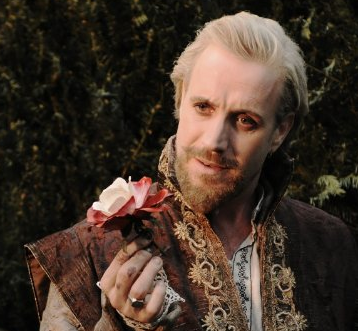
“F’in roses how do they work?” –Wm. Shkspere

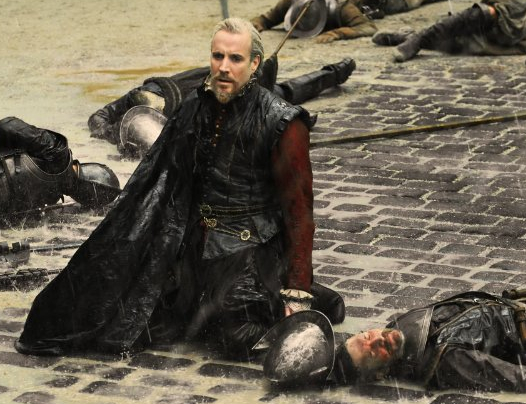
First the Queen dumps him and then there’s a rebellion. Ed’s having a crappy day.

It’s been only 3 days, and I forget who this is. Well acted, my friend. But look at that beard!

Bad guy who is not Shakespeare.

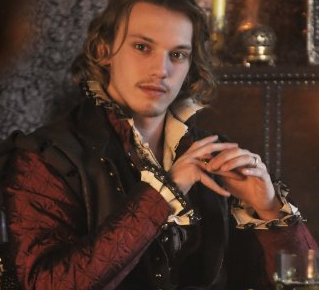
“Fauntleroy, why do you never return my text messages?”

Lord Melchett: “BAAAAAAAAAA!”

“What would you, the audience, do?”

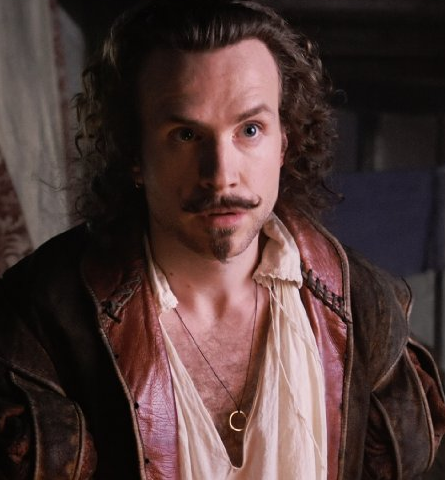
Seriously, Shakespeare’s facial wig carries the performance.

If they had spent half as much time grooming the plot as they did these guys’ upper lips, the movie would have passed. But it was badly told to the point that only a true believer could possibly invest in it. The infuriating thing at the end, however, was not that it crapped on the Bard, who can take care of himself, but that the little old ladies in front of us wondered out loud if their understanding of history had always been that bad. “No,” I assured them. “Roland Emmerich is just a bad person.”

RJB


The Other 5 Reasons Roland Emmerich is an Idiot

October 24, 2011

Here beginneth Part the Second (see here for Part the First):

6. Not edumucated enough.

Considering the anti-intellectual slant of Shakespeare-deniers (expressed by a comment on this post from screenwriter John Orloff), this one is rich.  As Emmerich says, “no records prove that Shakespeare ever attended the Stratford Grammar School.” True, no records survive before the nineteenth century. “Yet the work of William Shakespeare the writer shows extensive knowledge of [a bunch of stuff] as well as aristocratic activities such as royal tennis and falconry. Call me a snob….” Yup, you’re a big snob…. “but even if he was a genius, he couldn’t have pulled that one off without leaving a trace of his learning.” I don’t get it. Aren’t all those examples Emmerich provided evidence of Shakespeare’s learning? Not just formal education, but a continuing interest in learning things and, you know, reading stuff? “William Shakespeare had the largest English vocabulary of any writer in history. Not quite grammar school level I would say.” Well, then, you would be wrong. Again. First of all, “education” in Shakespeare’s day meant classical education: Latin and Greek. They weren’t learning English composition, much less creative writing. Second, as Shakespeare scholars have pointed out repeatedly, Shakespeare’s education was perfectly sufficient. James Shapiro notes that a grammar school education “was roughly equivalent to a university degree today, with a better facility in Latin than that of a typical classics major” (Contested Will, p. 276).

And let us not forget the things Shakespeare got wrong. In The Winter’s Tale, Shakespeare provided Bohemia with a coastline and a desert that it doesn’t actually have. Ben Jonson considered such mistakes risible. If you click the link above, you can see how Oxfordians have danced around this issue, and, if you scroll down a bit, you can see the history of the word “dildos.” It has nothing to do with the authorship question, but it’s fun. Shakespeare also kindly bestowed a harbor on Padua in The Taming of the Shrew.

7.  “Here is a big one:” if Emmerich had been Shakespeare, he wouldn’t have retired so early.

So what? What does Emmerich’s interminable drive to make splashy, bad movies have to do with Shakespeare? Emmerich adds that, after Shakespeare retired to Stratford (which was not the tiny town Emmerich makes it out to be), he never wrote “a single poem, play or sonnet again.” Okay, first, sonnets are poems. Second, argument from ignorance. How do you know he didn’t write anything ever again? Just because they don’t survive doesn’t mean they never existed. Finally, Shakespeare’s last plays (all collaborations) were probably written after after Shakespeare had largely retired and been replaced as principle playwright by John Fletcher.

“I would never compare myself to Shakespeare.” Oh, good, then shut up. “But to me the idea of retiring from directing and moving back to my hometown and never to be associated with movies again is just completely unthinkable.” Do you have a wife and kids in your hometown? And as we’ve seen, Shakespeare did continue to be associated with the theater (see more here). So, no, the explanation is not that he ran out of “idears.”

8. There is no record of Shakespeare traveling abroad, but he mentions Italy and other foreign lands a lot in his plays.

Argument from ignorance: we have no records of Shakespeare traveling abroad; therefore he must never have traveled abroad. Actually, we just don’t know. Even if he never left England, there were ways of finding out stuff about other countries. In the Renaissance they had a primitive version of Google earth.  It was called a “map.” And while Shakespeare didn’t have access to Wikipedia, there were these things called “books.” Oh, and while he couldn’t watch the Travel Channel (Emmerich actually sarcastically suggests this) there were travelers that he could talk to. And let us not forget Bohemia’s coastline and desert and Padua’s harbor.

9. The Stratford monument may have been altered to show Shakespeare as a writer.

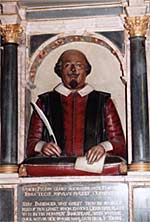
Shakespeare’s monument was erected sometime between his death in 1616 and the publication of the First Folio in 1623 (the Folio mentions the monument). It shows Shakespeare with his arms resting on a cushion and holding a quill in one hand and a piece of paper in the other.

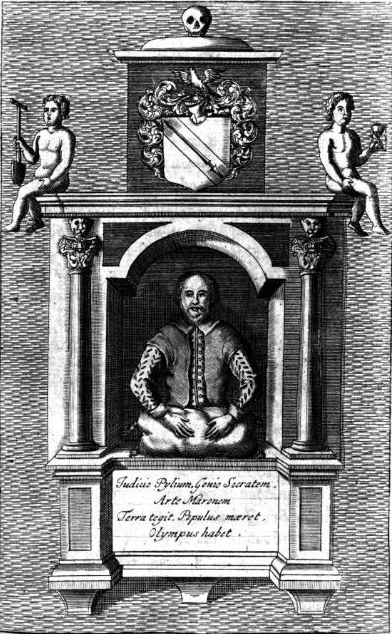
Emmerich points out that there were renovations to the monument. This is true. It was also repainted several times. He points out that in an early “engravement,” Shakespeare isn’t holding quill and paper; instead he is holding a “sack of grain.” The engraving appeared in William Dugdale’s Antiquities of Warwickshire published in 1656. Here it is:

First of all, while historians agree that the monument was renovated, I don’t think they believe it was renovated as early as 1656 (only a few decades after its erection). Secondly, the “sack of grain” is pretty clearly an awkward representation of the cushion, which is cut from the same hunk of stone as the bust (including the forearms and hands that rest on it). Why there is no quill and paper, I don’t know. Here is a discussion of the Dugdale engraving.

Also, you will notice that, even in the engraving, there is an inscription beneath the bust. This is what it says: “IVDICIO PYLIVM, GENIO SOCRATEM, ARTE MARONEM, TERRA TEGIT, POPVLVS MÆRET, OLYMPVS HABET.” Translation, “In judgment a Pylius [Nestor], in wit a Socrates, in art a Maro [Virgil]; the earth buries [him], the people mourn [him], Olympus possesses [him].” Not the inscription of a grain merchant. Although it is not visible in the engraving, there is also an English epithet (on the same slab as the Latin and so necessarily contemporary with it). It says (in modernized spelling): “Stay passenger, why goest thou by so fast? Read if thou canst, whom envious Death hath placed within this monument, Shakespeare, with whom quick nature died, whose name doth deck the tomb far more than cost, sith all that he hath writ leaves living art, but page, to serve his wit.” In other words, quill or no, the monument absolutely identifies Shakespeare as a writer, as is clear even in Dugdale’s rather bad drawing.

10. The bloody will.

“Can you believe that the last will of William Shakespeare of Stratford does not mention any books or manuscripts?” Why, yes, Roland: I can believe that, and if you can’t, your disbelief is merely an argument from incredulity. “Didn’t he care what would happen to his life’s work after his death?” Okay, I’m just going to copy and paste what I said about the will in my first post on this blog:

As for the will…well, Oxfordians get very excited about the will.  Shakespeare doesn’t mention his library, his books or his plays.  True, but he didn’t personally own the plays: they belonged to the acting company.  Those that were published became the property of the publisher.  He doesn’t mention books, but nor does he mention many specific items: the bulk of his estate was entailed.  Shapiro, citing  James Orchard Halliwell-Phillipps, notes that when Shakespeare’s son-in-law John Hall went to prove Shakespeare’s will, he apparently had with him “an inventory of the testator’s household effects” (qtd. in Shapiro, p. 50).  Shapiro continues:

Whatever valuable books, manuscripts, or letters Shakespeare owned and was bequeathing to his heirs would have been listed in this inventory rather than in the will itself (which explains, as Jonathan Bate has observed, why the surviving wills of such Elizabethan notables as the leading theologian Richard Hooker and the poet Samuel Daniel fail, like Shakespeare’s, to list any books at all).  (p. 50)

So, there you have it: arguments from ignorance, arguments from incredulity, arguments from snobbery and romanticism and arguments from what Roland Emmerich would have done if he’d been Shakespeare. And not a single iota of evidence to support the case for another author. [Emmerich mode] I chust don’t buy it [/Emmerich mode].

ES

RESOURCES:

The Norton Shakespeare.  Gen. ed. Stephen Greenblatt.  New York and London: Norton, 1997.  Texts based on the Oxford Edition, gen. eds. Stanley Wells and Gary Taylor.

The Riverside Shakespeare.  2nd ed.  Text. ed. G. Blakemore Evans.  Boston: Houghton, 1997.

Shakespeare: Life and Times. Palomar College. http://shakespeare.palomar.edu/life.htm.

Shapiro, James.  Contested Will: Who Wrote Shakespeare.  New York: Simon, 2010.

Shapiro, James. “Hollywood Dishonors the Bard.” New York Times 16 Oct. 2011

Wells, Stanley.  Shakespeare & Co.: Christopher Marlowe, Thomas Dekker, Ben Jonson, Thomas Middleton, John Fletcher, and the Other Players in His Story.  New York: Vintage, 2006.


The First Five Reasons Roland Emmerich Is an Idiot

October 23, 2011

Roland Emmerich, as you may know, is coming out with an interpretation of a screenplay that many in academia say was written by John Orloff (but we’re not sure). It will be called Anonymous. And other things. We have already linked to Roland Emmerich’s promotional video “10 reasons  why (Roland Emmerich believes) Shakespeare is a fraud.” Here it is again. Sorry. In previous posts on the subject of Shakespeare denialism, we have answered most of his ten reasons; however, it seems pertinent to go through the arguments point by point.

We should first address the elephant in the room: Shakespeare denialists sometimes claim that Shakespeare scholars have an invested interest in the Official Story. We want to be clear that we receive no monetary benefit from Big Shakespeare: Bob is an Americanist who becomes queasy when he sees the word “color” spelled with a “u;” Eve is a medievalist who considers Shakespeare to be dangerously modern. We do our shilling for free in our spare time.

Emmerich’s ten reasons are punctuated by animation. A memorial statue of Shakespeare is being tended to by a love-struck duck (or possibly a pigeon) in an academic cap and bow tie. After Emmerich makes each specious point, he throws a black quill. The real quill becomes animated and does surprising damage to the monument, causing the increasingly hysterical duck to apply emergency medical assistance. By the end of the video, the duck walks off in high dudgeon, giving the Bronx cheer to a now-animated Emmerich. Emmerich is twirling a quill and looking as smug as he does in real life. He blows on the monument, and it collapses, revealing the poster for Anonymous. This seems to be Emmerich’s opinion of scholars: hysterical ducks in bow ties.

So, let’s look at his devastating arguments against Shakespeare:

1. No manuscript or poem exists in Shakespeare’s own handwriting, not even a letter.

Very few Elizabethan/Jacobean plays exist in authorial manuscripts. As we have mentioned repeatedly, one of the few exceptions is the play-by-committee, Sir Thomas More. Hand D is an authorial hand; it is very possible that that hand is Shakespeare’s.

Emmerich suggests that because Shakespeare lived in London while his wife and children lived in Stratford, he would have produced “a vast amount of correspondence.” Of course, as Emmerich will later point out, Shakespeare’s wife, daughters and parents were all illiterate, and his son died at the age of eleven. The fact that his family members were illiterate doesn’t mean that Shakespeare couldn’t have written letters to them. A literate person could have read the letters to Shakespeare’s wife and family. Similarly, a literate person could have written messages to Shakespeare from his wife. We know, for instance, that actor Edward Alleyn wrote to his illiterate wife. These were included in letters to her father, theatrical entrepreneur Philip Henslowe. But why would we necessarily expect Shakespeare’s letters to survive? Shakespeare’s direct line died out with his granddaughter Elizabeth. His house was sold and eventually demolished.

Emmerich says, “the largest literary hand in history produced not a single handwritten note of William Shakespeare.” Ignoring for the moment the awkwardness of this sentence, the statement is not true, or is, at least, an argument from ignorance. The fact that we haven’t found any letters does not mean that there were no letters. It simply means that we have found no letters.

2. Shakespeare’s daughters Susanna and Judith were illiterate.

Emmerich muses that it seems incredible that Shakespeare wouldn’t want his children to read his works. “Doesn’t work for me,” he says. Whether it works for Emmerich or not is really irrelevant. The illiteracy of Shakespeare’s family has no bearing on the question of Shakespeare’s authorship. Is it disappointing that the creator of some great (literate) female characters didn’t teach his daughters to read? Perhaps, but it was pretty typical. Women of Shakespeare’s class were not routinely given extensive formal education. The school Shakespeare presumably attended would not have been open to his daughters. I assume that a tutor would have been necessary had Shakespeare decided to educate his daughters. I suppose Shakespeare could have afforded a tutor, but he seems not to have employed one–again, this is fairly typical for his class. And again, it has absolutely no bearing on the authorship of the works attributed to Shakespeare.

3. Shakespeare wrote “obsessively” and knowledgeably about the aristocracy.

First of all, not all of Shakespeare’s plays center on royalty and nobility: Merry Wives of Windsor focuses on middle-class characters. The main characters of The  Comedy of Errors and The Merchant of Venice are also non-noble. It is true, however, that a majority of Shakespeare’s plays feature royal and aristocratic characters. It is also true that some of his contemporaries (particularly later contemporaries) did focus more on the middle classes in, for instance, city comedies and satires.

So what does this prove? Exactly nothing. Christopher Marlowe and Thomas Kyd also seem to have focused primarily on the upper classes (although Kyd is usually named as the author of the domestic tragedy, Arden of Faversham. According to some scholars, particularly Arthur Kinney, Shakespeare is responsible for portions of this play).

If Emmerich is suggesting that Shakespeare didn’t have sufficient knowledge to write about the aristocracy and court life, then he is wrong. Shakespeare could have gained the knowledge he needed by study, observation and rumor. But privileged knowledge isn’t what Emmerich is primarily concerned about. Instead, he wants to start some kind of Renaissance class war. He contrasts Shakespeare to Ben Jonson whose works “pretty much reflect the perspective of the working man.” I guess Emmerich forgot all those Jonson masques that were written for and performed by members of the royal court. Shakespeare, says Emmerich, “apparently mocks his peers by giving them silly names, like Bottom, Dull, Mistress Overdone. Was Shakespeare a traitor to his own class? No way.”

I agree: Shakespeare was not a class-traitor. The tradition of giving silly and descriptive names to comic characters, usually (though not always) of lower social rank is a very old one. But surely Ben Jonson, Mr. Middle Class, wouldn’t do something like that. Let’s see, what are some of the character names in Bartholomew Fair? Well, there’s Littlewit, Quarlous, Winwife, Grace Wellborn, Adam Overdo and Dame Purecraft. Oh dear. Well, how about The Alchemist? There’s Lovewit, Subtle, Face, Dapper, Drugger, Sir Epicure Mammon (a nobleman), Surly, Dame Pliant and Dol Common. Feel free to peruse the name in Every Man in His Humour and Volpone for yourselves.

4. “Check this one out:” Shakespeare had bad handwriting and couldn’t spell his name.

We’ve been over this one several times, so briefly: 1. secretary hand 2. non-standardized spellings. Here is a signature of Sir Walter Raleigh:

The spelling is “W. Ralegh.” Here he signed his name “W. Rawley.” Illiterate yobbo swine. Also notice the handwriting of the document: it’s quite neat, but very hard to read. It may also be useful to compare the one letter addressed to William Shakespeare (original here; facsimile here): more hard-to-read secretary hand. And just one more–the handwriting of Sir Thomas Wyatt the Elder.

5. “I believe writing comes from the heart,” and Shakespeare’s writing doesn’t reflect that.

“Call me a romantic, but I believe great artists are inspired by their life” Emmerich says. Well, okay, I can think of other words, but for now I’ll just say, yes, your notions of authorship reflect concepts that arose in the Romantic Era.

Emmerich complains that Shakespeare didn’t write a poem on the death of his son. Jonson wrote about his dead kid, after all. Well, if Ben Jonson jumped off London Bridge….never mind. Of course, it’s possible that Shakespeare did write about his son’s death but that the poem was never published and did not survive. Maybe he decided to keep his personal poems personal. Or maybe he didn’t write about his son at all. We don’t know. And guess what? It has nothing to do with the authorship question.

But, just for the moment, let’s follow Emmerich’s thought-process: the fact that the plays and poems don’t reveal Shakespeare’s innermost feelings proves that Shakespeare didn’t write Shakespeare. Okay. So, what about the guy who did write the works? If the works don’t reveal Shakespeare’s inner life, how is it that they do reveal the inner man if that inner man is someone else? I guess the works do reveal the inner life of the “real” author if we just read them the correct way, which, I presume, is cross-eyed and and hanging upside down.

Here endeth Part the First.

ES/RJB


Shakespeare and Skeptoid Redux

October 18, 2011

Brian Dunning has dedicated his most recent episode of Skeptoid to the manufactured Shakespeare “authorship controversy.” The last time he discussed Shakespeare, I applauded his conclusions but questioned some of his premises (see here). Again, I find myself in agreement with his conclusion (Shakespeare wrote Shakespeare), but feel the need to quibble with some of his statements.

To begin with, Dunning says that Shakespeare

overcame his ordinary middle-class station and relative lack of formal education to compete with the finest noble playwrights of the day, and trump them all.

Shakespeare denialists claim that Shakespeare had no formal education at all because the records from Stratford’s grammar school do not survive, but Shakespeare scholars point out that Shakespeare would have been eligible to attend the grammar school for free because of his father’s position. If he did indeed attend grammar school, his formal education would have been perfectly adequate. According to Shakespeare scholar James Shapiro,

Scholars have exhaustively reconstructed the curriculum in Elizabethan grammar schools and have shown that what Shakespeare…would have learned there…was roughly equivalent to a university degree today, with a better facility in Latin than that of a typical classics major.” (Contested Will, p. 276)

Dunning’s statement makes it sound as if most of Shakespeare’s colleagues/competitors were noble and university educated. While some did have elevated connections (such as Shakespeare’s collaborator John Fletcher), few if any writers for the public stage held noble titles (this fact is important to Shakespeare denialists). Christopher Marlowe, who was much more famous than Shakespeare during his life, was the son of a shoemaker (Shakespeare’s father was a glover), although Marlowe did receive Bachelor’s and Master’s degrees from Cambridge. Ben Jonson, who famously said that Shakespeare had “small Latin and less Greek,” was the stepson of a bricklayer and, like Shakespeare, a grammar school boy who never attended university. In other words, Shakespeare’s grammar school education and middle-class origins were not that unusual among playwrights of his time.

In arguing that Shakespeare was not, as Shakespeare denialists claim, illiterate, Dunning says:

There are only seven surviving signatures of his, and oddly, some are spelled differently from one another, and all appear to be nearly illegible scrawls…. The style of writing common in Shakespeare’s time, known as secretary hand, often incorporated breviograms, shortened forms of words. Whether the various spellings of Shakespeare’s signatures are breviograms or the result of illiteracy or simple laziness, can’t be known. It does not prove that Shakespeare the man was different from Shakespeare the author.

Shakespeare did write in secretary hand which can be very difficult to read if one is not used to it. Some of Shakespeare’s signatures probably are intentionally shortened, but Dunning’s suggestion that the variation in spelling is a result of breviograms, illiteracy or laziness is a false dichotomy (trichotomy?). Spelling wasn’t standardized in Shakespeare’s day. He was not the only one who varied the spelling of his name. In Roland Emmerich’s video “proving” that Shakespeare didn’t write Shakespeare, he uses Shakespeare’s supposedly poor handwriting and spelling to suggest Shakespeare was nearly illiterate. He compares Shakespeare’s signatures to a single signature each of Francis Bacon, Ben Jonson and Christopher Marlowe. Bacon and Jonson were using italic hand, which is more familiar to us, so naturally they appear clearer. Marlowe did use secretary hand, and it’s really not that much clearer than Shakespeare’s. It should also be noted that in this, the only known signature of Marlowe, he spelled his name “Marley.”

Curiously, Dunning mentions seven Shakespeare signatures. Six signatures are generally accepted: one from a legal deposition, two related to the Blackfriars Theater and three from Shakespeare’s will (signed a month before his death). Presumably the seventh signature is the one which appears on a copy of William Lambarde’s Archaionomia. This signature is not universally accepted, but many scholars believe it is likely to be genuine. If it is genuine, it is important because it is in a book, which would mean that Shakespeare denialists could no longer claim that Shakespeare didn’t own any books.

Even more important is Hand D in the handwritten copy of the play Sir Thomas More. Hand D resembles Shakespeare’s signatures and the passage resembles Shakespeare’s style and contains spellings that are typical of him. Hand D is an authorial hand rather than a scribal hand–bits have been crossed out and other bits have been inserted. Again, not all scholars accept that Hand D is Shakespeare, but most agree that it is likely his work and his handwriting. If Hand D is Shakespeare’s handwriting, it destroys the denialists’ argument.

Dunning correctly notes that it is not unusual that no letters have survived in Shakespeare’s hand (though there is one letter to him, written by his future son-in-law, asking to borrow a rather large sum of money. It is not known whether the letter was ever actually sent). Dunning is, however, incorrect in saying that we don’t know very much about Shakespeare. We actually know a fair amount: it’s just not that interesting–most of it concerns business and legal matters. You know, the kind of documents that tend to survive because they are official.

Dunning also incorrectly compares what we know of Shakespeare to what we know of Marlowe:

Marlowe is well-documented largely because he was often in trouble with the law and was also murdered.

It is certainly true that Marlowe had a genius for getting into trouble. It is also true that he was killed. However, most of what we “know” about Marlowe actually raises more questions that it answers. Many things were said about him. How many of those things are true is a bit of a mystery. For instance, in the years after Marlowe’s death, several accounts were given of his death. Some were wrong. Gabriel Harvey suggested that he died of plague; Francis Meres said that he was “stabbed to death by a bawdy servingman, a rival of his in his lewd love” (see here).

In discussing the claims for the Earl of Oxford as the real author, Dunning says,

It’s well known that de Vere’s family did participate in the publication of Shakespeare’s works after his death, called the First Folio.

I was shocked and embarrassed that I did not know this well-known fact. Actually, it appears to be Oxfordian propaganda. The argument is as follows: the First Folio was dedicated to William Herbert, third Earl of Pembroke, and his brother Philip Herbert, first Earl of Montgomery (and later fourth Earl of Pembroke). Montgomery married one of Oxford’s daughters and Pembroke was briefly engaged to another. That’s it. That’s the de Vere family connection. The Herberts came from a very literary family–many members were writers and most were patrons of the arts. One Oxfordian site adds another supposed connection to Oxford:

The First Folio publication was a de Vere family affair with Oxford’s other son-in-law, William Stanley, Earl of Derby, being a highly literary man with his own company of players, quite possibly taking a hand in the preparation of the collected plays of his father-in-law.

That’s clearly just a made-up connection. The Herbert connection isn’t much better. And if Oxford’s sons-in-law (and almost-son-in-law) were behind the publication, why weren’t all the plays in the First Folio based on Oxford’s own handwritten copies instead of the mish-mash of sources the compilers actually used? Denialist propaganda should not be repeated as fact.

Dunning ends by suggesting that new techniques of computational analysis “prove” that Shakespeare wrote Shakespeare:

But let us not speculate. It turns out that technology finally did evolve to the point where we’ve been able to conclusively exclude all of these nominees, Edward de Vere the Earl of Oxford included, as having written Shakespeare’s works. Computational stylistics is a branch of computer science in which a “literary fingerprint” can be determined for any author, based on computational analysis of his writing. As detailed in their 2009 book, Shakespeare, Computers, and the Mystery of Authorship, professors Arthur Kinney and Hugh Craig proved during their 2006 research at the University of Massachusetts Amherst that Shakespeare was the author of his own works, and nobody else. These computational techniques also made it possible to determine which plays influenced which later authors, and many other subtleties that escape conventional study of the texts. Hollywood movies to the contrary, we now know for a fact that neither de Vere of Oxford nor anyone else deserves credit for William Shakespeare’s life’s work.

First of all, computer analysis is not as cut and dried as Dunning suggests. Scholars have already quibbled with arguments made in some of the articles in the collection edited by Kinney and Craig. Other authors who have used computer analysis to identify Shakespearean works have had to admit errors. Donald W. Foster had argued that Shakespeare wrote a funeral elegy for a man named William Peter (“A Funeral Elegy,” Norton Shakespeare, pp. 3303-3305). He has since admitted that his attribution was premature. The poem may have been written by John Ford. (In a comment on a previous post, I mentioned Foster’s attribution, but was not aware at the time that he had recanted).

More importantly, there is no way such analysis could prove that Shakespeare wrote Shakespeare. It can very strongly suggest that Christopher Marlowe and Francis Bacon didn’t. But to prove Shakespeare wrote Shakespeare, one would have to compare Shakespeare’s disputed works (all of them, from the point of view of denialists) to his acknowledged works (none, again from the point of view of denialists). The argument that the Hand D passage matches the characteristics of the rest of the works attributed to Shakespeare is the strongest argument, but it is hardly conclusive. At least it’s hardly conclusive IF you don’t believe the mountain of documentary evidence that suggests that Shakespeare wrote Shakespeare. It also doesn’t really eliminate Oxford because many of the works attributed to Oxford are of questionable authorship, and I believe that all of them are considered juvenilia.

Perhaps one of the most frustrating aspect of the episode is that Dunning does not include James Shapiro’s excellent book, Contested Will among his references.

ES

REFERENCES:

Dawson, Giles E. “A Seventh Signature for Shakespeare.” Shakespeare Quarterly 43 (1992): 72-79.

Dunning, Brian. “Finding Shakespeare.” Skeptoid Podcast. Skeptoid Media, Inc., 18 Oct 2011. Web. 18 Oct 2011. <http://skeptoid.com/episodes/4280&gt;.

Evans, G. Blakemore, text. ed. The Riverside Shakespeare. Boston, Houghton, 1974.

Greenblatt, Stephen, gen. ed. The Norton Shakespeare. New York: Norton, 1997.

Nicholl, Charles. The Reckoning: The Murder of Christopher Marlowe. London: Jonathan Cape, 1992.

Shapiro, James. Contested Will: Who Wrote Shakespeare? New York: Simon & Schuster, 2010.


This Week in 19th-Century Conspiracy

October 9, 2011

Right now I’m writing my presentation for CSICon, and if you follow my twitter feed, you are well aware of this. CSICon has taken precedent over most other things at this point, and I’m gunning to have the entire presentation done well before I go to New Orleans, so I can just plug and play. Well, play mostly.

The program says I’m writing about religious conspiracy theories, which is mostly true. It’s actually going to be about a lot more than just straight religion. As I was writing, I realized that there was a good chance my audience would start thinking, “So the hell what?” as I was writing about a number of anti-Jesuit and anti-Catholic movements in 19th-century. This audience is on the cutting edge of bullshit–they are up on their game and mostly committed to fighting woo, bunk, nonsense and enfeebling thoughts in the here and now. So, I have reengineered my presentation to bring make clear that there is a close continuity between the conspiracy theories of yesteryear and the conspiracy theories of todayyear. In particular, I am going to be looking at the features of these old stories and the features of the more recent stories. And instruct my audience to embrace the FEMA death camps and obey the New World Order. (I know that some of you Truthers are reading this! w00t!)

Basically, I’m going to answer the question, “What does a pillow fight having gone horribly wrong have to do with UFOs?” I’ve taken an especially strange statement given to me by a modern conspiracist and am looking at all the history that led up to someone making such an extreme claim. In doing so, I hope to show that, as much as it appears and no matter how truly gobsmacking this comment was, it was not pulled right out of his probed orifice, but is the end product of immense conspiracist energies spanning decades. I hope that it will fit in nicely with the meme-based explanations that I anticipate from the other panelists, since I will be looking at some of the longest-lived (most enduringly reproductively successful) memes.

I don’t want to spoil it all here right now–not that the people who I will be presenting to are currently readers. (I do hope, though, that some of them will become readers by the end of the conference.)

RJB


Superstitions as a Window Into Culture: Whooping Cough Cures

September 7, 2011

As Dragon*Con approached, I gathered my thoughts and made notes for a panel about superstition. As you might imagine, while as a general skeptic I have some opinions about the matter, I found that I was having a hard time conjuring examples on the fly.

Bother.

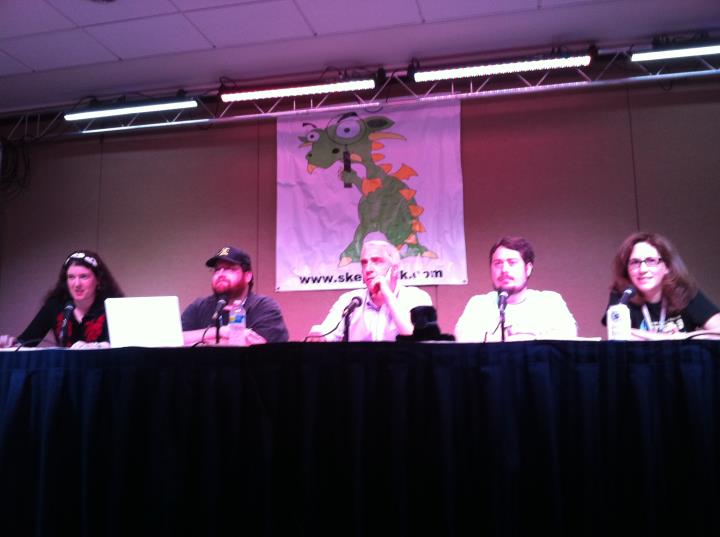
Dragon*Con Superstition Panel: Kylie Sturgess, Bob Blaskiewicz, Steve Novella, Stephen King, Barbara Drescher (photo by Maria Walters)

Enter Opie and Tatem’s Oxford Dictionary of Superstitions, which I picked up and started reading a few weeks ago. It opens with a surprising use for adulterers: if you secretly rub your warts on them, you will be cured. Personally, I think that this was more likely an adulterer detection test–rub your warts on the suspected adulterer and if the warts clear up, well, it’s a mixed blessing.

The volume focuses on the folk wisdom and superstitions in the British Isles, but I find that by reading them, really do get a sense of the ways of life of the people who embraced the practices. In fact, the type of superstitions that you encounter can tell you a lot about the region it comes from. In a fishing community, if you saw a bowl turned over, you might be wary of going out in your boat for fear of capsizing. In a mining town, if you found your work shoes tipped over in the morning, you might be excused for not going down in the hole that day. Superstitions reflect the fears, hopes and values of the people who harbor them.

You can tell a lot about the lives from people from what they fear. As most of the superstitions in the Oxford Dictionary date from the 19th century and earlier (there was intense interest in “collecting” folklore in the 19th century), they reflect the concerns of rural, largely agricultural communities, for instance, warding off droughts and keeping your pollinating bees in the loop about the head of the household’s health. Hives were abandoned, however, and droughts still occurred, perpetuating the need for the superstitions. But I found something I was not expecting as I sifted through this tome, something that spawned so many proposed cures and protections in all ages across the British Isles that it must have been a matter of near-obsessive concern–whooping cough.

Now, the compilers of the dictionary did not miss the importance of the themes running through the superstitions, so even though a whooping cough cure might be listed under “caterpillar” and another under “running water,” those two entries will also be found in the subject index under “whooping cough.” This is a very useful index. Now, the dates that I am giving here are approximate–sometimes the source is a printed interview of remembering their childhood–for the most part, however, the superstition was alive within the lifetime of someone living when the reference was made. Also, I should point out that with a single exception, the metaphorical interpretations that follow are my own, though I think that they are realistically plausible speculations.

A number of clear themes in British superstitions surrounding whooping cough emerge from the catalog assembled by Opie and Tatem. One motif that sticks out–and illustrates that everyone knew exactly what was at stake when a child contracted whooping cough–is the theme of burial, which appears in a number of guises. The most straightforward example is the practice, recorded in the 1830s, of “dipping the persons affected nine times in an open grave” (49). Modified versions of this dipping practice–perhaps an allusion to baptism, or possibly trying to “fake out” death by pseudo-burial–appear at other times as well. One that is clearly related is to take a child to a mill and dipping them in the hopper. As late as the early 20th century, people recalled patients being taken to a grain mill during an epidemic, and the miller starting up the mill and saying, “In the name of the Father, Son and Holy Ghost, grind away this disease.” You might have to repeat this several times for optimal results (248). A shallower burial might suffice, when one digs a shallow hole and puts the patient face down to breathe into it, possibly to bury only the disease itself (48). Another version was to take a child into a cave. In the 1810s, one might seek to propitiate the “aerial beings” by taking the child into a cave and chanting: “Hob-hole Hob! my bairn’s got kink-cough: take’t off; take’t off” (67). Opie and Tatem found a machine age variation on this theme, hanging the head of a child out of the window of a train going through a tunnel (321), because if fresh coal smoke doesn’t cure an irritated respiratory system, I don’t know what will.

Cures for whooping cough often involved a surprisingly large amount of cruelty to very small animals. For instance, there is a whole suite of superstitions that involve hanging something from the afflicted’s neck. The whooping cough, of course, constricts the airways of very small children, and the attention to the neck may reflect an application of the magical cure to the site of the problem. In the 1850s, one might take a caterpillar and put it in a little bag around a baby’s neck. As the caterpillar died, so did the cough abate (64). a decade later, you might take a dead beetle, hang it around the neck of a child with whooping cough and as the bug rotted away, the cough vanished too. In the 1890s, one might take nine hairs off the back of a donkey (there’s that number 9 again), put it in a bag around the neck of the sick kid. When I wondered why the hell one would look at a donkey’s back and say, “Hey, that could be a cure for whooping cough!” I found an interesting photo:

Donkeys.

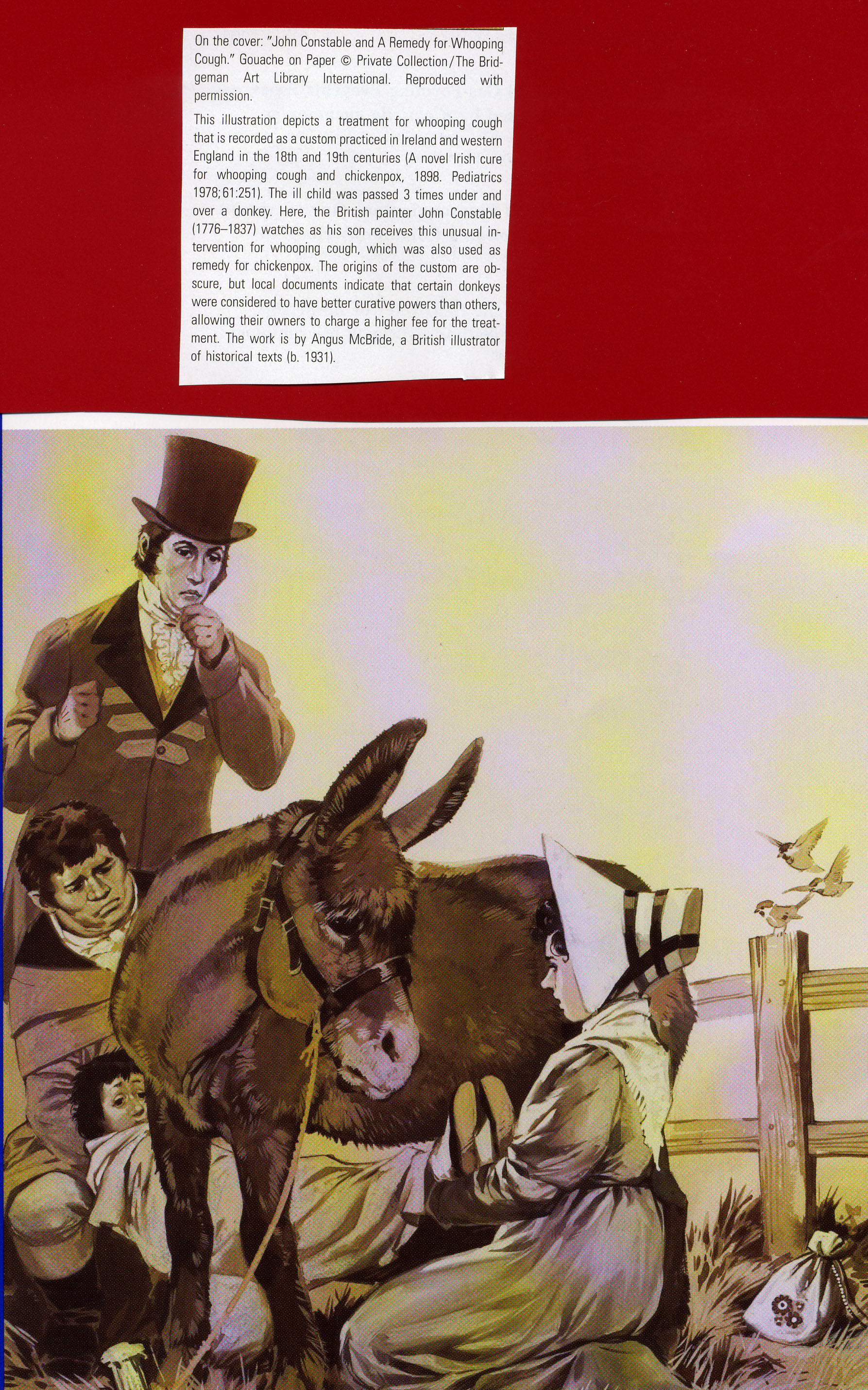
Donkeys have dark crosses on their back! Now this is really interesting, and now I wonder if the story of Jesus riding into Jerusalem on a donkey in the Bible might have been inspired by this probably fairly common sight. The cross then becomes a sort of divine butt-print and an ever-present reminder to the faithful of that particular story. Clever that! [Note: see Pacal’s excellent correction below!] Also, this suggests reasons for a really bizarre cure, passing the child underneath a donkey, which was recorded in the 1820s and remembered as late as the 1930s (122-123). This also seems to be related to a few other practices, for instance, passing the baby underneath a piebald horse (305). Also, one might pass the child through the arched roots of a bramble bush, specifically cited as a symbolic rebirth (37). Lacking a donkey, you could pass the child under the belly of a piebald horse, whose breath was also thought to be curative (305-306).

Courtesy Bill Atkinson.

Getting back to things that were traditionally hung around the neck of children, items usually associated with squeezing were also employed, including the corset lace of the child’s godmother (with 9 knots in it!) or the garter of the child’s godfather (174-175).

Getting back to cruelty to small animals, in the 1850s, one might pass small snails between the hands of the afflicted and hang them by a string in the chimney. The cough was thought to leave as the snails died. An earlier version involved wrapping a house spider in muslin above the mantle and letting it die. One might also feed the hair of the sick baby to a dog, hiding the hair in bread and butter. If the dog dies, the baby will recover. Lastly, in the 1850, one might consider “[p]utting a trout’s head into the mouth of the sufferer and…letting the trout the breathe into the child’s mouth.” I wonder if this one too had a symbolic association with asphyxiation, though I could be wrong be wrong about that; it was also thought that putting a live toad’s head in your mouth would transfer the sickness to the toad (170). You could also try a soup with nine(!) frogs in it, as was recorded in Yorkshire. For some reason, it was important that nobody saw the frogs as you carried them home and prepared the soup, especially, I imagine, the person who was sick (170).

Trout were considered an important curative, it seems, for whooping cough. An interesting one remembered in the 1930s suggested that drinking milk a trout has been made to swim in would be beneficial. You could also drown the fish in beer, which you then drank (162-3). Other lactic treatments for the “kink-cough” included drinking new milk from a wooden bowl made of holly (201), though ivy-wood bowls worked too (214), and, in the 1860s, “For the Hooping cough . . . let the patient drink some milk which a ferret has lapped” (148).

An especially innovative cure involved feeding afflicted children either roasted or fried mice. Also you could powder mice and put them into the patient’s morning and evening beverage (268), though, as Barbara Drescher observed at the panel, if you add water to powdered mice, you just get mice. Pliny, by the way, thought that serving a boiled mouse to a child cured bedwetting (267-8). Useful little guys.

There are comparatively few overtly religious superstitions. In a practice that went back to at least the 1770s, those afflicted with whooping cough would go to Catholic Chruches to drink out of the challice after Mass, even Jews, it is reported (93-4). Of course, if you don’t like going into churches, you can always fast on a Sunday and carry a sick child to three parishes (298).

A kid with whooping cough is a miserable creature indeed; how could you possibly make him more miserable? Well, how about forcing him to drink seawater at low tide? When he vomited, the sickness was thought to disperse on the tide with the sick (407).

Lastly, two superstitions that I simply can’t even imagine how they were supposed to work. Porridge made over a stream flowing from east to west was thought to be a better remedy than any old porridge (430). Finally, you could give the afflicted a piece of bread made by a woman who has successively married two men, both of whom shared the same last name; this is apparently a variation on the older tradition of taking the bread of a woman who did not have to change her surname when she married (277).

As you can see, the variety and strangeness of the folk cures for whooping cough reveal how horrible the disease was and suggests the lengths that people would go to to cure it. We don’t have these superstitions anymore. We don’t need them. We have safe and effective vaccinations. Adults who have not had a dTap (or tDap) booster in the last 10 years should plan to get vaccinated during their next checkup. Write that down. You don’t do it for yourself as much as you do if to keep clear the narrow airways of children too young to be vaccinated.

Congratulations to Maria Walters, Jamie Bernstein, and the original MoFo herself, Elyse Anders, for the Women Thinking Freely pertussis booster clinic at Dragon*Con. Special thanks to Bill (“The Amazing Bearded Man”) Atkinson of the CDC and the workers from the Cobb County Health Department who made it possible and to the folks at Dragon*Con who put aside space for us. Thanks to Sanofi who donated 100 doses of flu vaccine to the cause of public health, one dose of which I am currently enjoying with minimal autism–it was very popular and we were out quickly. We managed to give out 250 doses of whooping cough and flu vaccine. Next year, we’re going to rock it even harder!

Bob and Eve get shot at Dragon*Con. FLU shot!

RJB

Reference:

Opie, Iona and Moira Tatem. Oxford Dictionary of Superstitions. New York: Oxford UP, 1996.


Eve’s Skepticamp Presentation: The Mythical Origins of Dirty Words

July 2, 2011

Me again.

A few weekends ago, Eve delivered a talk at Skepticamp Atlanta about cunts, shit, fucking, and shit-fucking cunts.

The Mythical Origins of Naughty Words from Atlanta Skeptics on Vimeo.

Not safe for work. Though it is completely appropriate if your work is a daycare or a church or if you are at a McDonalds.

RJB


Skepticamp Atlanta: Live, Online, All-Nude!

June 10, 2011

Oh well, 2 out of 3 is not bad.

Tomorrow, Atlanta Skeptics are leaving the bar (for once) to put on a two-day online extravaganza: Skepticamp 2011: This Time It’s Personal. We will be streaming live on the Internet, so you may be able to see my talk or Eve’s talk. I’ll be doing a bit about my visit to the TruthCon at 1:00PM Eastern, while Eve will go at 1:30 and will be talking about the history of profanity.

I am embedding a widget linky doodad below, but in case that does not work, you can click on this link to get to the live web stream. Remember to ask questions in the chat and to introduce yourselves?


    Vodpod videos no longer available.
    RJB


WAR! Huh! Good god, y’all! What is it good for?

May 31, 2011

Growing your teaching portfolio, for one.

This semester, students in my 3 classes put together a website about World War II as experienced in Atlanta. They looked at Atlanta before, during and after the war, and we found that the war really shaped much of what Atlanta has become.

Behind the splash page, you’ll find that all of the groups have been named using the military alphabet of the day, because of my super cleverness. I need to work on that page, but other than that, it’s complete. I am immensely proud of so many students who worked very hard over the semester to produce a fantastic site.

http://wwii.lcc.gatech.edu

RJB