Conspiracy in the News: 30 Jan 2011

January 30, 2011

Like Douglass MacArthur, I have returned. Unlike MacArthur, I bring with me the best in conspiracy. We could go on for a few hours about the wild-assed speculation about events in Egypt. Personally, I think that the withered, gnarly hands of the pharaohs are behind them, but we’re going to sidestep that for now.

Conspiracy Theory of the Week:

RJB


All Hail Akhenaten!

January 30, 2011

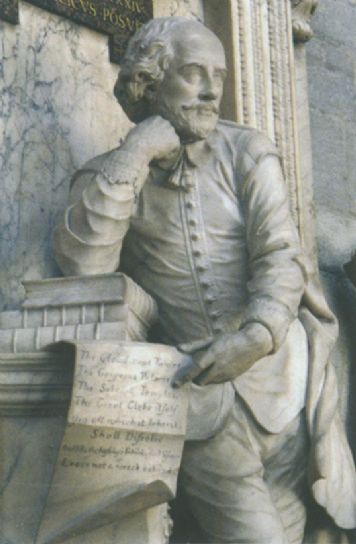
Our chum Akhenaten has designed a new logo for Skeptical Humanities, the “Shakespearean Facepalm.” It is perhaps the most awesome arrangement of electrons in the history of computer screens.

The image comes the Shakespeare memorial in the Poets’ Corner at Westminster Abbey:

The statue was funded by Alexander Pope, designed by William Kent, erected by Peter Scheemakers and perfected by Akhenaten. Thanks so much!

RJB


Psychoanalytic Literary Theory: Where Freud Ended Up

January 27, 2011

I’m suspicious of literary theory, and, as you might imagine, this is a problem for someone in my profession. A lot of criticism is grounded in philosophical positions that seem to me unproven and possibly unprovable. This, of course, is not their problem, but mine. Nonetheless, I would very much like to single out one school of literary theory and beat it savagely as a warning to other schools of theory. I am talking about psychoanalytic literary theory.

The purpose of psychoanalytic theory has always eluded me. I mean, as far as I can tell, even what constitutes the object of psychoanalytic critique is in doubt. I have seen psychoanalytic literary criticism directed at authors, works, characters in the works, even entire cultures. Once, and I swear I’m not making this up, I saw an author claim (and publish, fer cryin’ out loud) that Much Ado About Nothing had analyzed him.* I mean, what does that even mean? Professional psychiatry, with the exception of a dwindling cult of hardcore Freudians, has long recognized that Freud’s understanding of the mind was fundamentally flawed. Why is it so hard for literary theory to jettison Freud?

My personal objections to Freud stem from his misunderstanding of memory, which was very important to my dissertation on the memoirs and fiction of WWII combat veterans. The model of memory that Freud employs is pretty much at odds with everything that we know about how memory works from empirical studies. Central to psychoanalysis is the idea of repression, that traumatic events get displaced, forgotten from the conscious mind, but can still exert influence on the conscious life. Memory is, to Freud, similar an object that gets tucked away in the attic of memory, one which the analyst and patient must dislodge and bring to light. The memory is whole and essentially unchanging.

Most laboratory findings, however, refute this model of the mind. Memories are not mental objects; they are representations of events reconstructed anew with each remembering, subject to decay and alteration over time. Most importantly for any discussion of Freud, the more traumatic an experience is, the more likely we are to remember it, a process that seems to be governed by stress hormones. Indeed, there is no good evidence for “memory repression” in the Freudian sense. So-called “recovered” memories don’t count, because it is entirely possible to plant memories that are indistinguishable from regular memories–we can’t even in principle distinguish the two. Yikes!

If you think about it, psychoanalysis and literary interpretation have a lot in common, and depending on how far you are willing on how far you are willing to go, they may ultimately be variations of the same process. At a basic level, psychoanalytic criticism allows you to say that “A” equals “B.” That is, it is an exploration of metaphor, an examination of something expressed in terms of something else.  This also underlies an important (and true) assumption of literary criticism, that the “texts” we are examining often mean something more than what they literally say.

Often, however, I think that people run too far with the comparison and mistake the metaphor for the real thing. This is perhaps most prominent in the area of psychoanalytic theory that purports to look at “cultural or social memory,” the shared narratives that knit together large groups of people. A claim that might come out of this area of study would be, for instance, “America has expunged from its national memory the one of the greatest holocausts ever perpetrated by humanity, the displacement of Native Americans.” Academics, in this case, take an inadequate model of the human mind and use it for a metaphor for how societies remember, then they mistake the metaphor for the actual historical process of building up a national narrative. In its more flamboyant forms, what is being repressed, because it is naturally hidden, turns out to be…whatever the academic’s kink is. If it’s imperial conquest, they find imperial conquest. If it’s patriarchy, they’ll find patriarchy. If it’s pandas, they’ll find pandas. When A (the text) is defined and B is perfectly hidden, waiting to be “discovered” or “uncovered” by the theorist, well, you get widely divergent and often silly interpretations. When you are allowed to substitute any word or idea for any another word or idea, hell, you can make anything mean anything that you want! Postmodern criticism that finds the meaning “outside” of the text is especially vulnerable to this type of goof, and when you fuse the two in Lacan, you get unfettered bollocks.

I’m not saying that this might not be a useful exercise in some cases–I glean a lot from the historical research that informs much of this type of literary criticism. I think that the way in which that context is applied does not add much to the actual knowledge about the text the critic is analyzing. I suspect, and this has been said of Freud, that you learn more about the critic than you do about the object of criticism at this point. This in itself, however, has the potential to be a useful poetic, creative, and artistic project in its own right, and I wonder if that is not the one saving grace of psychoanalytic criticism– that it is the artistic synthesis of a creative mind.

But who’d want to read it?

So, what’s the “proper” use of Freud? I think that question is up for debate, but I would use Freud sparingly. Freud transformed all he touched, and I think that it is an important area of scholarship to show the influence that Freud’s ideas had on culture. So, you need to have his ideas in the back of your head (heheh) when surveying the art of the twentieth century, for instance. It would be nonsensical to look at the work of Salvador Dali and not consider the influence of psychoanalysis on his work and the work of other surrealists. Once we mistake his theories for useful models of how the mind actually works (say authors’ minds), however, that’s when we start to misuse him.

RJB

——-

*Krims, Marvin Bennett.  The Mind According to Shakespeare: Psychoanalysis in the Bard’s Writing. Westport: Praeger, 2006. Introduction, xv.


Guess Where I’m Going?

January 25, 2011

I won’t be writing about it much here, because I’ve been invited to write about it for a real, live skeptical magazine. I still might do a podcast about it here, but we’ll see what my schedule allows:

I’ve already been to a preliminary meetup held by the organizer, and it was very interesting. Apparently, saying that you can electrify women’s naughty chakras is actually an effective pickup line in some social circles. Clearly my sparkling personality, humor and preternatural wisdom is only worth so much against saying that you have the ability to deliver psychic thrills directly into ladies’ pants. Oh, well.

RJB


Conspiracy in the News

January 22, 2011

If the conspiracy theorists are to be trusted, it has been the most momentous week in the entire of global history, just like last week. And the rest of the world didn’t even manage to even notice. Shame on you, entire world.

Onto the news that is news to the rest of us:


Conspiracy Theory of the Week

Though it is in the spirit of the aflockalypse two weeks ago, this headline has a sort of “Beowulf is an anonymous medieval poem written by Robert Cotton in the 18th century”-quality to it (that’s an actual opening line from a paper Eve once received):

Wow. I mean. Wow.

RJB


FDR’s Paralysis: A Fortuitious Misdiagnosis?

January 21, 2011

A few days ago, an antivaxxer by the name Mayer Eisenstein made a comment that FDR may have gotten Guillain-Barre Syndrome (GBS) from a reaction to a flu shot. This, I found, is simply not possible because the first influenza vaccines were not available for far more than a decade after Roosevelt fell ill. So, big fake facts out of the big fake health guru.

Nonetheless, an interesting story lies behind Eisenstein’s painfully inaccurate mutterings. Roosevelt’s diagnosis of polio was made in 1921, after a string of misdiagnoses (the first doc said it was a bad cold, the second doc first diagnosed a blood clot in spine and then a lesion). The diagnosis that ultimately stuck is polio.

Several reasons appear responsible for the original diagnosis and why it remains a popular diagnosis today. First, Roosevelt fell ill in an era when polio was rampant, and several outbreaks had occurred in previous summers, mostly in cities. It’s a virus spread by interpersonal contact, either oral-oral or oral-fecal. Children are especially vulnerable. At the time FDR fell ill, polio was one of a fairly limited number of known diseases that caused flaccid paralysis, muscular weakening with no immediately obvious cause (like traumatic nerve damage).

After bouncing, metaphorically, from physician to physician, Roosevelt was diagnosed by Boston doctor Robert W. Lovett, who Pierce A. Grace describes “the leading American authority on polio.” He immediately diagnosed polio. It was a fairly late stage in the disease by this point, and he shortly thereafter began his slow recovery. I suspect that once his initial crisis had passed, the urgency of coming up with a diagnosis may have abated, but that’s speculation on my part.

Another factor that seems to have contributed to the story found in the biographies is the fact that on July 28, 13 days before he fell ill, Roosevelt had toured and visited a Boy Scout camp for disadvantaged city youth, something that Roosevelt delighted in. Historians have speculated, and this is the story that I was familiar with, that he contracted the disease while he was at the scouting event. I haven’t seen anything to suggest that there had been polio at the camp, but someone who is infected but not yet showing symptoms can be contagious. Regardless, it’s plausible that Roosevelt contracted polio at the camp, because the incubation period of the disease is between 3 and 35 days.

Other people have looked to the immense stress that Roosevelt had recently been under. He was in the middle of an especially saucy sex and vice scandal, in which a Senate Naval Affairs committee alleged that members of a vice-squad at a naval training facility under his command (and not necessarily AT his order) were reported to have engaged in sodomy while attempting to entrap homosexuals among recruits. Stress may leave people susceptible to infection, and perhaps there was a perfect storm of stress and filthy children that led to his contracting the disease, which was, after all fairly rare in adults.

And let’s not overlook FDR’s symptoms, the major one being progressive paralysis, which at its worst extended from his chest down and was ultimately permanent in his legs, accompanied by a fever (102 degrees). Marooned in a wheelchair for much of the rest of his life, Roosevelt certainly looked like a polio survivor (though remarkably few photos of the man in his wheelchair exist).

In the years following his disease, Roosevelt became an advocate of polio research and in 1938 founded the National Foundation for Infantile Paralysis, which became known as the March of Dimes and supported the development of Jonas Salk’s vaccine. As a sort of recognition of his association with that organization (in 1946, the “March of Dimes” was the group’s annual fundraiser), the disembodied head of FDR now graces the US dime:

See?

Regardless of what condition Roosevelt suffered, his name will always be closely associated with polio.

As best I can tell, a serious challenge has been raised to the diagnosis of
polio. Now, as historical questions go, this is not as pressing an issue as, say, “Did the Holocaust happen?” but it is an interesting question, the type of point that you could possibly argue on Jeopardy if the question they accept is, “What is polio?” Hey, that could be worth money.

Anyway, in 2003 the Journal of Medical Biography published an article by Goldman, Schmalstieg, Freeman, another Goldman and yet another Schmalstieg (apparently the University of Texas was suffering from an outbreak of Goldman-Schmalstieg in 2003). The article, “What was the cause of Franklin Delano Roosevelt’s paralytic illness?” The researchers looked at 11 features of the disease reported in FDR’s medical record. Then they did something called Bayesian Analysis, which as I understand it is a retrospective analysis of probability based on a subsequently established incidence rate (in this case of disease) in a population. So, they were asking questions like, “What is the relative probability that someone FDR’s age would have contracted polio versus GBS?” and “What is the relative probability that someone with polio would have fever versus someone with GBS?” (GBS, by the way, is a condition where the immune system, which has started fighting an infection, mistakenly starts to attack parts of the nervous system. Dr. House is always ruling it out.)

By comparing the features of FDR’s disease, the Goldman-Schmalstieg-infected Freeman makes a strong case that the GBS hypothesis is worth serious consideration (from Goldman):

Click to embiggen!

It really does seem as if most of FDR’s symptoms are most commonly associated with GBS. This is not, however, conclusive diagnostically. At the same time, it seems to me that a good Bayesian analysis would need to accurately determine the prevalence of the diseases and symptoms at the time, and I have no way of assessing that and still maintain a blog. The only way to do be sure of what Roosevelt had would be to tap his spine. Modern interventions gor GBS had not yet been developed, and the authors conclude that it is unlikely his treatment would have changed if FDR had a different diagnosis.

The nearly complete elimination of polio from the planet is a powerful testimony to the efficacy of vaccination, and one may wonder how the course of history might have been altered if Roosevelt’s intense interest in polio research had been redirected toward autoimmune disorder research. Whether he had it or not, FDR will always be closely associated with polio and the search for the cure.

RJB

References

Goldman, Armond, et al. “What Was the Cause of Franklin Delano Roosevelt’s Paralytic Illness?” Journal of Medical Biography 11.4 (2003): 232-240.

Grace, Pierce A. “With Reluctant Feet–The Story of FDR’s Struggle with Polio.” Journal of the Irish Colleges of Physicians and Surgeons 21.1 (1997): 58-61.


Letters in the Eyes of the Mona Lisa?

January 20, 2011

The recent accounts in the media that an Italian researcher had uncovered tiny letters in the eyes of the Mona Lisa seemed suspicious, especially since in no account that I have seen has anyone bothered to print a picture of the supposed micro-signature. Well, Joe Nickell has seen this sort of claim before, and he has some background on the people who are making this extraordinary claim.  (Spoiler: They harbor  all manner of  improbable beliefs.)

RJB


Antivaccine Rhetoric vs. History

January 17, 2011

Tonight, Mayer Eisenstein hosted a webinar (shudder) about vaccines. Ostensibly, the online event was to tell people how to write vaccine exemption letters. It was a Cirque du Soleil-sized extravaganza of clownishly sloppy logic and at-best-half-truths. I’ve watched some webinars before, and they are simply online Powerpoint presentations with audio. We see the speaker’s screen while they talk, and there is usually a chat room where the audience can interact. I have no idea how well attended Eisenstein’s event was, but it lasted for an hour and ended with about a 10-minute sales pitch for his miracle cure, Vitamin D, and his books.

The basic argument that Eisenstein was pushing was “use the religious protections provided by the First Amendment to justify vaccine exemption,” a cynical use of religion if I have ever seen one (and I’ve seen several). I thought that I would see how cynical he could possibly be, so in the chat room I asked, “Is there an option for atheists to claim religious objections?” Heehee.

His answer?

“I think all lawyers are atheists so [unintelligble] when they get in front of a jury they say, ‘I pray that the jury gives a verdict for me.’  Oh, or ‘I religiously believe that I believe this person is negligent or guilty.’ So I had a lawyer tell me that he felt the religious exemption had nothing to do with the belief in God, that a personal, specific religious belief–if you look up the word ‘religious,’ it’s very closely held position, uh, believing that there is some higher order or higher power, and you know, I think it’s close enough. If it’s not close enough for you, well, I’m not sure how you would go about it. Even if there’s a belief that there’s a natural order in the universe, that in itself is a religion. Don’t take the word religion to be so narrowly defined. Take a more, ah, expansive position.”

You could look at this answer in a couple of ways. The first way to see it as a string of loosely connected statements of a person on their way out, and while that is tempting, we do far more damage to the cause of public health when we underestimate our ideological adversaries. Even this guy.

But if you look at the underlying logical structure of that first part, he seems to be saying, “Well, atheist lawyers often pretend like they have religion to appeal to juries. Wink wink, nudge nudge.”

I am also bemused by the way he went straight to “negligent,” as his medical practice, according to the Chicago Tribune

“was on the losing side of one of the largest U.S. jury verdicts — $30 million — ever awarded to the family of a newborn in a wrongful-death suit.”

Anyway, then he tries on another fundamentally cockamamie argument, that “religion” doesn’t really mean “religion.” It really just means, “closely guarded belief.” This, of course, inflates the meaning of the word “religion” to almost complete uselessness: “Even if there’s a belief that there’s a natural order in the universe, that in itself is a religion.” Yeah, only if you are an intelligent design advocate, bucko. So sayeth the courts.

Despite his willingness to see the First Amendment misapplied, he did make some rather staggering comments that do fall directly under the purview of this new skeptical humanities site. He made a rather large claim when someone asked a question about diseases like polio:

“Well, that opens up a big can of worms. Because, I don’t want anyone to leave tonight saying Mayer Eisenstein isn’t worried about, uh, diseases. I’m more worried about…most doctors will scare you with the disease, I’m going to scare you with the side effects.”

Yeah, he actually said that. I know.

“We now know that we have had thousands and thousands of people die from contamination of the, of the, uh, polio vaccine. The polio vaccine, many of the doses were contaminated with SV40 virus, and I talk about it in my book, Making an Informed Vaccine Decision. […] Polio died out in Europe even in countries that didn’t give the polio vaccine, and the big push for the polio vaccine came with President Franklin Roosevelt who allegedly got polio as an adult. Allegedly. I’ve read some very credible reports that, um, he most probably had Guillain-Barré from the, um, Guillain-Barré from the flu vaccine, because, I don’t, I can’t remember, another adult who got polio. I’ve never seen it in almost 40 years in medicine. Now you know I came in a little bit after the adult era, but I should have seen, especially 35 and 40 years ago adults who contracted polio.”

Then he prattles on about what’s in vaccines, as if it helped his case.

Many of the assertions in this especially densely-packed drivel are historical questions. Take, for instance, his statement about the SV40 virus. According to the CDC, the Simian Virus was found in kidney cells of rhesus monkeys, which (I’m supposing) were used as a growth medium for attenuated polio virus in early polio vaccine. Quoth the CDC:

“More than 98 million Americans received one or more doses of polio vaccine during the period (1955–1963) when some of the vaccine was contaminated with SV40. SV40 has been found in certain types of human cancers, but it has not been determined that SV40 causes these cancers. The majority of evidence suggests there is no causal relationship between receipt of SV40-contaminated vaccine and cancer; however, some research results are conflicting and more studies are needed.”

Further, the contaminated strains have been yanked, and there has been no SV40 in polio vaccines since the early 1960s. I don’t know how he can say that deaths were caused by the presence of the virus in vaccines. Does he have access to research that the CDC doesn’t? Swing and a miss, Mayer.

The likelihood that a younger Mayer Eisenstein would likely have encountered a case of polio in the 1970s is also one that can be clarified by looking at history, again provided by the CDC:

There were usually about 13,000 to 20,000 cases of paralytic polio reported each year in the US before the introduction of Salk inactivated polio vaccine (IPV) in 1955. Polio peaked in 1952 when there were more than 21,000 reported cases. The number of cases of polio decreased dramatically following introduction of the vaccine and the development of a national vaccination program. In 1965, only 61 cases of paralytic polio were reported compared to 2,525 cases reported cases just five years earlier in 1960.

By the time Eisenstein graduated from short pants, the cases of paralytic polio were down to 61. The chances that he would have seen polio in the 1970s as a med student are vanishingly small. One interesting side note, Eisenstein mentioned over the course of the webinar that Amish kids don’t get autism, and he says it is because they don’t get vaccines. But they sure as hell got polio, as an Amish community hosted the last natural outbreak of polio in the US in 1979.  Strike two. No batter, no batter.

By far, my favorite assertion by Mayer was that FDR did not suffer from polio but Guillain-Barré syndrome brought on by flu vaccine.

I have access to a truly fantastic set of databases that I use in my research almost constantly. A source does exist that discusses the of FDR having Guilain-Barre, an article from 2003 in the Journal of Medical Biography by Armond Goldman, which according to the abstract:

“Posits that the conditions around the diagnosis of President Franklin Delano Roosevelt’s illness indicate that he likely suffered from Guillain-Barré syndrome, an autoimmune polyneuritis, rather than paralytic poliomyelitis.”

So, we have a retrospective study based on available historical documents at the Franklin D. Roosevelt Library and Museum, Hyde Park, New York, and the Francis A. Countway Library of Medicine. It’s possible, I imagine. However, I looked at 5 cross-disciplinary databases looking for “Roosevelt and Guillain-Barré” and found that all of the mentions of the hypothesis in the press were references to Goldman’s article. So, it’s nothing like the consensus view at this point. (I have ordered the article, however, and look forward to seeing it.)

We can, however, use history to completely demolish the boneheaded assertion that FDR got…whatever he had… from a flu vaccine, as he fell ill in August 1921. The first experimental influenza vaccine was developed in 1936, according to Stanley A. Plotkin, Walter A. Orenstein, and Paul A. Offit. Strike three, big guy. YEEEEEEEROUT!

History spanks cranky antivaxxers.

RJB

A note: I did subsequently find another reference to an article from the Journal of Medical Biography that suggests that Roosevelt may not have had polio (top of list), but diagnostically, I am told, we would need to see his spinal fluid to get a final answer about what caused his paralysis. Good luck with that.


Conspiracy in the News (15 Jan 2011)

January 16, 2011

Tonight I resurrect, like a twisted necromancer, a feature from my old website in which I take a look at the conspiracies that make our wacky world go ’round. Honestly, the conspiracy flies so thick and fast on the web that it is impossible for any single mortal to keep up with. This week, a lot of it has related back to the Giffords’ shooting, and, let’s face it, the shooter is bizarre: he has left tracks all over AboveTopSecret.com and believed that grammar was being used by the government as a method of control. If you see that much agency where there cannot possibly be agency, you are flying over the cuckoo’s nest.

Gordon Duff found a Jewish angle to the attack, because he is such a delight.

Before It’s News found five sinister reasons for the attack. (Misery is like porn to these people.)

The other major conspiracy theory story this week has been about animals “dying off” all over the world, starting with the aflockalypse in Arkansas. This of course is bullocks as similar incidents happen all the time; the only thing different this time is an especially fatuous news cycle. So, here’s the obligatory link to that conspiracy, with a dash of apocalyptic Christianity thrown in for good measure.

Mnookin’s new book, The Panic Virus, discusses how conspiracy theories can have deadly real-world effects.

Are the floods in Australia the work of HAARP? Of course not, but here’s a video with snappy music (btw, the comments are worth reading):

Also, discredited anti-vaccine fraud Andrew Wakefield was recently interviewed on Anderson Cooper and resorted to conspiracy theories to defend himself. Super-weak:

According to the Canada Free Press (in my experience, appending “free press” to your website’s name indicates “otherwise unpublishable”), secular humanists are using evolution to dismantle American democracy. Check out the CrAzY CaPs that the author “USES”!!!!

Liberty News Online issues a crazed statement of belief or something. I like where they describe the TSA as Nazis. The Nazis were primarily known, of course, for especially vigorous pat-downs. The bastards.

Fluoridation is still a controversial topic in certain sections of the undeveloped world. Like Wyoming.

Conspiracy Theory of the Week

The Zionists are behind the “new” astrological zodiac. Somehow they are going to copyright Ophiuchus and make a killing. This one was on the JREF forums, where goofy ideas often collide. It’s like an LHC of hilarity.

RJB


The Panic Virus

January 13, 2011

On the Media, one of my favorite podcasts, interviewed Seth Mnookin about his new book, The Panic Virus, which is about the vaccine scare brought on by Andrew Wakefield, who remains happily complicit in unprecedented child suffering and death.

I am excited about this in particular because host Bob Garfield uses the phrase “false balance” to describe the disproportional representation of vaccine fears in the media despite vaccines’ statistically insignificant risks.

We included On the Media in the podcast section of the website because Bob Garfield, Brooke Gladstone and their producers and contributors do a fantastic job of showing how often-unseen forces affect the news and media consumed by the public. I’ve been hooked ever since 2004, when they explained exactly how everyone on NPR sounds so damned good. The report is a classic, and I still recommend it.

Oh, this week they also mention Allen Gribben’s shamefully bowdlerized new edition of Huckleberry Finn, which substitutes the word “nigger” with the word “slave.” They are not the same thing, Allen. I was going to hurl a pithy Twain quote at him (“Censorship is telling a man he can’t have a steak just because a baby can’t chew it”), but I can’t verify that it is actually Twain’s. Oh well.

RJB