The essence of responsible skepticism is to adjust one’s beliefs to accord with the evidence. Hand-in-hand with this principle is the guiding maxim that extraordinary claims require extraordinary evidence. With the Shakespeare authorship question, we have often said that for us (Eve and Bob) to credit anyone but Shakespeare of Stratford it would take something on the order of the “true” author of the works signing a letter or a manuscript explaining exactly why and how he (presumably) took the pseudonym. Even then, we’d have to cross-check and verify this new evidence with multiple lines of converging evidence.
Everyone knows that Shakespeare’s plays were performed at the Globe Theater, but his company also performed at a small indoor theater called the Blackfriars, built on the site of a Dominican friary. The Globe has been reconstructed as Shakespeare’s Globe, and from the beginning, there was always a plan to reconstruct the Blackfriars as well. Indeed, the shell of the Blackfriars was built before the Globe opened, and the Globe is now raising funds to complete its sister theater.
There were actually two theaters built on the site of the monastery. The first theater was built on the site of the former buttery and produced plays featuring boy actors. In the 1580s, Edward de Vere, the 17th Earl of Oxford, whom many believe wrote the plays attributed to Shakespeare, was involved with this theater. He may have been its patron, and he placed the running of the theater under the control of his secretary, playwright John Lyly, and William Hunnis. This theater was shut down by legal entanglements in 1585.
In 1596, James Burbage, impressario of Shakespeare’s company the Lord Chamberlain’s Men and father of the great tragic actor Richard Burbage, purchased the friary’s refectory and the rooms below it. Burbage had the space renovated into a theater; however, the residents of the area were unhappy, and even Lord Hunsdon, the patron of the Lord Chamberlain’s Men, signed a petition to prohibit the company from performing there. In 1600, Richard Burbage was able to lease the theater to Henry Evans, and the Children of the Chapel began performing there. Finally, in 1608, Burbage reclaimed the lease and his company, now called the King’s Men, took over the Blackfriars Playhouse. Shakespeare was one of the theater’s owners. The King’s Men performed seven months of the year at the Blackfriars and five months at the Globe. Although the Blackfriars was smaller, the company earned more revenue from it because they were able to charge a higher admission price. Many of Shakespeare’s late plays were written to be performed at the Blackfriars. In addition, Shakespeare owned a property in the Blackfriars area, which he left to his daughter Susanna in his will.
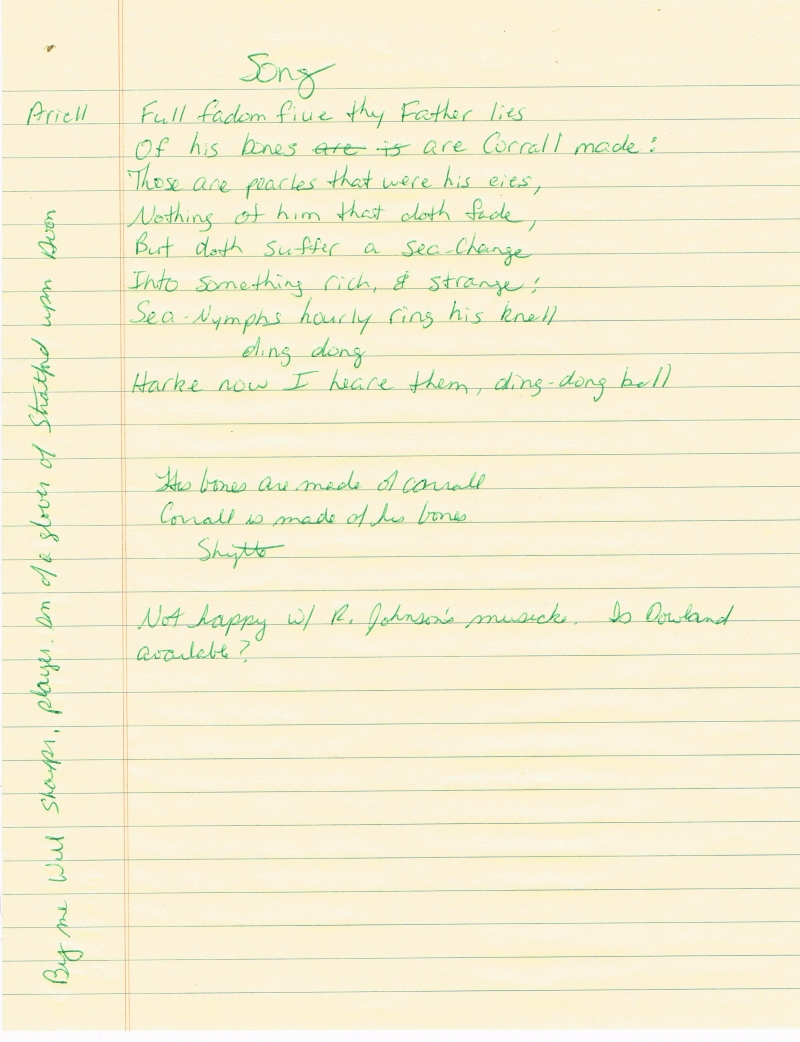
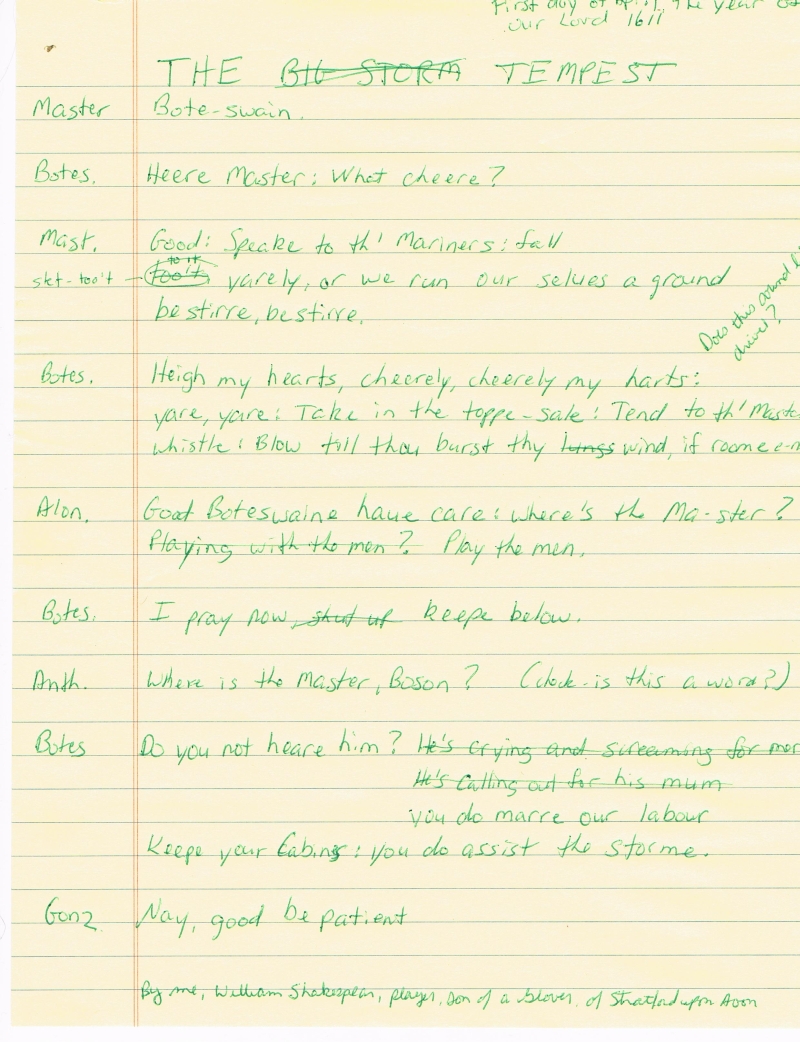
It is interesting that both Shakespeare and Oxford have an association with the old monastery and the surrounding area, since recent excavations have unearthed a treasure trove of manuscripts which some have identified as Shakespeare’s “foul papers,” the rough, handwritten copies of plays produced before a fair copy. The manuscripts, found in a trunk, are damaged and dirty, and it will take some time for scholars to assess what they have. Early indications, though, suggest that they are not a hoax or forgery. The paper, ink and handwriting seem to date from the late 16th century. According to Professor Stanley Jay Taylor of the Folger Shakespeare Library, if the manuscripts are genuine, they are authorial works: they are rough and show evidence of revision. It is not clear from the release how many or which plays have been found (Taylor only mentions two, Two Gentlemen of Verona and The Tempest), but the foul papers may cause us to rethink our view of the plays if the manuscripts represent a version substantially different from the texts we have. Furthermore, snippets from what seems to be an early draft of The Tempest has been carbon dated to 1599, within Oxford’s lifetime! (Give or take 3 years.) This is important because The Tempest is considered to be one of the author’s later plays. That–and the prospect of abandoned literary projects–boggles the mind!
The discovery of the foul papers could also settle once and for all the question of “Who wrote Shakespeare?” If the handwriting matches Shakespeare’s six signatures, then we will know that he was indeed the author. If not, or if there is any question, Oxfordians will finally have their day. Of course, it may not be as easy as that: it may be difficult to make a definitive assessment of the handwriting by comparing it to just six signatures. Luckily, we have numerous, mutually consistent examples of Oxford’s hand, so we will have a firm answer on that account likely very, very soon.
More to come!
ES/RJB


 Posted by Bob

 Skeptical Humanities